
Chrome Nails: Ideas, How-To Tips, and What to Ask For
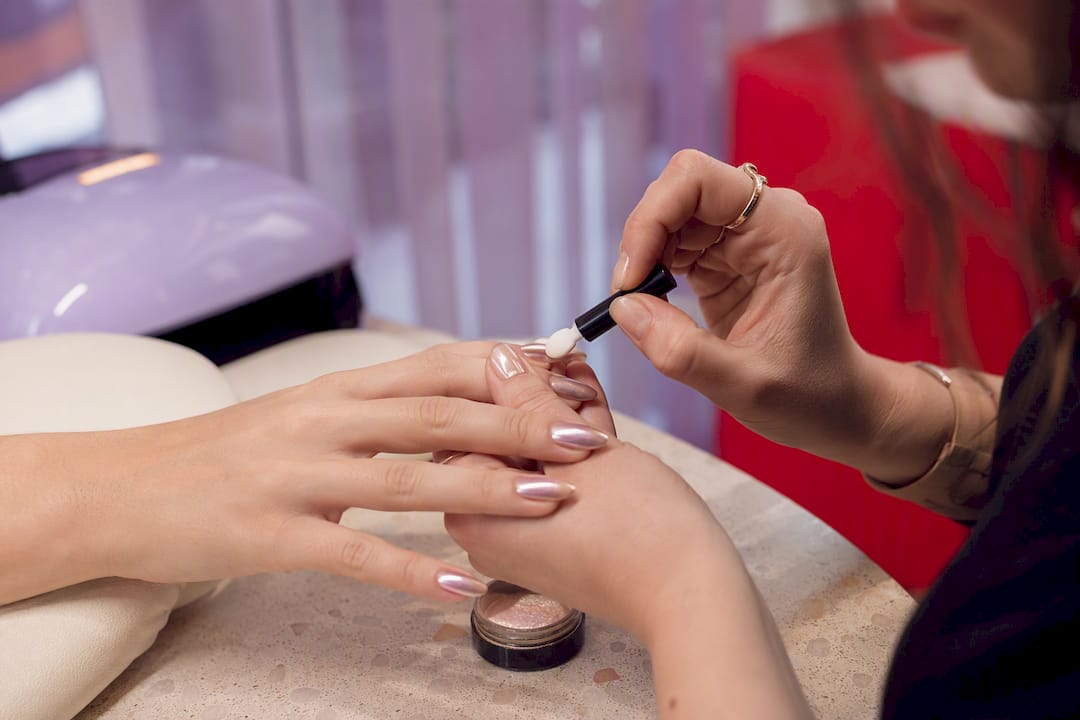
Chrome nails are a mirror-like or pearlescent finish made by burnishing ultra-fine metallic pigment into a cured no-wipe gel top coat. The 2026 verdict: chrome hasn’t faded, it’s matured. Soft pearl and glass chrome have replaced full mirror silver as the look everyone’s actually booking. Want to try it tonight? Test a liquid chrome polish or press-ons at home, book a salon for glass or neutral chrome, or grab a starter powder kit if you’re ready to commit to the real technique.
Key Takeaways
Chrome nails succeed or fail based on one variable: whether the no-wipe top coat is cured to the correct tacky window before burnishing.
Point | Details |
Chrome needs the tacky layer | Powder bonds only to a partially cured no-wipe top coat, not a fully cured one. |
2026 favors softer finishes | Pearl, glass, and satin chrome are now the most-booked salon versions, not full mirror. |
Loose powder causes peeling | Always dust off excess pigment with a clean applicator before sealing. |
Specialty chrome costs more | Expect $20 to $25 for pearl, glass, or aurora finishes versus $5 to $15 for basic add-ons. |
Bradentonnails offers trained application | Book a chrome finish, neutral, glass, or accent, with a tech who manages cure timing for you. |
Table of Contents
What Are Chrome Nails, Exactly?
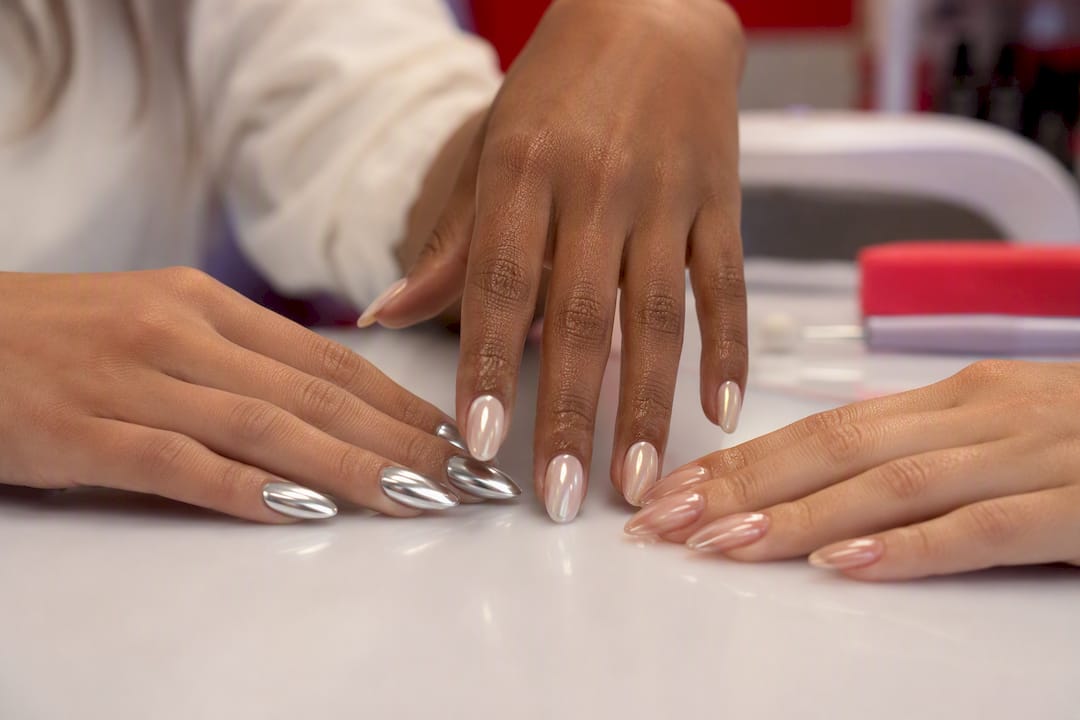
The name covers more ground than most people realize. Classic mirror chrome is the loud, high-shine metallic that started the trend. Pearl chrome (sometimes called glazed or milky chrome) mutes that reflection into something closer to a soft sheen over a nude or white base. Glass chrome layers the pigment over a sheer or jelly polish, so you get depth and shine without full opacity. All three rely on the same core material: a chrome powder or liquid metallic pigment reacting with light once it’s bonded to the nail surface.
Chrome Manicure Ideas Worth Saving
Not every chrome look works on every nail. Here are six directions that consistently perform well, whether you’re screenshotting for your tech or attempting it yourself.
Neutral pearl chrome over a milky white or soft beige base, for an everyday luxe look that doesn’t scream “manicure.”
Glass chrome applied over a sheer jelly polish, showing depth rather than solid opacity.
Satin or brushed chrome, buffed slightly to knock down the shine into something more textured.
Colored chrome in coral, butter yellow, or icy blue, which reads as a tinted metal rather than a bright polish.
Chrome French tips, where only the tip or a single accent nail gets the treatment.
Iridescent or mermaid chrome, layering shifting tones for warm-weather nails that catch light from every angle.
Base color matters more than most people expect. Pearl chrome needs a milky or white base to look soft rather than gray. Glass chrome wants a sheer or jelly polish underneath, not an opaque one, or you lose the depth entirely.
Pro Tip: If you’re short on nail length or working with a squoval shape, stick with pearl or satin chrome. Full mirror finish tends to highlight every ridge and imperfection, while glass chrome photographs best on longer almond shapes where the light travels across more surface.
Tools and Products You Need for Chrome Nails
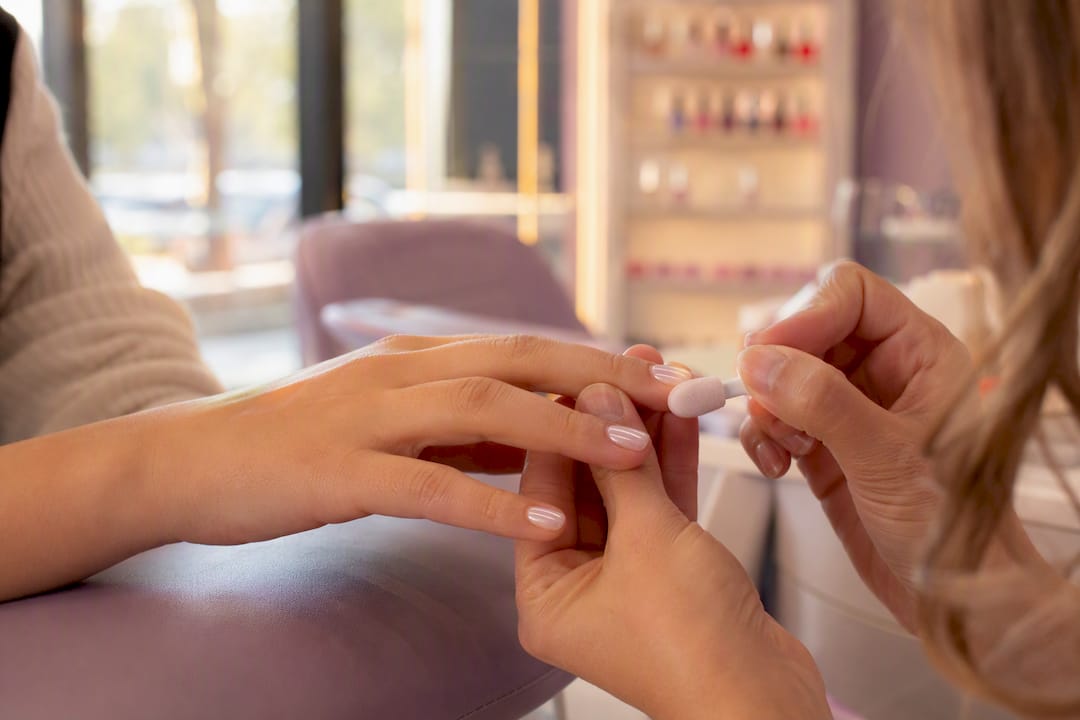
A chrome manicure runs on a short list of non-negotiables: an LED or UV lamp, gel base and color coat, a no-wipe gel top coat, chrome powder or liquid chrome, a silicone or foam applicator (or a soft eyeshadow-style brush), and something to dehydrate and prep the nail plate beforehand. Skip any one of these and the finish suffers.
For brand direction, a few names come up constantly among techs and DIYers alike. The GelBottle makes a well-regarded no-wipe top coat and chrome powder line that’s become a salon staple for mirror and pearl finishes. OPI has pushed further into chrome with dedicated metallic releases, reflecting how seriously the category is being taken at a commercial level. Essie offers accessible liquid chrome and metallic polish options for anyone who wants the look without gel equipment. Olive & June is a solid pick for at-home manicurists who want beginner-friendly tools and a simpler application system. Glamnetic covers the press-on route, which is worth considering if you want chrome nails for one event without the commitment of a full gel set.
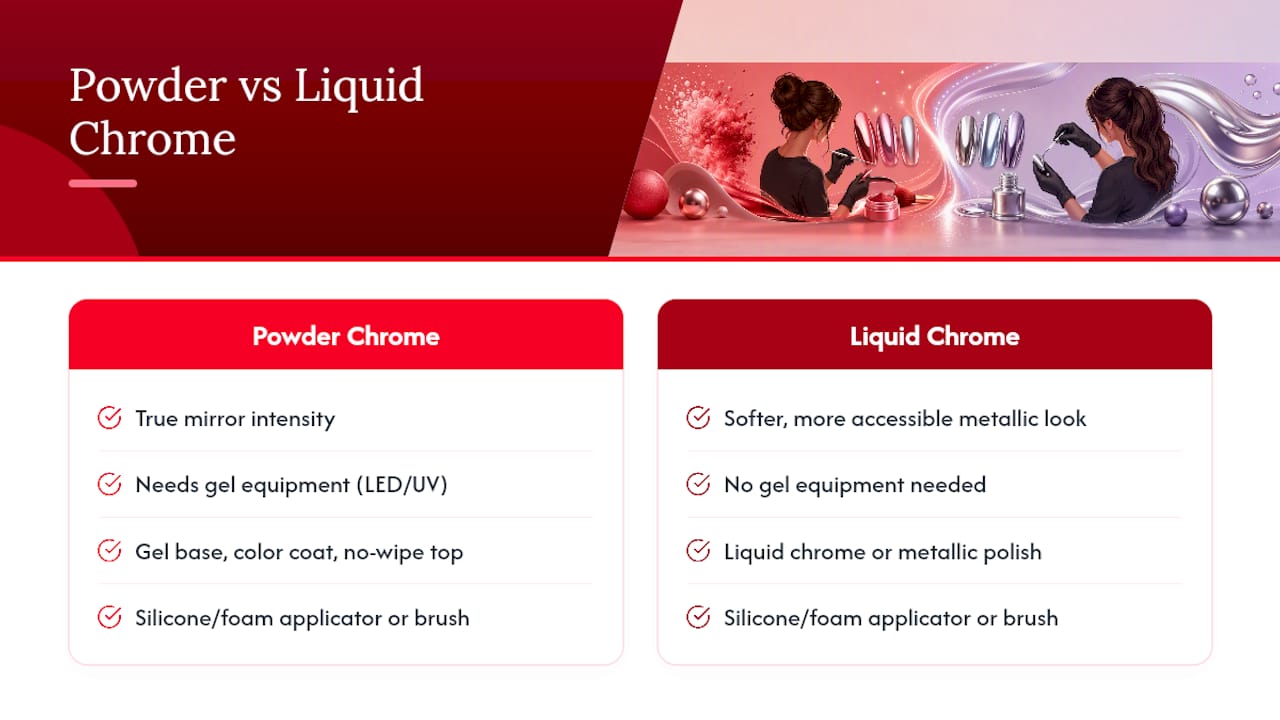
If you’re deciding between powder and liquid chrome, know the trade-off going in. Liquid chrome gives a softer, more accessible metallic look without any gel equipment, while burnished powder chrome remains the professional standard when you want true mirror intensity. Cost, durability, and finish all shift depending on which route you pick, and neither one is wrong, just different tools for different goals.
How to Do Chrome Nails: A Salon-Grade Method
The entire technique hinges on one detail: a properly prepped gel surface and a no-wipe top coat cured to the correct tack, not fully hardened, not still wet. Get that window right and the rest is mostly patience.
Prep the nail. Push back cuticles, buff the surface lightly, and wipe with a dehydrator to remove oils.
Apply and cure the base coat. Cure per your lamp’s instructions before moving on.
Apply your color coat (or skip it for glass chrome over a sheer base) and cure fully.
Apply a thin, even layer of no-wipe gel top coat. Thickness matters here, too heavy and the burnishing step won’t work cleanly.
Cure for a partial window, not a full cure. This leaves the tacky oxygen inhibition layer chrome powder needs to bond to, since chrome powder has no adhesive properties of its own and relies entirely on that residual tack.
Burnish the chrome powder into the tacky surface using small, circular motions with your silicone applicator or brush.
Dust off loose powder with the clean side of your applicator before sealing anything.
Seal with a final top coat, capping the free edge to lock in durability.
Pro Tip: Use light, even pressure when burnishing. Pressing too hard can scrape the pigment right back off, while too light a touch leaves patchy spots. And always cap the free edge on that final seal. Skipping it is one of the fastest ways to get lifting at the tips within a week.
Common Chrome Nail Problems and How to Fix Them
Most chrome failures trace back to one of three culprits, and professional application data backs this up: wrong top coat, bad cure timing, or leftover powder under the seal.
Patchy or uneven shine usually means the top coat was over-cured before burnishing. Reapply a thin no-wipe layer and try the partial cure again.
Peeling or lifting within days almost always comes from loose powder trapped under the final seal instead of removed first, since leftover chrome dust prevents the top coat from bonding properly.
Dull, chalky finish instead of mirror shine often means a wipe-type top coat was used instead of a true no-wipe formula.
Before you sit down for a service, ask your tech three things: are they using a no-wipe top coat, what’s their partial-cure timing, and will they cap the free edge. If you have sensitive skin or nails, ask about HEMA-free gels and TPO-free powders, since formulation matters more for chrome than for standard polish given the extra curing steps involved. A well-sealed set typically holds for two to three weeks; when it’s time to remove it, expect a standard acetone soak-off, and don’t pick at lifting edges, since that’s what causes surface damage on the natural nail underneath.
What’s Booking Right Now: The 2026 Chrome Trend
Salons aren’t seeing chrome fade. They’re seeing it specialize. Neutral and soft chrome finishes, glazed, satin, and glass, are now the most-booked chrome services in salons, a real shift away from the loud, all-mirror sets that defined the trend’s early years. This lines up with what broader 2026 trend coverage is highlighting: layering, transparency, and satin texture over pure high-shine effect, plus continued product investment from major brands rather than any sign of the category cooling off.
On pricing, expect some range depending on where you book and which version you want:
Basic chrome add-ons at many salons generally remain priced as modest add-ons.
Specialty finishes like pearl, glass, or aurora chrome often command higher prices to reflect the extra time and technique they require.
Full sets that include chrome as part of the base service will run higher depending on your salon’s standard gel or acrylic pricing.
Walk in with the right words and you’ll get a better result. Try phrases like “milky nude with pearl chrome” or “glass chrome over a sheer base” instead of just saying “chrome nails.” That level of specificity tells your tech exactly which of the seasonal trend cycles you’re aiming for.
A Note From the Chair
Chrome still intimidates a lot of first-timers, but the softer 2026 finishes are far more forgiving than the mirror-only sets that started this trend. A trained tech knows exactly how long to hold that partial cure, and that’s the detail that separates a flawless set from a patchy one.
Book a Chrome Finish With a Trained Tech
Getting that partial cure window right, and burnishing pigment evenly across ten nails, takes practice most people won’t want to build on their own bathroom counter. Bradentonnails offers neutral and pearl chrome, glass chrome over sheer bases, and chrome accents as add-ons to any gel or acrylic set, with a technician handling the timing so you’re not guessing at home.
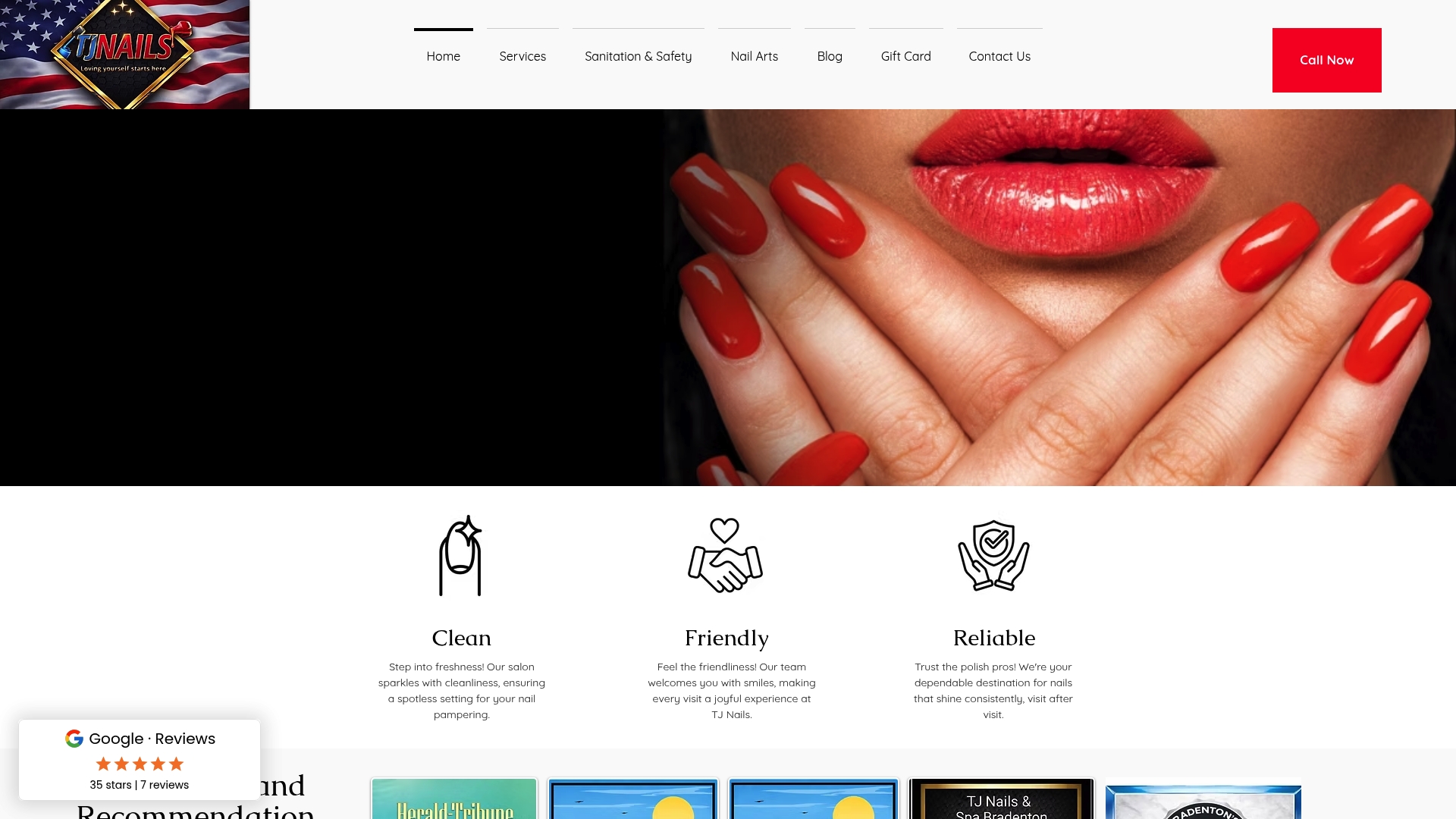
If you’ve been eyeing the long-nail chrome looks or want something closer to the neutral, wearable finish now dominating salon bookings, book your chrome manicure at Bradentonnails and tell your tech exactly which version you want. Prefer to browse services first? Start on the Bradentonnails homepage to see current offerings before you pick a time.
Frequently Asked Questions
What are chrome nails made of? Chrome nails use an ultrafine metallic pigment powder (or a liquid chrome polish) burnished onto a cured gel surface, creating a reflective mirror, pearl, or glass finish depending on the base and technique.
How long do chrome nails last? A properly sealed chrome set typically lasts two to three weeks before needing a refresh, similar to standard gel wear time.
Can I do chrome nails at home without a UV lamp? Yes, liquid chrome polishes and chrome press-ons skip the lamp entirely, though they generally give a softer effect than professionally burnished powder chrome.
Why did my chrome powder come out patchy? Patchiness almost always points to incorrect top coat curing, either too far gone to be tacky or not cured enough to hold pigment evenly across the nail.
Is chrome nail powder safe for sensitive skin? Look for HEMA-free gels and TPO-free powders if you have sensitivities, and ask your salon which formulations they use before booking.
Sources
Recommended
Comments