
12 Creative French Manicure Variations to Try in 2026
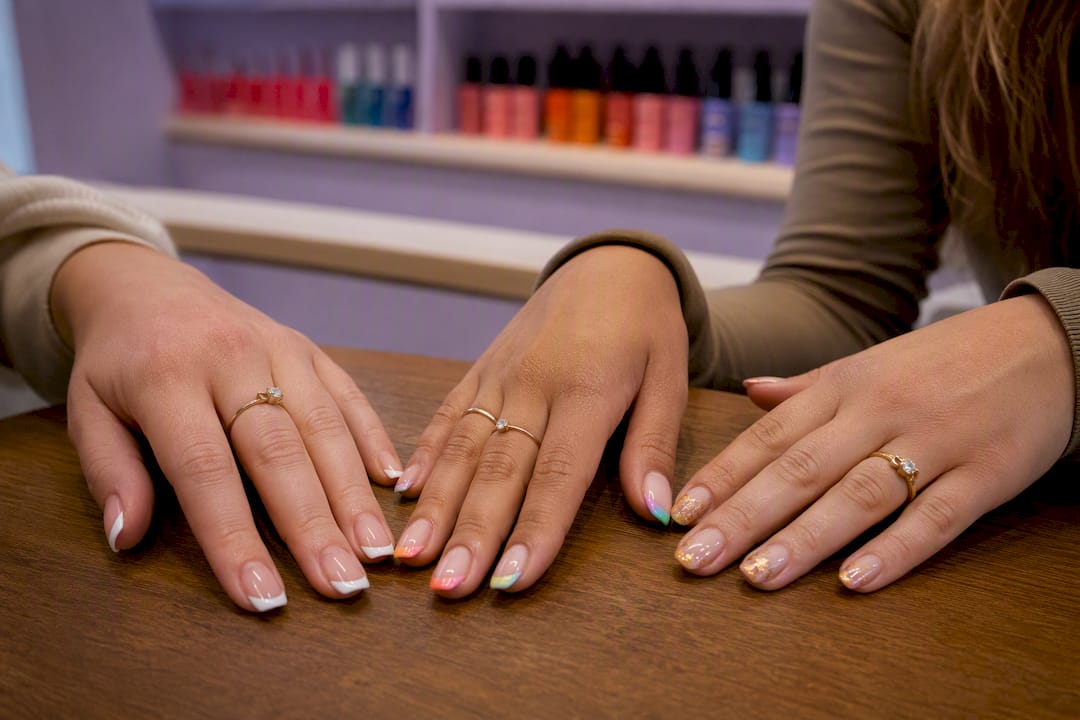
The classic white tip is just one option among a dozen worth trying now: milky and ombré French, micro-hairline tips, colored and multicolored tips, reverse French, chrome-flicked edges, and rhinestone-studded statement sets are all having a moment. Pinterest searches for French tip ideas increased sharply between January and March 2026, and the version that photographs best usually comes down to three things: your nail length, how often you want to sit in a salon chair, and how loud you want your hands to talk. Bradentonnails sees the full range of these requests walk through the door, and a quick rule helps narrow it down fast:
Short nails, low maintenance: micro-hairline or milky French
Medium nails, want color: single-color or multicolored tips
Long nails, want drama: rhinestone, chrome, or hand-painted floral tips
Key Takeaways
The French manicure now spans a dozen distinct styles, from micro-hairline tips to rhinestone-studded sets, and picking one comes down to nail length, maintenance tolerance, and how bold you want your hands to read.
Point | Details |
Match style to nail length | Short nails suit micro or milky tips; long nails carry bold color, chrome, or rhinestones better. |
Consider maintenance tolerance | Reverse French hides regrowth longest; classic white tips show growth fastest. |
Choose the right application | Gel or SNS extends wear to two or three weeks versus 5 to 7 days for regular polish. |
Let proportion drive the look | Thinner tips (1 to 1.5mm) and softer, milky transitions are the dominant 2026 trend. |
Book complex looks in-salon | Bradentonnails offers trained technicians and personalized consultations for chrome, builder-gel, and rhinestone French designs. |
Where to Find More French Manicure Inspiration
Harper’s Bazaar: trend analysis on milky, proportion-tailored tips
Vogue: celebrity nail artist customization ideas
InStyle: gallery of modern French spins
ORLY: brand history and origin of the style
Bradentonnails: local trend roundup and styling notes
Table of Contents
Examples of French Manicure Variations Worth Booking or DIY-ing
Each of these reads differently on the nail, wears differently over two to three weeks, and suits a different shape. Consider this your reference list for screenshotting or bringing to your next appointment.
1. Classic white tip The original: a solid white smile line over a sheer pink or nude base. Jeff Pink invented this look in the 1970s as the Natural Nail Look for Hollywood actresses who needed a manicure that matched every costume change in a day, and it hasn’t gone out of style since. Ask for a straight, even smile line rather than a rounded one for a crisper finish. Best on almond and coffin shapes at medium to long length. Regrowth shows within two weeks on natural nails, faster than most variations on this list.
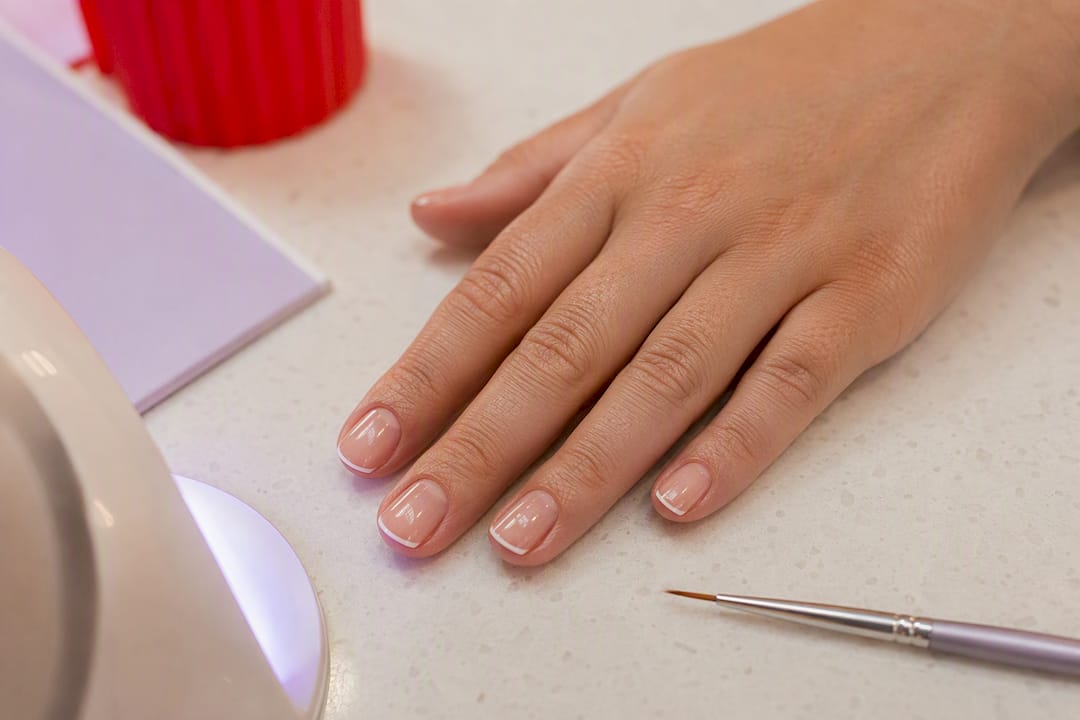
2. Milky/ombré French A soft, diffused gradient where the tip fades into a sheer, cloudlike white instead of a hard line. Teen Vogue describes the technique as building sheer, buildable layers rather than one opaque coat, which is why it photographs so well against every skin tone. Request a makeup sponge application for the gradient blend. Flatters every shape, especially short and round nails where a hard line can look stark. Grows out gracefully since there’s no sharp edge to chase.
3. Micro-hairline French A tip under 1.5 millimeters wide, barely more than a whisper of color at the edge. Editorial sources point to this thinner proportion as the current preference over the thicker tips of a decade ago. Ask your technician for a fine detail brush, not the standard French guide stickers. Best on short and squoval nails where it elongates without adding bulk. Hides regrowth longer than almost any other style on this list, since the line is so thin it barely registers as it grows out.
4. Colored tips (single color) Swap white for a single saturated shade, hot pink, cobalt, or deep burgundy, over a neutral base. Vogue notes that celebrity nail artists like Kim Truong and Tom Bachik treat the French shape as a customizable canvas rather than a fixed formula. Request a striping brush for a clean edge with any pigmented polish. Works on all shapes; bolder colors suit longer nails where there’s more surface to show off. Chips at the tip line first, so plan a two-week refresh.
5. Multicolored and striped tips Two or three different colors banded across the same tip, or thin stripes layered over a classic base. Great for a nail artist to show range in one set. Ask for a dotting tool or striping brush for crisp separation between colors. Best on medium to long nails with flat surface area to work with. More upkeep since multiple color edges mean more visible wear at once.
6. Reverse French (half-moon base) Flip the formula: color lives at the cuticle in a half-moon shape instead of at the tip. A clever trick for anyone who wants to disguise regrowth almost entirely, since the color sits where new growth naturally starts. Ask for a half-moon guide sticker for symmetry. Flatters short and round nails by visually lengthening the bed. Among the longest-wearing options here for exactly that reason.
7. Double-stripe/double-French Two parallel lines at the tip, often in contrasting colors like white and black or white and gold. A graphic, architectural look that reads as intentional rather than trendy for trendiness’s sake. Request a striping brush and a steady hand, this one takes technician skill to keep both lines even. Best on square or coffin shapes with a flat tip to showcase the lines. Moderate wear; the outer line shows growth first.
8. Outlined French (smile line outline) A thin contrasting line traces the edge of a standard white or colored tip, like a cartoon outline. InStyle lists this among the top modern spins keeping the French fresh right now. Ask for a fine liner brush in a metallic or black polish for the outline. Suits almond and stiletto shapes where the pointed tip gives the outline somewhere dramatic to go. Regrowth is fairly visible since two lines need to stay crisp.
9. Chrome/metallic-flicked tips Chrome powder or metallic pigment brushed just at the tip instead of covering the whole nail, giving a mirror-like flick of shine. Needs a gel topcoat to seal properly, chrome powder won’t hold under regular polish. Best on medium to long nails where there’s room for the reflective effect to catch light. Longest wear on this list when done over gel, typically two to three weeks.
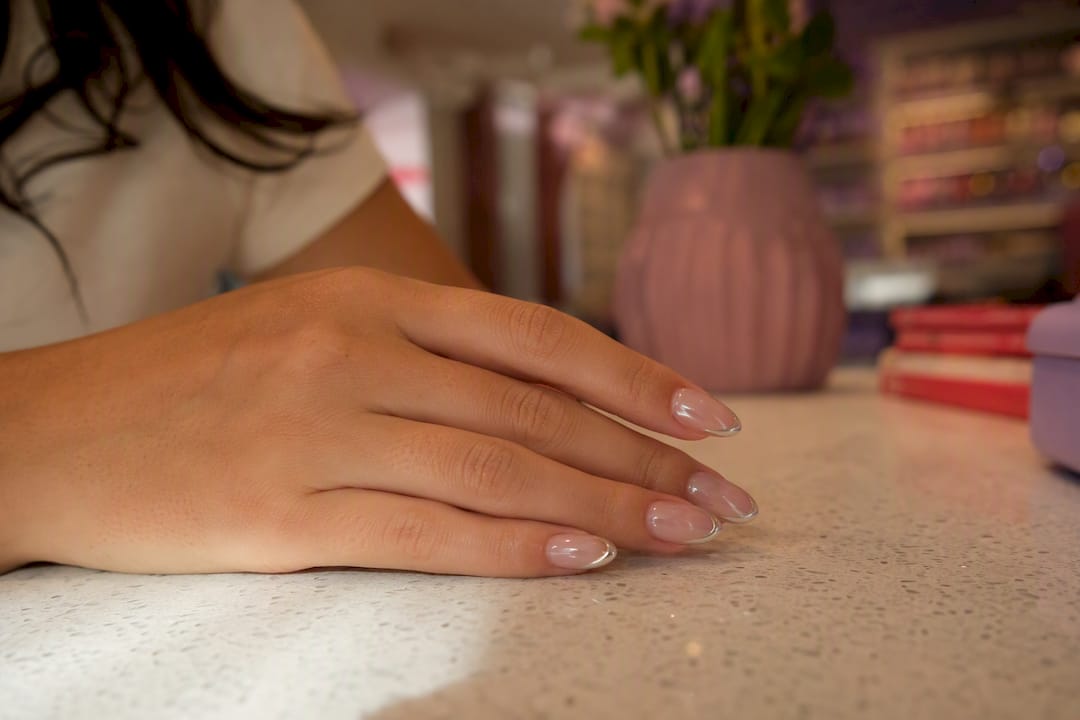
10. Glitter or foil edge tips A fine line of glitter or metallic foil replaces the solid white edge for texture without full sparkle overload. Ask for loose glitter applied with a dotting tool rather than glitter polish, which tends to look patchy at a thin edge. Works on any shape; particularly popular for holiday sets. Glitter holds up well since it’s textured rather than smooth, chips are less noticeable.
11. Rhinestone/blinged French Small crystals placed along or just above the smile line for a jeweled, statement finish. Vogue notes this sits at the high-drama end of the French spectrum, proof the shape scales from minimal to maximalist. Requires builder gel or a strong topcoat to keep stones secure. Best on long nails with surface area for placement. Needs the most careful removal of any style here to avoid losing stones.
12. Floral or hand-painted art at the tip Tiny painted flowers, leaves, or abstract shapes replace or accent the standard tip line. A technician’s fine brush skill really shows here. Ask to see a nail artist’s portfolio before booking if you want a specific floral style. Best on medium to long nails, square or coffin, with flat space for the art. Wear depends on sealant quality; a strong gel topcoat protects detail for two to three weeks.
How to Pick the Right French Style for Your Nails and Life
Short nails read best with micro or milky tips since a thick white line can overwhelm a small nail bed. Reverse French is the smartest pick if hiding regrowth between appointments matters more to you than the classic look. Bold colored or blinged tips work best on longer nails, where there’s simply more canvas for the statement to land.
Before booking, run through this checklist:
How often can you realistically get back in the chair? (weekly favors bold color, monthly favors milky or reverse)
Do you want matte or glossy finish?
Do you want extendable art like rhinestones or 3D details, which need extra care during daily tasks?
Do choose a warm ivory tip over stark white if you have warm undertones, it reads softer against the skin. Don’t load heavy chrome onto very short nails if your goal is a minimal look, the reflective finish tends to read as more dramatic than expected at that scale.
Pro Tip: Manicurists increasingly tailor tip transparency and proportion to each client instead of defaulting to one stock white. Bring a reference photo, but ask your technician to adjust the width for your specific nail shape.
DIY Steps and Tools for Recreating a Basic French at Home
The basic sequence stays the same no matter which variation you’re chasing:
File and buff the nail surface, then push back cuticles.
Apply a sheer base coat in nude or pale pink.
Paint the smile line with a striping brush or guide sticker.
Clean any smudges along the cuticle line with a small brush dipped in remover.
Seal with a glossy topcoat.
Variants change one step: use a makeup sponge for the milky ombré blend, a striping brush for double lines, or chrome powder buffed in after a gel topcoat cures for the metallic flick.
Keep these on hand:
Nail file and buffer
Thin striping brush
Dotting tool or guide stickers
Sheer milky base polish
Gel topcoat (required for chrome)
HEMA-free formulas for sensitive cuticles
Pro Tip: Micro-French photographs cleanly and hides regrowth longer than any bold variation, making it the lowest-effort option for anyone who travels or can’t get back in the chair often. Anyone with reactive skin should ask about HEMA-free gel options before a chrome or builder-gel service. For anything involving chrome, 3D detail, or builder gel, booking with a trained technician at Bradentonnails gets a cleaner result than most home kits allow.
Choosing the Right Finish for Durability and Style
The application method changes both how long your French lasts and how it looks under light.
Regular polish: cheapest, fastest for a quick DIY refresh, but wears in 5 to 7 days.
Gel: holds shape better for two to three weeks and is required for chrome or mirror finishes to set properly.
SNS/dip powder: more durable than gel over time but adds a bit more bulk to the nail.
Builder gel: the strongest option for anything 3D, rhinestones, or heavy embellishment that needs a solid base to grip.
Matte finish softens contrast and mutes color, useful if you want a milky or reverse French to look even more understated. Glossy finish intensifies both pigment and chrome shine. Reapply topcoat every few days to extend wear, keep a cuticle oil routine going, and skip acetone-based removers on detailed chrome work since it can dull the metallic finish.
Fresh French Twists Trending Now
Milky, soft ombrés replacing hard white lines
Micro-hairline tips at 1 to 1.5 millimeters
Translucent and negative-space designs
Chrome-flicked smile lines
Framed or double-stripe graphic tips
Modern French manicures are trending toward softer, diffused, milky effects with proportions tailored to the individual wearer rather than a one-size-fits-all stark white tip.
The takeaway: chase the trend that fits your actual routine. A micro-French suits someone who wants low-maintenance elegance, while chrome accents suit someone building a photo-ready set for an event.
What We See Most Often in the Chair
Milky French and micro-hairline tips are the two most requested looks at Bradentonnails right now, closely followed by rhinestone accents for special occasions. Technicians adjust tip width and transparency based on nail shape and skin undertone rather than applying one template to every client, which is exactly the approach editorial sources recommend.
Book Your French Manicure Variation at Bradentonnails
Chrome flicks, builder-gel rhinestones, and hand-painted floral tips are hard to nail solo with a bathroom mirror and a steady-hand hope. Bradentonnails gives you trained technicians who adjust every proportion to your actual nail shape instead of a one-size guide sticker, plus a clean, relaxed space with Sunday hours for whenever your schedule allows.
Two services make the boldest looks on this list realistic to maintain: SNS dip powder for a durable, chip-resistant base under colored or multicolored tips, and builder gel application for anyone chasing 3D rhinestone or chrome-flicked sets that need a strong foundation. If you’re planning a bridal set, pairing your French manicure with creative wedding photography in mind is worth mentioning at your consultation, since certain finishes catch camera flash differently. Book your appointment through the Bradentonnails booking page and bring a reference photo from this list, your technician will take it from there.
Frequently Asked Questions
What are the most popular French manicure variations right now? Milky/ombré French, micro-hairline tips, colored and multicolored tips, reverse French, chrome-flicked edges, and rhinestone-embellished sets are the styles seeing the most interest in 2026.
Which French manicure variation is lowest maintenance? Reverse French and micro-hairline tips both hide regrowth the longest, since the color placement or line width minimizes how visible new growth becomes.
Can I do a milky French manicure at home? Yes, with a sheer buildable base polish and a makeup sponge for the gradient blend, though gel application holds the effect longer than regular polish.
What nail shape works best for bold French designs like rhinestones or chrome? Longer nails in almond, coffin, or square shapes give the most surface area for embellishment and tend to showcase these designs best.
How long does a gel French manicure last compared to regular polish? Gel typically holds for two to three weeks, while regular polish tends to chip within 5 to 7 days.
Sources
Recommended
Comments