
Foot Scrub Benefits: What They Do and How to Use One Right
- Bradenton Salon Today
- 19 hours ago
- 6 min read
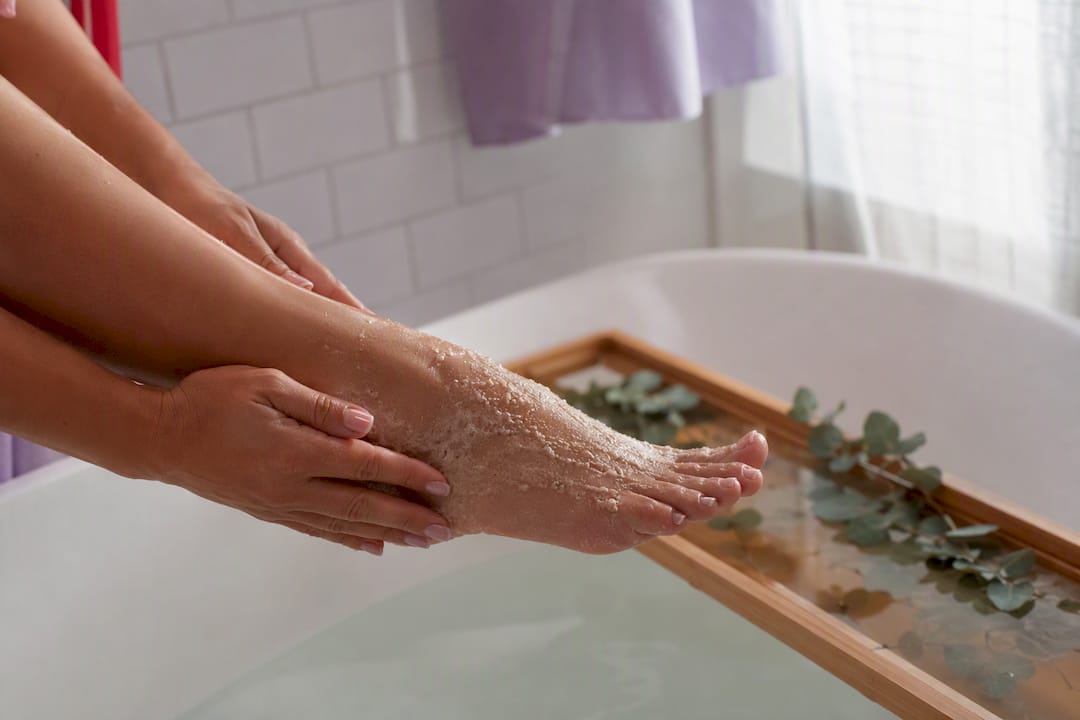
Foot scrubs exfoliate dead skin, boost circulation through the massage motion, help moisturizer sink in more deeply, cut down odor, and leave your feet genuinely relaxed, but only when you use them the right way. Skip scrubbing over open cuts, active infections, or if you have diabetes with nerve damage, and check with a doctor first if you’re unsure. Here’s the fast version of the routine: soak feet for a short time, scrub gently in small circles, then seal in moisture with a urea or lactic acid cream while skin is still damp.
Removes dead skin and prevents cracked heels
Improves circulation through massage
Helps moisturizer absorb deeper into skin
Reduces odor by lifting away bacteria-trapping buildup
Relaxes tired feet and eases tension
Key Takeaways
Foot scrubs work because gentle, consistent exfoliation removes dead skin, boosts circulation, and lets moisturizer absorb deeper, but results depend entirely on using the right technique and frequency for your skin.
Point | Details |
Core benefits | Exfoliation, circulation, better moisturizer absorption, odor reduction, and relaxation all come from one routine. |
Safe soak time | Stick to 5 to 10 minutes in warm water; longer soaks raise fungal risk if skin stays damp. |
Right order matters | Soak, scrub gently, rinse, then moisturize immediately while skin is still damp. |
Frequency limit | One to two times weekly prevents the rebound thickening that daily scrubbing can cause. |
Professional option | TJ Nails in Bradenton offers controlled, technician-guided foot scrubs for thick calluses or sensitive skin that home care struggles to manage. |
Table of Contents
Why Foot Scrub Benefits Go Beyond Softer Skin
Dead skin builds up fastest on the heels and balls of your feet because that’s where the pressure hits hardest with every step. Left alone, it thickens into calluses, and calluses eventually crack. A scrub physically breaks up that buildup before it turns into a problem you have to treat instead of prevent.
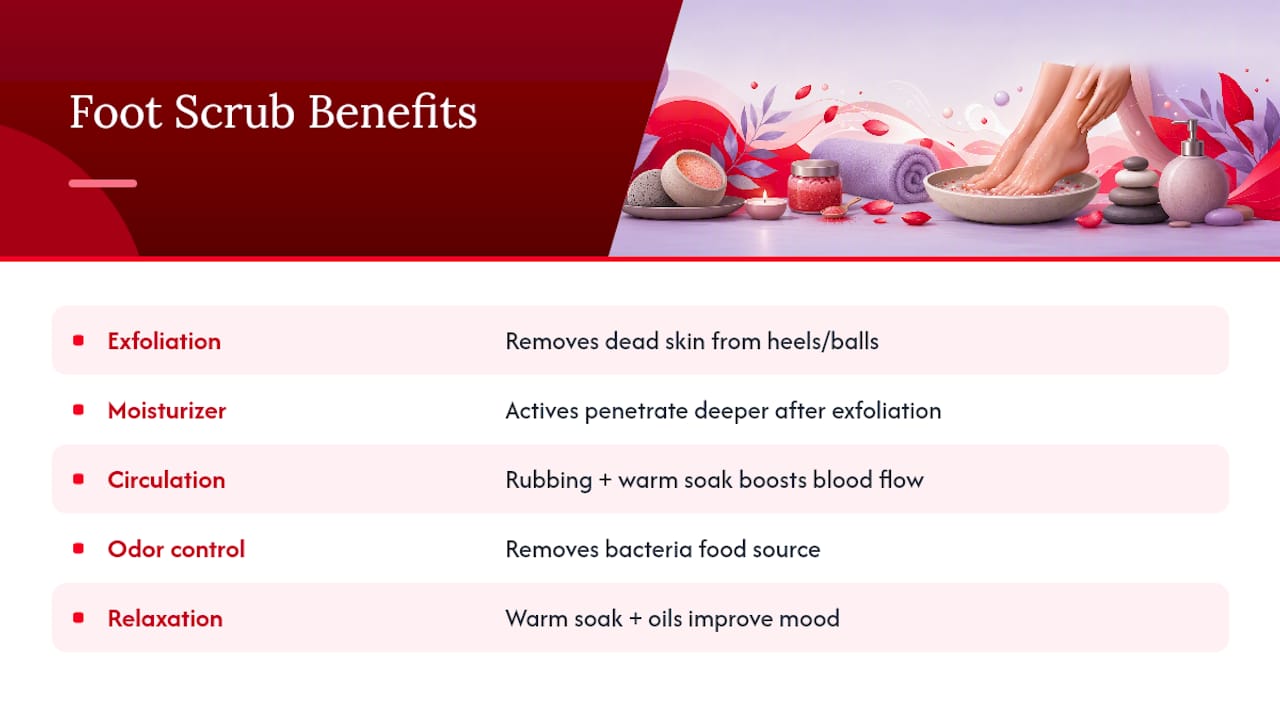
The exfoliation itself is doing more than smoothing rough patches. The American Academy of Dermatology notes that removing dead surface cells lets moisturizer actives penetrate deeper into skin, instead of sitting on top of a dry, flaky layer that blocks absorption. That’s why the order of operations matters: scrub first, moisturize second, always.
Circulation is the part people underestimate. The rubbing and pressing motion of a scrub, especially combined with a warm soak, dilates blood vessels and gets blood moving through tissue that’s been compressed in shoes all day. WebMD’s rundown of foot soak benefits points to this same mechanism easing muscle tension and reducing that heavy, tired feeling by evening.
Odor control follows a simpler logic. Sweat itself doesn’t smell, bacteria feeding on dead skin and trapped moisture do. Scrubbing away that buildup and drying feet thoroughly afterward removes the bacteria’s food source, which is a cleanliness effect, not a treatment for an existing infection.
Then there’s the part that has nothing to do with skin cells at all: a warm soak and a slow scrub is one of the few times most people sit still and pay attention to their own feet. Add a drop of lavender or eucalyptus oil if you want, purely for mood, not medicine.
Pro Tip: Scrub before bed, not before you slip on shoes. Freshly exfoliated skin absorbs moisturizer best when it has hours, not minutes, to soak in undisturbed.
Consistency is what separates a nice one-off pampering session from an actual foot care routine. Feet that get regular gentle exfoliation hold polish and gel better during a pedicure, simply because the surface underneath is smoother and the product has less debris to fight through.
How Do You Use a Foot Scrub Correctly?
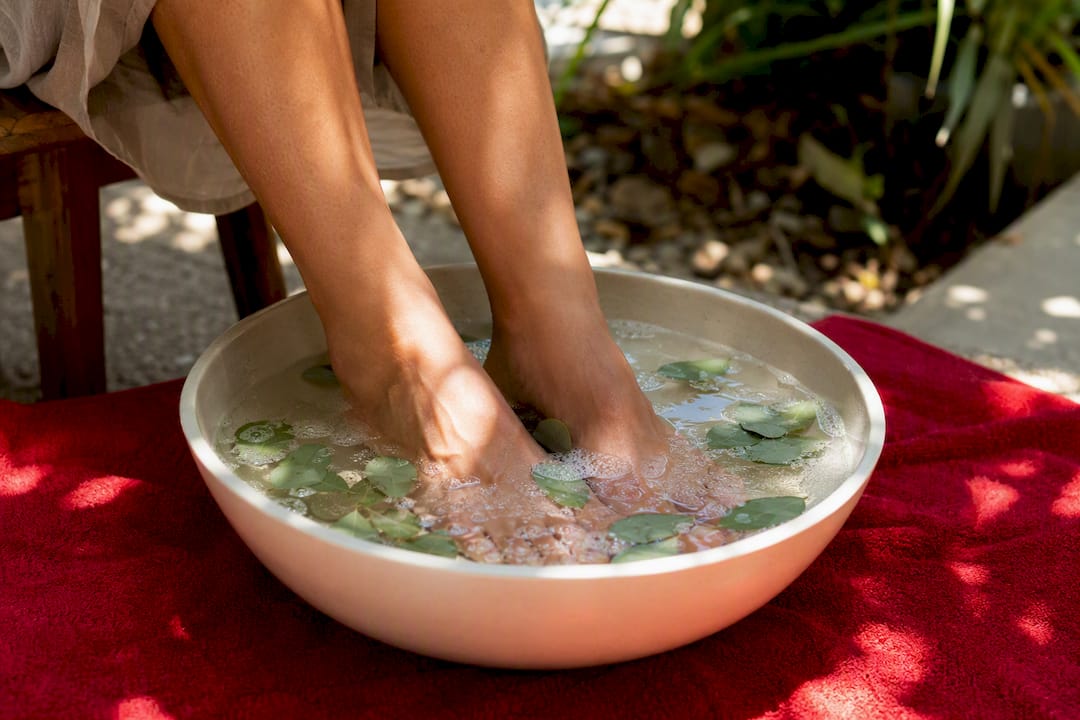
Soak first. Warm water for 5 to 10 minutes softens skin enough to exfoliate without scraping. Stick to the shorter end if you have sensitive or thin skin, or if you’re prone to dryness between soaks.
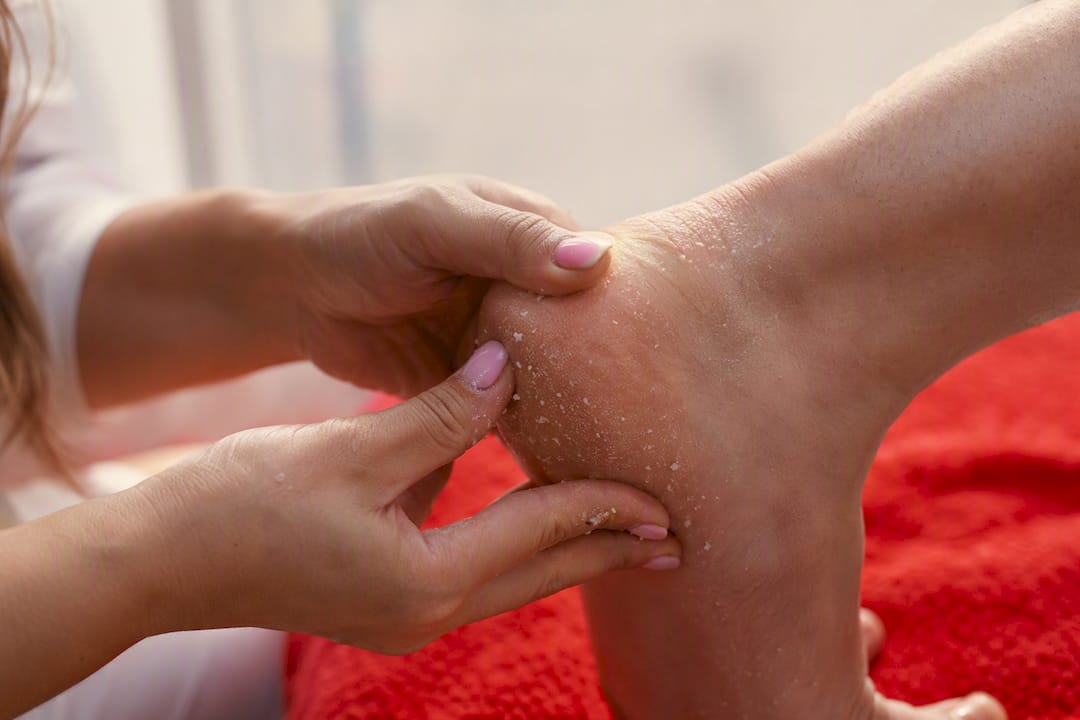
Scrub in small circles. Use a pumice stone, foot file, or scrub product, and keep pressure light. Work each rough area for roughly 30 seconds. If skin turns red or irritated, stop.
Rinse with lukewarm water. Hot water strips natural oils right after exfoliation, which works against you.
Pat dry, then moisturize immediately. Apply a cream with urea or lactic acid while skin is still slightly damp. Derm on Demand’s step-by-step breakdown recommends this exact sequence, soak, exfoliate, moisturize, for cracked heels and stubborn dry patches.
Dry between your toes. This step gets skipped constantly, and it’s the one the Cleveland Clinic specifically flags as a fungal risk if left damp.
Frequency depends on your skin and your product. Generally, exfoliate regularly but avoid overdoing it, especially with stronger chemical exfoliants; increase frequency only if your skin tolerates it without irritation. For cracked heels that need faster repair, apply a thick urea ointment and cotton socks overnight, an approach dermatology sources note can help accelerate results over time.
What Kind of Foot Scrub Should You Use?
Not every scrub works for every foot. Mechanical scrubs, the kind built from salt, sugar, or pumice granules, physically buff away dead skin and suit normal to rough skin best. Chemical exfoliants built around AHAs like glycolic or lactic acid dissolve the bonds holding dead cells together, which makes them more effective on stubborn, thickened calluses without as much scraping. Enzymatic scrubs, often derived from fruit enzymes like papaya or pineapple, are the gentlest option, better suited to sensitive skin that reacts to grit or acid.
Sugar, salt, and pumice: physical buffing for average, rough skin
Glycolic or lactic acid: chemical dissolving for tough calluses
Salicylic acid: mild exfoliation with anti-bacterial properties
Fruit enzymes: gentle option for reactive or thin skin
Whatever method you choose, follow it with the right moisturizer. Urea and lactic acid both continue softening skin after exfoliation, glycerin pulls in moisture, and petrolatum seals it all in. That’s the same combination the American Academy of Dermatology recommends matching to skin type rather than grabbing whatever’s cheapest on the shelf. If calluses are thick enough that a pumice stone barely dents them, that’s the signal to move from a drugstore scrub to a professional treatment.
When Should You Not Use a Foot Scrub?
Skip exfoliation entirely over open wounds, active fungal or bacterial infections, or if you have diabetes-related nerve damage, since reduced sensation means you might not notice you’re scrubbing too hard until skin breaks. Talk to a doctor before starting a routine if any of that applies to you.
Over-exfoliating backfires. Daily aggressive scrubbing can trigger the skin to thicken defensively or create tiny abrasions that invite infection, while gentle exfoliation one to two times weekly shows real improvement over two to four weeks without that rebound effect.
Redness that lingers past a few hours signals you scrubbed too hard
Stinging or peeling means dial back frequency, not push through it
Watch for dark, blotchy patches after repeated scrubbing on darker skin tones
Darker skin tones face a higher risk of post-inflammatory hyperpigmentation from aggressive mechanical exfoliation, so gentler enzymatic or lighter chemical options are usually the safer starting point, ideally with a dermatologist’s input. If you’re using retinoids or prescription topicals anywhere near your feet, space out exfoliation sessions to avoid compounding irritation.
When a Professional Foot Scrub Makes More Sense
A salon pedicure isn’t just a nicer version of what you do at home. Technicians control pressure and timing in ways that are hard to replicate solo, use tools calibrated for different callus thicknesses, and follow up with product recommendations suited to your actual skin, not a generic bottle. That precision matters most for thick, long-standing calluses, limited mobility that makes reaching your own feet difficult, or vision issues that make self-treatment risky.
At TJ Nails in Bradenton, technicians work in a clean, controlled setting and take the time to ask about skin sensitivities before starting. Mention any recent cuts, irritation, or products you’re using, retinoids especially, so they can adjust technique accordingly.
— MinhHieu
Skip the DIY Guesswork With a Professional Foot Scrub
A drugstore scrub and a pumice stone get you partway there. What they can’t replicate is a technician who reads your skin in real time and adjusts pressure, tools, and follow-up moisturizer to match, rather than a one-size-fits-all routine from a bottle label.

At TJ Nails in Bradenton, foot scrubs and pedicures happen in a clean environment with technicians trained to spot the kind of thick calluses or sensitive spots that home tools tend to overwork or undertreat. It’s the difference between guessing at pressure and technique versus having someone calibrate both to your actual feet. If you’re dealing with stubborn dry heels or just want the relaxation part done right, book a pedicure appointment and let a technician handle the scrub, soak, and moisturize sequence for you.
Sources
Recommended
Comments