
How salons handle nail damage: repair and prevention guide
Nail damage from salon treatments is not the unavoidable price of beautiful nails. Many clients in Bradenton walk away from gel or acrylic appointments believing that thin, peeling, or sensitive nails are simply part of the deal, but that belief is outdated and flat-out wrong. Gel manicure heat spikes are considered abnormal and are linked to fixable factors like thicker gel layers or lamp and product mismatches. This guide covers how to identify real nail damage, what causes it, how skilled technicians prevent and repair it, and why choosing the right salon in Bradenton makes all the difference.
Table of Contents
Key Takeaways
Point | Details |
Heat spikes are preventable | Using the right gel thickness and lamp settings stops abnormal heat and nail damage. |
Professional assessment matters | A salon’s expert evaluation leads to safer repair and personalized nail care. |
Prevention is a top priority | Bradenton salons use careful application and removal techniques to protect your nails. |
Salon vs. home care | Professional salons minimize risks that DIY nail work often increases. |
What really causes nail damage during salon treatments
Most people assume that gel and acrylic nails are inherently damaging. The truth is more specific and more fixable than that. Damage almost always traces back to a handful of avoidable mistakes, not to the products themselves.
Heat spikes are one of the most misunderstood problems in gel nail care. When gel polish cures under a UV or LED lamp, it goes through an exothermic reaction, meaning it releases heat as it hardens. In a well-run salon, this heat is barely noticeable. But heat spikes during gel manicures are caused by exothermic reactions and poor technique, including applying gel too thick or using a lamp that does not match the brand of gel being used. That burning sensation some clients describe is not normal. It is a warning sign.
Here are the most common causes of nail damage in salon settings:
Improper removal: Peeling or filing off gel or acrylic instead of soaking can strip away layers of the natural nail plate, leaving nails thin and fragile. Learning about safe acrylic removal is essential for anyone who wears enhancements regularly.
Lamp and product mismatch: Not all gel polishes are designed for all lamps. Using an incompatible combination can mean the gel never fully cures, or cures too aggressively, both of which create problems.
Over-filing the nail surface: Some technicians buff the natural nail before applying gel to help it adhere. Done too aggressively, this thins the nail plate and causes long-term weakness.
Skipping base coat: Base coat acts as a protective barrier. Without it, pigments and chemicals in gel polish can stain and weaken the nail directly.
Rushing the removal process: Soaking off gel properly takes time. Rushing leads to scraping, which leads to damage. Understanding avoiding breakage during removal is something every client should know before sitting down at the table.
“A burning sensation during gel curing is not something to push through. It signals that the gel layer is too thick, the lamp setting is too high, or the products are mismatched. A good technician will stop, adjust, and protect your nails.”
Understanding these causes puts you in a much stronger position as a client. You can ask the right questions, recognize red flags, and choose a salon that takes these issues seriously.
How salons in Bradenton assess and treat nail damage
Reputable salons do not just slap on a new coat of color and hope for the best. When a client comes in with compromised nails, a skilled technician follows a clear process to evaluate the damage and choose the safest path forward.
Here is how a thorough nail assessment typically works:
Visual inspection: The technician examines the nail plate for discoloration, white spots (which can indicate air pockets or trauma), peeling layers, and unusual thinning. They also look at the nail bed and cuticle area for signs of irritation or infection.
Touch assessment: Running a finger across the nail surface reveals ridges, soft spots, or uneven texture that might not be visible. Flexible or bendy nails signal significant thinning.
Client history questions: A good technician will ask how long you have been wearing enhancements, how your last removal went, whether you experienced any burning during curing, and whether you have had any infections. This context shapes every decision that follows.
Damage grading: Based on the inspection, the technician categorizes the damage as mild, moderate, or severe. Mild damage might just need a strengthening treatment and a lighter product. Severe damage may require a full break from enhancements.
Treatment planning: Options include applying a nail strengthener or hardener, using a thinner gel formula with lower curing intensity, or recommending a series of restorative manicures with conditioning treatments before any enhancement goes back on.
Experts recommend using appropriate removal and lower-heat cure settings to reduce natural nail damage risk, and Bradenton’s best salons build that principle into every appointment. Checking out gel nail removal tips before your visit can help you arrive with realistic expectations and the right questions ready.
In cases of severe nail compromise, a responsible salon will temporarily restrict certain services. That might mean no acrylics for four to six weeks, or avoiding gel entirely until the natural nail grows out enough to support it safely. This is not a rejection. It is the mark of a salon that actually cares about your nail health over the long term. You can explore the full range of manicure techniques offered locally to understand what options fit your current nail condition.
Pro Tip: Before your next gel appointment, ask your technician which brand of gel they use and confirm it is matched to their specific lamp model. This one question tells you a lot about how seriously a salon takes nail safety.
Prevention strategies: how salons avoid causing or worsening damage
The best nail damage is the kind that never happens. Quality salons in Bradenton invest in prevention as much as repair, and the difference shows in the long-term health of their clients’ nails.
Correct product and lamp pairing is the foundation of prevention. Every reputable gel brand publishes guidelines about which lamp types and wattages work best with their formulas. A salon that cuts corners by using whatever lamp is cheapest is gambling with your nail health. Using the right removal process and curing settings protects nails from heat and future damage, and that starts with matching products correctly from the start.
Here is a comparison of prevention practices between quality salons and less careful ones:
Practice | Quality salon | Less careful salon |
Lamp and gel compatibility | Always matched by brand | Mixed brands, no verification |
Gel layer thickness | Thin, even layers | Thick application to save time |
Removal method | Soak-off with foil wraps | Filing or peeling |
Sanitation | Sterilized tools per client | Shared or lightly cleaned tools |
Strengthening treatments | Offered proactively | Only if client requests |
Curing time | Adjusted per product | Standard setting for all gels |
Beyond product pairing, careful removal practices are the second most important prevention tool. Proper gel removal uses acetone-soaked cotton held against the nail with foil for ten to fifteen minutes, then gentle pushing with an orangewood stick. No scraping. No filing down through the gel. Clients who want to understand this process in detail can read more about removal tips to know exactly what to expect and what to refuse.
Hygiene and sanitation also play a direct role in nail health. Bacteria and fungal infections can take hold on nails that are already compromised from improper removal or thin nail plates. A clean salon with sterilized metal tools and fresh files for each client is not just a comfort issue. It is a health issue. Choosing an eco-friendly salon that prioritizes non-toxic products also reduces chemical exposure that can weaken nails over time.
Additional prevention strategies used by top salons include:
Applying a nail hardener between enhancement appointments
Recommending cuticle oil daily to maintain nail flexibility
Offering nail treatments with keratin or calcium to rebuild nail structure
Tracking client nail history to catch recurring problems early
Pro Tip: Schedule a break from enhancements every three to four months to let your natural nails breathe and recover. Even one or two weeks of a nourishing bare-nail treatment can make a significant difference in long-term nail strength.
Comparing salon vs. at-home nail damage outcomes
DIY gel kits have become popular, and the appeal is understandable. Lower cost, convenience, no appointment needed. But the gap between professional and at-home outcomes is wider than most people realize, especially when things go wrong.
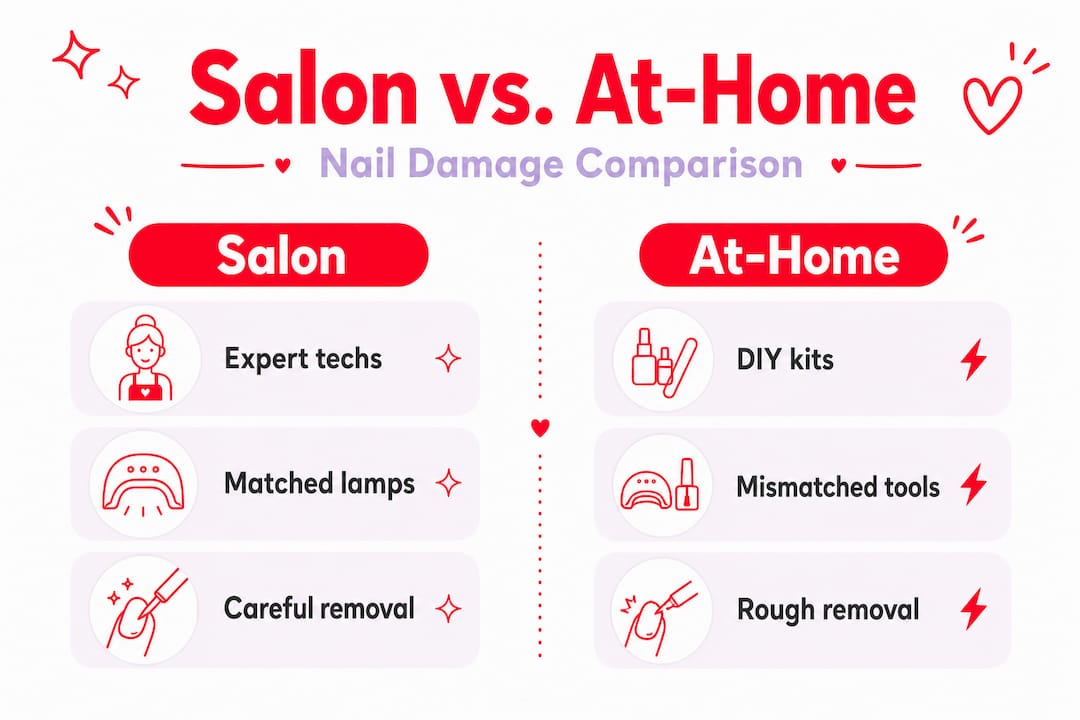
Here is a direct comparison of key factors:
Factor | Professional salon | At-home DIY |
Lamp and product match | Verified and consistent | Often mismatched |
Application thickness | Controlled and even | Frequently too thick |
Removal technique | Soaking and gentle tools | Peeling or over-filing |
Damage detection | Caught early by trained eye | Often missed until severe |
Infection risk | Low with proper sanitation | Higher without sterile tools |
Cost of fixing errors | Covered by salon expertise | Paid out of pocket |
The cost angle is worth dwelling on. A DIY gel kit might save you thirty to fifty dollars upfront. But if improper curing damages your nail plate, restoring it through professional treatments can cost several times that amount over the following months. Nail damage is not just an aesthetic problem. Severely thinned nails can become painful and take six months or more to fully grow out.
Improper cure settings or thick applications can be problematic in both settings, but professional controls greatly reduce risk. The key difference is training and equipment. A professional technician knows how to read the nail, adjust the formula, and respond if something feels off. At home, most people do not have that knowledge or those tools.
Common at-home mistakes that lead to the most damage include:
Using a lamp that is too powerful for the gel brand purchased
Applying multiple thick layers to get better coverage
Peeling off gel when it starts to lift instead of soaking it off
Skipping base coat to save time
Not using cuticle oil, which leads to brittle nails over time
Understanding the full range of nail salon service options available professionally helps put the DIY versus salon question in perspective. The value is not just in the final look. It is in the safety, the expertise, and the long-term health of your nails.
Why nail care myths still persist—and what actually works
After years of working with clients in Bradenton, one pattern stands out clearly. The most persistent nail care myths are not spread by bad information online. They are spread by bad experiences that people never got a proper explanation for.
Someone has a burning sensation during gel curing, assumes it is normal, and tells their friends it is just part of the process. Someone peels off their gel at home because soaking takes too long, their nails thin out, and they conclude that gel is damaging by nature. Neither conclusion is accurate, but both feel logical based on what that person experienced.
Home removal kits are one of the biggest culprits in ongoing nail damage. Most kits do not include proper foil wraps, the acetone concentration varies, and there is no guidance on how to tell when the gel is ready to come off without scraping. Clients who use these kits regularly often show up to salons with nails that look like they have been sanded down. The kit did not cause the damage directly. The lack of proper technique did.
Here is the contrarian take that surprises most clients: resting your nails is not always the answer. If your natural nails are healthy and your salon uses matched products with careful technique, taking a forced break does not add much. The biology of the nail does not require downtime if the application and removal are done correctly. What nails actually need is consistent moisture through cuticle oil, proper removal every time, and a technician who pays attention. Exploring eco-friendly nail care options is also worth considering, since lower-chemical formulas reduce the cumulative stress on nail tissue over time.
The real shift happens when clients stop accepting discomfort and damage as inevitable and start asking better questions. A burning sensation is not normal. Thin nails after removal are not normal. A good salon will welcome those questions, not dismiss them.
Find expert nail care and repair in Bradenton
If this guide has made one thing clear, it is that nail damage is preventable and treatable when you are in the right hands.
At TJ Nails, our team in Bradenton takes nail health seriously at every step, from the first visual assessment to the final coat of color. Whether you are recovering from a bad experience elsewhere or simply want to protect your nails while keeping them beautiful, we have the expertise and the products to help. Visit our Bradenton nail salon to explore service options, or check out our SNS dipping options for a gentler enhancement alternative. Book your appointment online at TJ Nails Bradenton and experience nail care that puts your health first, every single visit.
Frequently asked questions
What should I do if my nails are damaged after a salon visit?
Consult your salon right away for a proper assessment. Based on expert recommendations for lower-heat settings and careful removal, a skilled technician can recommend targeted strengthening treatments or a restorative break to encourage healing.
How can I tell if a salon follows best nail health practices?
Ask about their lamp and gel brand compatibility, and watch how they handle removal. Gel manicure heat spikes often result from lamp and product mismatches, so a salon that cannot answer this question clearly is worth reconsidering.
Is at-home nail art as safe as professional salon services?
Professional salons offer controlled environments, matched products, and trained technicians that significantly reduce the risk of nail damage. Professional controls greatly reduce risk compared to most DIY approaches, especially when it comes to curing and removal.
What is a “heat spike” during gel nails?
A heat spike is a sudden burning sensation that occurs when gel cures too aggressively under a lamp. Heat spikes from gel polish are abnormal and linked to curing issues like thick application or a mismatched lamp, and they should never be dismissed as a normal part of the process.
Recommended
Comments