
Medical Pedicure or Wait Months: How to Get Foot Care With Nail Fungus
- Bradenton Salon Today
- 1 day ago
- 7 min read
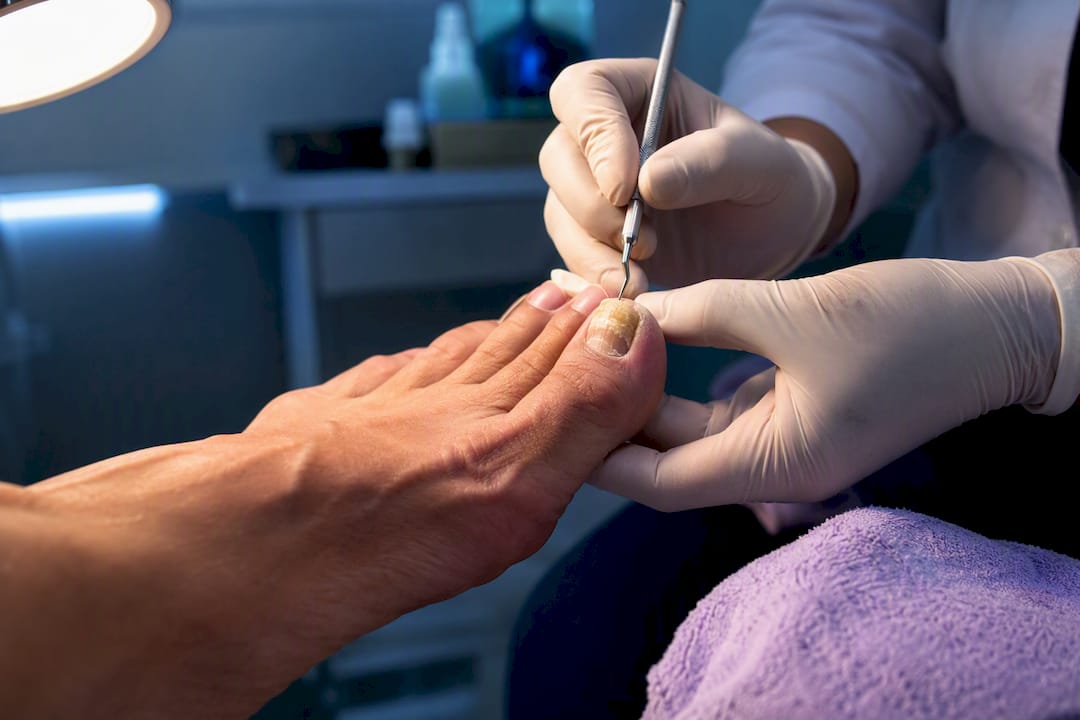
Skip the standard cosmetic pedicure until a podiatrist confirms what you’re dealing with and gets you started on treatment. A visible fungal nail is not automatically dangerous, but shared tools, footbaths, and aggressive filing raise the odds of spreading it or opening the door to a bacterial infection on top of it. The safer move is a clinician visit first, then a medical pedicure if you need foot care in the meantime, and expect treatment to run several months.
TL;DR:
Lab testing is essential for an accurate diagnosis, as conditions like psoriasis or trauma can mimic fungal nail infection.
Aggressive filing or trimming during a pedicure can worsen an active infection or open pathways for further bacterial entry.
Oral terbinafine is the most common treatment, but fungal nail clearance often requires several months to a year of consistent medication.
Medical pedicures are waterless, sterile, and safer options, especially for those with a diagnosed fungal infection or compromised immune systems.
Ensure tools are sterilized in an autoclave and avoid micro-injuries when getting foot care during active treatment to prevent infection recurrence.
Table of Contents
What Does Toenail Fungus Actually Look Like?
Fungal nail infection, known clinically as onychomycosis, usually shows up as yellow or white discoloration, a nail that’s thickening or crumbling at the edges, and sometimes a nail lifting away from the skin underneath. It often starts small, at one corner or the tip of the nail, and spreads slowly over months.
The problem is that several other conditions mimic it almost exactly. Psoriasis can pit and thicken nails in a way that looks fungal at a glance. A stubbed toe or repeated pressure from tight shoes can cause a subungual hematoma, a bruise under the nail that discolors it without any infection involved at all. Harvard Health points out that misdiagnosis is common enough that guessing wrong wastes months on treatments that were never going to work.
That’s why a lab-confirmed diagnosis matters before you spend money on either antifungal medication or cosmetic nail services:
Discoloration, thickening, and lifting suggest fungus but don’t confirm it.
Psoriasis, trauma, and bruising can look identical to a fungal infection.
A nail scraping sent for lab analysis is the only way to know for sure.
Why Salon Pedicures Can Make Nail Infections Worse
A standard salon pedicure was not built with an active fungal infection in mind, and that’s the core issue. Foot spas, metal files, and cuticle tools that aren’t sterilized between clients can carry fungal spores and bacteria from one person’s feet to the next. Cleveland Clinic podiatrist Joy Rowland has warned that unsafe or poorly sanitized pedicure tools are directly linked to fungal nail infections, which is exactly why she recommends seeing a clinician before booking cosmetic care.
The bigger risk isn’t just contamination. It’s what happens when a technician trims or buffs a nail that’s already thickened or damaged by fungus. That kind of aggressive filing creates micro-cuts in nail tissue that’s already compromised, giving bacteria or more fungus a direct entry point.
Fungal infections don’t always show up right away. Research summarized by The Conversation notes that salon surfaces and equipment can carry fungi and bacteria even after standard cleaning, and Cleveland Clinic has reported that infections from an unsafe pedicure can surface weeks or months after the actual appointment. That delay makes it easy to blame the wrong salon visit, or no salon visit at all.
A few groups face higher stakes here:
People with diabetes, where minor nail injuries can escalate into serious foot complications.
Anyone immunosuppressed, where a small fungal or bacterial entry point spreads faster than it would otherwise.
Anyone already showing signs of nail lifting, since lifted nail is an open pathway for organisms to get underneath.
How Do Doctors Diagnose and Treat Toenail Fungus?
A podiatrist starts with a visual exam, but a confirmed diagnosis usually means a nail scraping sent to a lab. That single step separates fungus from psoriasis, trauma, or bruising, and it keeps you from guessing your way through treatment for months.
Once fungus is confirmed, oral terbinafine is typically the first-line prescription for toenails, and the CDC notes that clearing a toenail infection can take several months to a year. That timeline surprises a lot of people. Even once the medication is working, the nail itself grows slowly, so a healthy-looking nail takes time to grow out from the base, regardless of how well the drug is working underneath.
Topical antifungal lacquers exist too, but they work best on mild infections that haven’t reached the nail bed, and they generally require longer treatment than oral medication.
Pro Tip: Don’t judge treatment progress by how the nail looks at week eight. Judge it by whether new, clear nail is growing in at the base. That’s the part that tells you the medication is actually working.
Seek urgent care rather than routine follow-up if you notice:
Redness spreading rapidly up the toe or foot.
Increasing pain, swelling, or warmth around the nail.
Any foot wound combined with diabetes, since those need faster attention than a standard fungus check.
What Is a Medical Pedicure and When Does It Make Sense?
A medical pedicure, sometimes called a medi pedi, is built around foot health rather than polish and design. Cleveland Clinic describes it as waterless and clinically focused, run by staff trained to work around active nail and skin conditions instead of ignoring them.
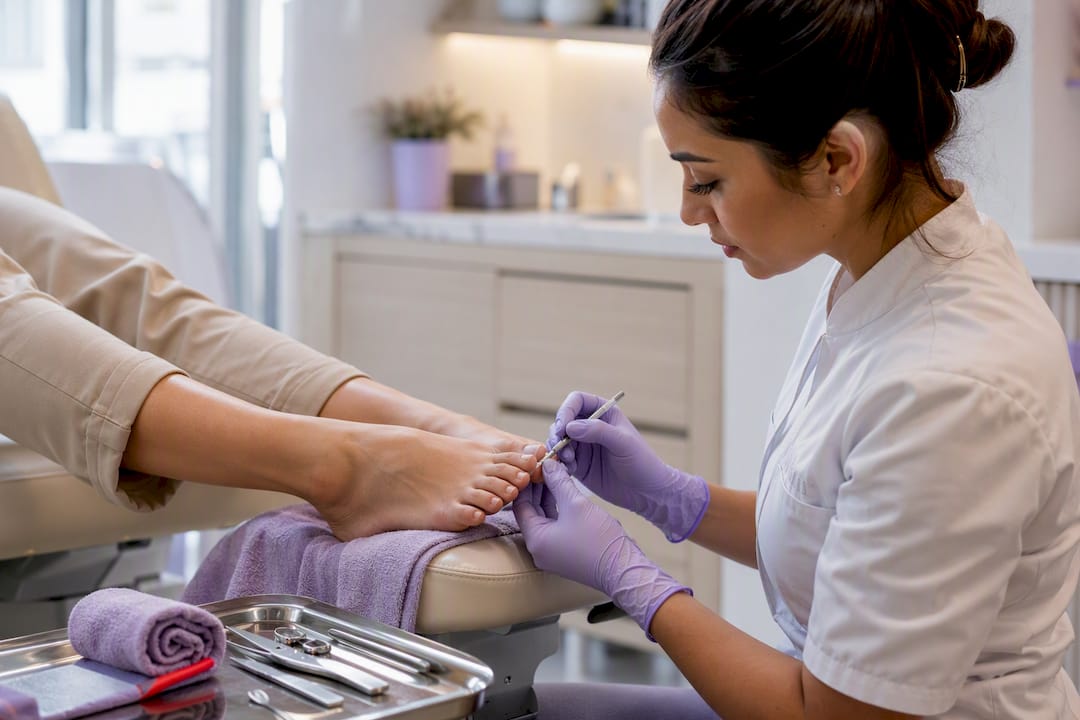
That waterless setup matters more than it sounds like it should. Shared footbaths are one of the more obvious ways organisms move between clients, and skipping the soak removes that pathway entirely. Instruments in a medical pedicure setting are also expected to meet a higher bar, with autoclave sterilization treated as the standard rather than a disinfectant wipe.
A medical pedicure is a reasonable middle ground in a few situations:
You’re mid-treatment and want basic foot care without risking spread or injury.
You’ve been cleared by a podiatrist but still want extra caution around the healing nail.
You have a foot condition alongside fungus, like dry skin or calluses, that needs attention without touching the infected nail itself.
Safety Checklist for Getting Foot Care During Treatment
If you can’t wait for full clearance and need basic foot care, ask the salon a few direct questions before you sit down, and treat the answers as a filter, not small talk.
Ask whether instruments are sterilized in an autoclave. Wiping tools with disinfectant is not the same as sterilizing them, especially for anything that touches nail or skin debris directly.
Confirm which implements are single-use versus reused, and ask to see fresh files or buffers opened in front of you.
Request no cuticle cutting and no aggressive buffing near the affected nail, since that’s exactly the kind of micro-injury that lets fungus or bacteria go deeper.
Skip the footbath if you can, or ask whether the basin uses a disposable liner.
After the visit, disinfect your own pedicure tools and treat the inside of your shoes, since fungal spores can linger there too.
Pro Tip: Bring your own file and buffer to any appointment during active treatment. It’s a small habit that removes one entire category of risk.
When Can You Go Back to a Regular Pedicure?
Go by your podiatrist’s assessment, not by how the nail looks in the mirror. A nail can appear mostly normal while fungus is still active underneath, and a clinician exam (sometimes with a follow-up scraping) is the only reliable way to confirm clearance.
Expect the process to run longer than you’d guess. Even with oral terbinafine working as intended, the CDC notes that new, healthy nail has to grow out from the base, which takes months regardless of how well the medication is performing.
Once you’re cleared, keep it that way with basic habits: dry your feet fully after showering, rotate breathable shoes, and change socks daily, all steps the CDC lists as genuinely effective prevention. If you polish again, ask about antifungal-safe formulas rather than sealing a nail that’s still recovering.
Balancing Self-Care and Safety
A pedicure isn’t a frivolous thing to want. It’s often the one part of the week that feels like actual self-care, and telling someone to just skip it for months undersells how much that matters to people. But wanting one and needing one right now are different questions, and the honest answer is that a fungal infection changes the math for a while.
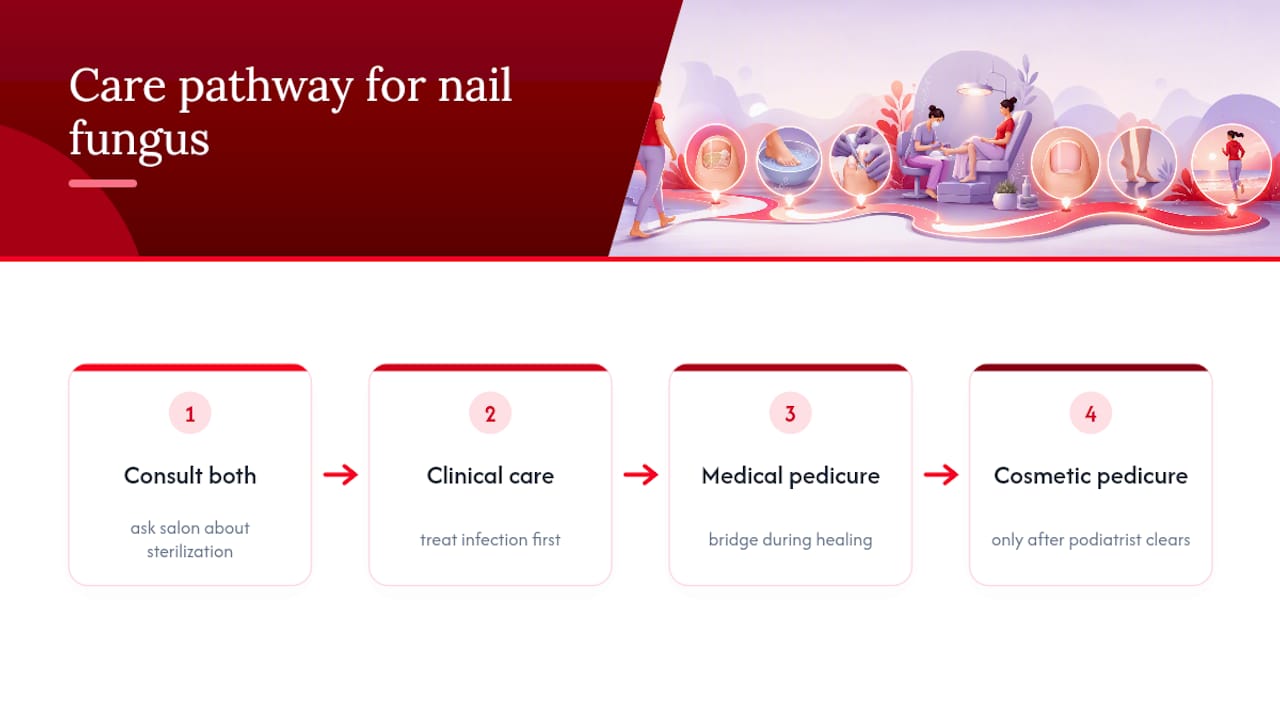
The move that actually works is treating your salon and your podiatrist as two halves of the same conversation instead of separate errands. Ask the salon about sterilization before you book anything. Ask the podiatrist how soon a medical pedicure might be reasonable given your specific case. Most people land on some version of clinical care now, medi pedi as a bridge, and full cosmetic pedicures once a professional actually says so.
— MinhHieu
Getting Foot Care in Bradenton While You’re Being Treated
Some nail salons promote the principle of prioritizing sterilization before cosmetic services. Every tool that touches skin or nail tissue goes through the same infection-control standards that matter most when a client is mid-treatment for a fungal or bacterial nail issue, not just a quick wipe-down between appointments.

If you’re currently working with a podiatrist, get that diagnosis and treatment plan locked in first. Once you have it, salons can discuss appropriate services at that time, such as medical-style pedicures or scaled-back options that avoid the infected nail while caring for the rest of your feet. Bring your own file if you’d like extra peace of mind. You can check appointment availability and book online for a visit that works around where you are in treatment, not against it.
This article is general information, not a substitute for advice from a qualified doctor. Consult a qualified healthcare professional about your own circumstances before acting on anything here.
Sources
Recommended
Comments