
Stop Peeling Nails in a Few Weeks: Causes and Salon Safe Fixes
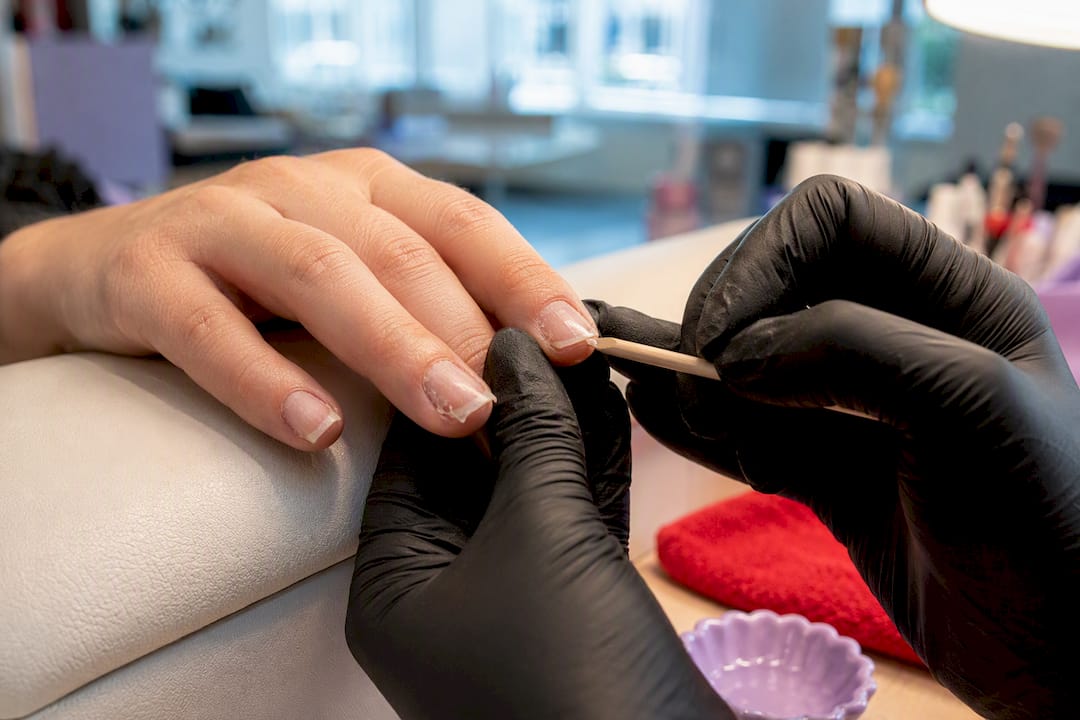
Peeling nails most often result from repeated wet and dry cycles, chemical exposure, or mechanical damage rather than serious illness. Cutting back on soaking, sanitizer, and acetone while moisturizing daily fixes most cases within a few weeks. If peeling comes with pain, dark streaks, thickening, or shows up on both fingernails and toenails at once, that pattern points toward an internal cause worth checking with a clinician.
TL;DR:
Most peeling nails result from repeated exposure to water, chemicals, or mechanical trauma, with proper moisturization and protective habits eliminating most cases within weeks.
Nail peeling affecting both fingers and toes often indicates an internal health issue, such as fungal infection, nutrient deficiency, or systemic disease, requiring medical assessment.
Applying moisture immediately after washing, wearing gloves during chores, and avoiding harsh removers are key home strategies to support nail recovery.
Nail hardeners containing formaldehyde and aggressive buffing treatments can worsen nail health; opting for gentle, oil-based products and low-trauma removal methods is recommended.
Signs like pain, dark streaks, thickening, or multiple nails affected call for professional diagnosis, with tests for infections, deficiencies, or underlying systemic conditions necessary before treatment.
Table of Contents
What Causes Nails to Peel? Common External Factors
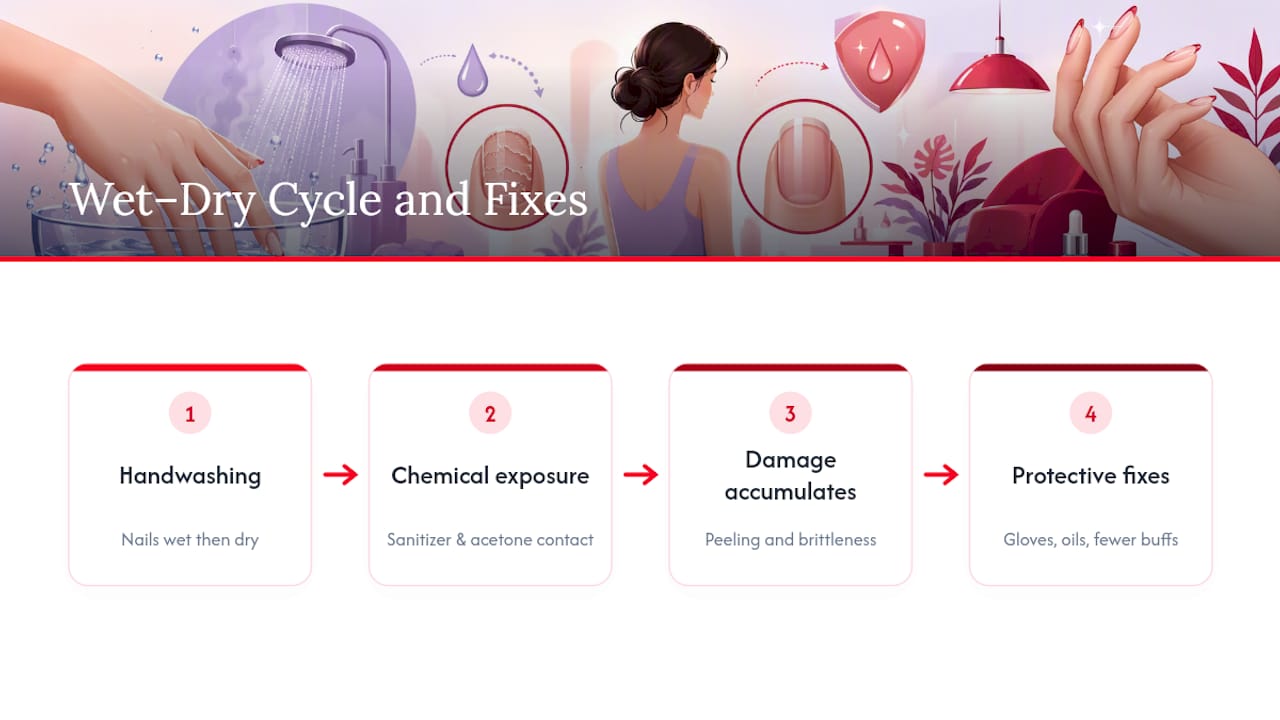
Most peeling starts with something you’re doing to your hands, not something wrong inside your body. The nail plate is made of layers of a protein called keratin, held together by a kind of cellular glue. Swelling that glue with water, then drying it out again and again, weakens the bond between layers until they start to separate. That is the mechanism behind onychoschizia, the clinical term for splitting or peeling nails.
Here’s what drives that damage in daily life:
Wet to dry cycles: Washing dishes, showering, and frequent hand washing repeatedly swell and shrink the nail plate, which breaks down its layered structure over time.
Chemical exposure: Acetone, nail polish remover, solvents, and even dish soap and sanitizer strip natural oils and weaken keratin bonds.
Mechanical trauma: Biting, picking at polish, using a nail as a makeshift screwdriver or box opener, and aggressive filing all stress the nail plate directly.
Poor enhancement removal: Forcibly peeling off acrylics, gels, or press-on nails tears away healthy nail layers along with the product, which is one of the most common causes of severe peeling.
Occupation and climate: Cooks, bartenders, housekeepers, and hair stylists face constant water and chemical contact, and low humidity in winter or in air-conditioned spaces dries nails out further.
The Mayo Clinic notes that repeated wetting and drying, along with harsh chemical exposure, are among the most common causes of brittle, peeling nails, and it recommends cotton-lined rubber gloves for cleaning as a first defense. Dermatologists describe the underlying process as a loss of cell-to-cell adhesion within the nail plate, which explains why both over-hydration and dehydration can trigger the same symptom.
Could Peeling Nails Signal an Internal Health Issue?
Sometimes the nail plate is fine and the problem is coming from inside the body. Roughly half of all nail dystrophies, meaning changes in nail texture or structure, trace back to fungal infection, with the rest linked to trauma, inflammatory skin conditions, systemic disease, or nutrient shortfalls. About 10% of all skin conditions dermatologists see actually involve the nail unit.
A few patterns to watch for:
Nutritional deficiencies: Low iron, biotin, vitamin D, or zinc can produce thin, brittle, peeling nails, often alongside fatigue or pale skin. The NIH’s iron fact sheet is a reference clinicians use when evaluating deficiency-related nail changes.
Thyroid, kidney, or liver disease: These conditions can produce peeling nails plus other clues, like ridging, spooning, yellowing, or changes in the skin and hair.
Fungal infection: Look for thickening, yellow or white discoloration, and crumbling that persists rather than simple layer separation.
Single-nail changes: One damaged nail usually points to local trauma, not systemic illness.
One useful diagnostic shortcut: if only fingernails or only toenails are peeling, an external cause is more likely; when both are affected at once, an internal cause becomes more plausible.
How Do You Treat and Prevent Peeling Nails at Home?
Fixing peeling nails is mostly about breaking the wet/dry cycle and rebuilding moisture, not finding a miracle product. Consistency matters more than any single ingredient.
Daily moisture routine. Apply a nail oil, such as jojoba or vitamin E oil, or a cream containing urea or ceramides immediately after washing your hands, while the nail plate is still slightly damp. That timing locks in moisture instead of letting it evaporate.
Protective habits. Wear cotton-lined rubber gloves for dishes and cleaning, limit hand sanitizer and acetone contact, and resist the urge to buff your nails smooth every time you notice a ridge. Frequent polish changes with acetone remover compound the damage, so space them out when you can.
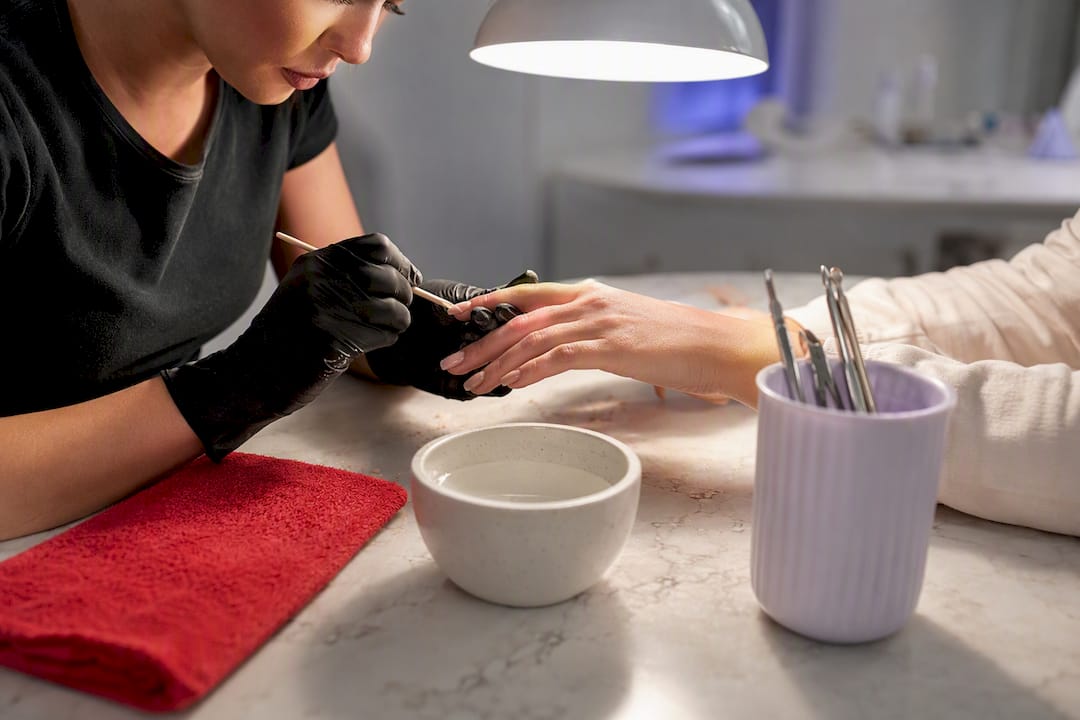
Salon-safe requests. Ask for gentle soak-and-file removal rather than forcible peeling of acrylics or gels, and request a low-trauma shape and a hydrating finish instead of heavy buffing. Guidance from the American Academy of Dermatology backs acetone-free removers and professional, low-trauma removal as ways to prevent long-term nail damage.
What to skip. Nail hardeners that contain formaldehyde-releasing ingredients can make nails stiffer but more prone to cracking. Harsh reagent-based removers do the same. Simpler oil-based products tend to work better for peeling nails.
Pro Tip: Keep a small bottle of nail oil at your sink, not in a drawer. If it’s not within reach, you won’t use it after every wash, and that’s exactly when it works best.
Expect gradual improvement. Cleveland Clinic notes that nail plate recovery from external damage typically takes weeks to a few months, while fungal or systemic causes can take considerably longer to resolve fully.
When Should You See a Doctor About Peeling Nails?
Home care handles most cases, but certain signs mean it’s time to get checked out.
Watch for red flags. Rapid onset, pain, bleeding, dark streaks under the nail, involvement of multiple nails, or no improvement after several weeks of consistent home care all warrant a professional look.
Expect specific tests. A clinician may take a nail clipping for microscopy or fungal culture, run a KOH prep to rule out infection, or order blood work checking iron levels and thyroid function. Merck Manual notes that microscopic exam of nail clippings is standard practice for ruling out hidden fungal infection before starting long-term treatment.
Know the treatment path. Depending on findings, treatment might mean topical or oral antifungal medication, correcting a nutrient deficiency, or managing a thyroid disorder. MedlinePlus lists infections, psoriasis, and endocrine, kidney, or liver disease among the systemic conditions clinicians screen for when nail changes don’t add up to simple wear and tear.
What Should You Ask for at the Nail Salon?
At check-in, request gentle, soak-based removal instead of forced peeling, ask your technician to skip heavy buffing, and request a hydrating oil or cream finish. Certified technicians using sterilized tools matter even more when nails are already compromised, since a rough file or a contaminated tool can turn a cosmetic problem into an infection. For specifics on what to say and what technique to request, our guide on a low-trauma manicure for brittle nails walks through it, along with safe acrylic removal techniques if you’re dealing with damage from a previous enhancement.
The Real Fix for Peeling Nails Isn’t What Most People Try First
Most people reach for a nail hardener the moment their nails start peeling, and that’s usually the wrong move. A stiffer nail isn’t a healthier nail. It’s often a more brittle one, prone to snapping instead of gently splitting, which can make the damage worse rather than better.
The research here points to a simpler priority order: identify whether the pattern looks external or internal first, then treat accordingly. Readers skip straight to products because it feels like action, but if the real driver is six months of dish soap and hand sanitizer, no oil or cream fixes that without a change in habits alongside it. Conventional advice tends to lump “moisturize more” and “stop biting” into one vague bucket of self-care, when the more useful frame is mechanical: you’re breaking a bond in the nail plate every time you wet and dry it, and every product decision should either protect that bond or rebuild it.
What I’d prioritize first, before buying anything new: gloves for wet work and a genuinely low-trauma removal process at your next salon visit. Everything else is maintenance.
— MinhHieu
A Gentler Path Back to Healthy Nails
If you’ve tried the gloves, the oils, and the patience, and your nails are still splitting, a professional reset often gets you there faster than another round of DIY fixes. A professional nail salon treats damaged, peeling nails as a repair job, not just a polish job. Natural nail care services often focus on gentle, soak-based removal and hydration-based finishes rather than aggressive buffing or forced product removal, which is a low-trauma approach that helps compromised nails recover instead of splitting further.

Whether you need a restorative manicure built for damaged nails or want a second opinion on why your last set of acrylics left your nails thin, book a consultation and we’ll assess your nails in person before recommending any service. You can schedule an appointment online at our Bradenton location today.
Where This Information Comes From
Mayo Clinic covers practical do’s and don’ts for nail health, including glove use and moisturizing routines.
Merck Manual explains nail dystrophies and when fungal testing is warranted.
MedlinePlus details systemic conditions linked to nail abnormalities.
Healthline offers patient-friendly guidance on distinguishing external from internal causes.
This article is general information, not a substitute for advice from a qualified doctor. Consult a qualified healthcare professional about your own circumstances before acting on anything here.
Sources
FAQ
What deficiency causes nails to peel?
Iron deficiency is one of the most commonly cited nutritional causes of peeling or brittle nails, though low biotin, vitamin D, or zinc can also contribute. A blood test is the only reliable way to confirm a deficiency rather than guessing from nail appearance alone.
What is the best treatment for peeling fingernails?
For most people, the fix is reducing wet and dry cycles, wearing gloves for chores, and applying nail oil or a urea-based cream right after washing. If home care does not improve things within a few weeks, or a salon visit for gentle, low-trauma nail care doesn’t help, a clinician can test for fungal infection or an underlying deficiency.
What does it mean if my nails are peeling?
It usually means the layers of your nail plate have lost their bond, most often from repeated water exposure, chemicals, or physical damage. Less often, it signals a nutrient deficiency, thyroid issue, or fungal infection, especially if both fingernails and toenails are affected at the same time.
What do liver failure nails look like?
Nails affected by liver disease can appear pale or whitened, sometimes with a band of darker color near the tip, a pattern distinct from the layered splitting typical of everyday peeling nails. Peeling alone is rarely a sign of liver failure, but nail changes paired with jaundice, fatigue, or abdominal swelling warrant prompt medical evaluation.
Recommended
Comments