
2–4 Week Face Waxing Schedule by Zone, Dermatology Safe Timing
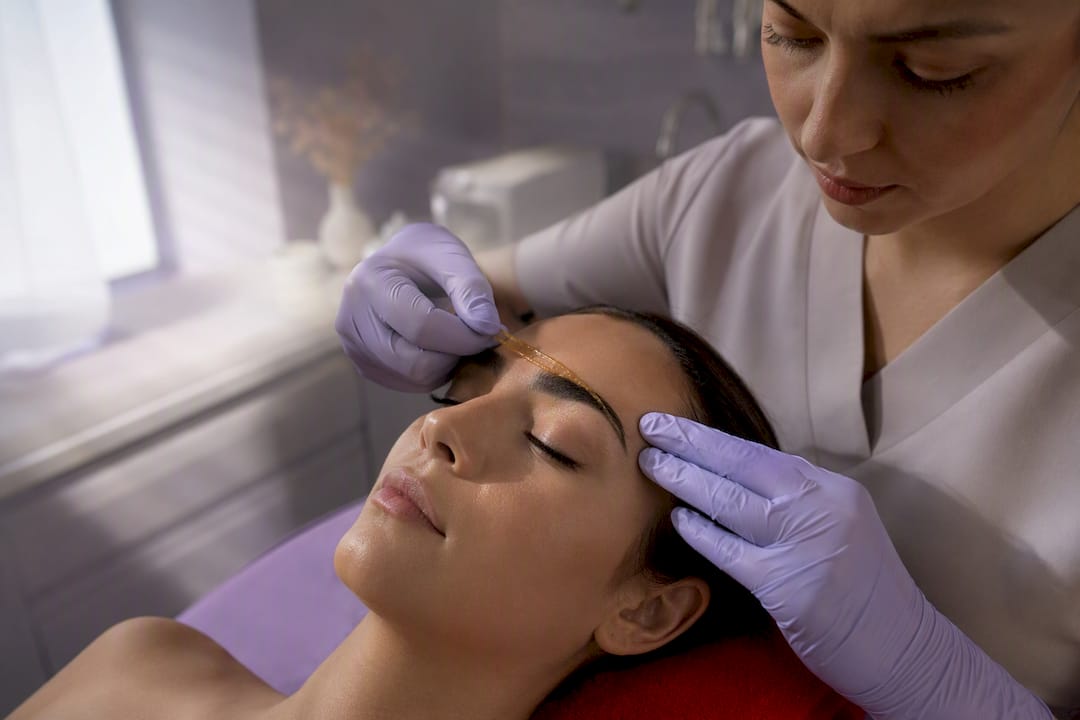
Most facial waxing clients settle into a rhythm of a few weeks, adjusted for how fast their hair grows back and how their skin recovers between sessions. There’s one caveat that overrides any calendar: if you’re using a topical retinoid or you’re on isotretinoin, waxing needs to wait, sometimes for months, because treated skin tears more easily and scars more visibly.
TL;DR:
Waxing intervals should be based on individual regrowth patterns and skin recovery, typically every 2 to 4 weeks per zone, not fixed dates.
Hair length must be between a quarter to three quarters of an inch for effective waxing and to prevent unnecessary irritation or cost.
Avoid waxing if using isotretinoin or topical retinoids in treated areas, and wait at least six months after isotretinoin therapy.
Sensitive or acne-prone skin may require longer intervals than resilient skin to prevent redness, breakouts, or scarring.
Proper post-wax care, including cold compresses and gentle cleansing, is essential to reduce irritation and prevent ingrown hairs.
Table of Contents
Waxing Frequency for the Face: A Schedule by Zone
There’s no single number that works for every part of the face, because hair on your brows, upper lip, and chin doesn’t grow at the same rate. Treating “facial waxing” as one uniform interval is the most common scheduling mistake, and it’s usually what leads to over-waxing an area before it’s actually ready.
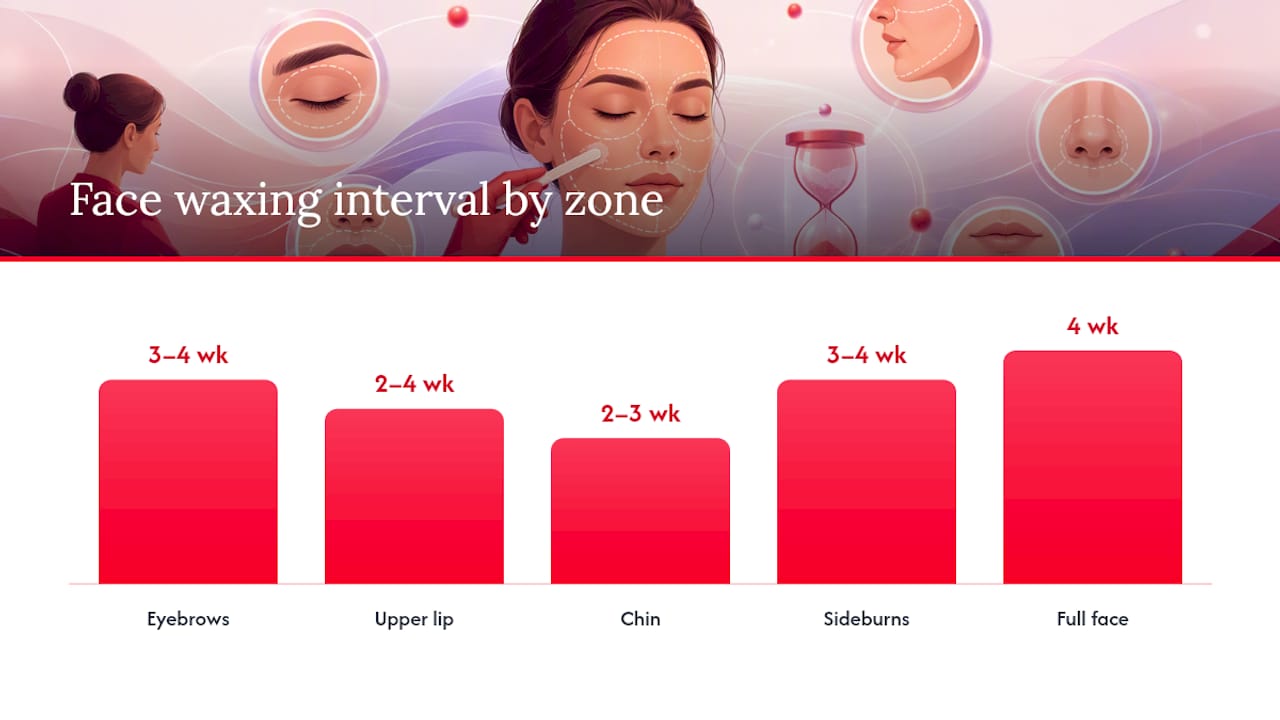
Here’s a realistic starting point for each zone, based on typical regrowth patterns and dermatology guidance on hair removal:
Eyebrows: every 3 to 4 weeks. Brow hair regrows slowly and unevenly, so waxing too soon just removes a handful of stray hairs and irritates skin that hasn’t recovered yet.
Upper lip: every 2 to 4 weeks. This is thinner, finer hair, and it tends to reappear faster than eyebrow hair, especially for people with darker or coarser facial hair.
Chin: every 2 to 3 weeks. Chin hair is often coarser and can grow back with visible stubble faster than the lip or brow area.
Sideburns: every 3 to 4 weeks, similar pacing to eyebrows.
Full face: treat monthly as your starting baseline, then adjust the next appointment based on which zones show regrowth first.
The interval you land on should follow what you actually see in the mirror, not a fixed number of days. The American Academy of Dermatology notes there’s no universal medical schedule for waxing. Regrowth speed varies by individual and by body area, which is exactly why a chin might need waxing every two weeks while the same person’s brows can comfortably stretch to four.
Hair length matters as much as the calendar date. Wax needs something to grip, and dermatology guidance points to roughly a quarter inch to three quarters of an inch as the workable range. Hair that’s shorter than that will slip through the wax without being pulled, which means you paid for a session that barely worked and irritated skin for no payoff. If you check before an appointment and the regrowth looks more like faint stubble than actual hair, you’re better off trimming lightly or just waiting another week rather than booking early.
There’s a flip side too. Waxing sparse, barely visible regrowth doesn’t just waste a trip. It repeatedly stresses the same follicles before they’ve had a chance to settle, which is a pattern Cleveland Clinic flags as a driver of ongoing irritation rather than smoother skin. Waxing works by pulling hair out at the root, and that root area stays somewhat vulnerable for a short window afterward. Come back too soon, and you’re reopening that vulnerability before it’s closed.
A practical rule that professionals in the field use: rather than waxing a zone the moment any hair reappears, wait until there’s a consistent, workable amount across the area. One or two visible stragglers on your chin don’t justify a full appointment. Patchy but full regrowth across the zone does. This single adjustment, waiting for coverage instead of waxing at the first sign of stubble, cuts down on both irritation and how often you’re in the chair, which is a win either way.
How Your Hair Cycle, Hormones, and Skin Type Change Your Ideal Interval
Hair grows in cycles, not in a straight line, and that’s the biological reason your eyebrows and your chin don’t need waxing on the same schedule. Each follicle moves through a growth phase, a transition phase, and a resting phase, and the length of that cycle differs by body region. Facial hair on the chin and lip often has a shorter, faster cycle than brow hair, which is part of why those areas tend to need more frequent attention even on otherwise similar skin.
Hormones can throw that whole rhythm off. If you notice facial hair becoming heavier, coarser, or more widespread than it used to be, especially during menopause or with a condition like PCOS, waxing more often only manages the symptom you can see. It doesn’t address what’s driving the change. A dermatologist can evaluate whether the pattern points to a hormonal cause and talk through options beyond waxing, including laser hair reduction or prescription creams, if that’s the direction you want to go.
Skin type is the other major variable, and it’s the one people underestimate most. Sensitive or acne-prone facial skin doesn’t tolerate the same waxing cadence as resilient skin, even in the same zone. If you’re seeing redness that lingers, breakouts that follow every session, or visible irritation that takes days to calm down, that’s your skin telling you to stretch the interval, not push through it.
A few lifestyle factors shift the equation further:
Recent sun exposure or a fresh tan makes skin more reactive to waxing and raises the risk of uneven pigmentation afterward.
Chemical peels in the past week or two leave skin thinner and less able to handle the pulling force of waxing.
Regular exfoliation between sessions actually helps, since it keeps dead skin from trapping regrowth and contributing to ingrown hairs.
Frequent heat exposure, saunas, hot yoga, right before a scheduled wax can leave skin more sensitive than usual on appointment day.
Pro Tip: Keep a simple note on your phone logging the date of each facial waxing session by zone. After two or three cycles, you’ll have your own personalized interval instead of guessing from a generic range.
When to Delay Waxing: Medications, Peels, and Skin Conditions
Some situations aren’t about timing preference. They’re about avoiding real skin damage, and the rules here come straight from clinical guidance rather than personal comfort.
Isotretinoin is the clearest line in the sand. If you’re currently taking it, waxing is off the table, and that restriction extends to six months after you stop the medication, because skin treated with isotretinoin becomes significantly more prone to tearing and scarring. Topical retinoids carry a smaller but still real version of the same risk. Products containing tretinoin, adapalene combined with benzoyl peroxide, or newer options like trifarotene increase skin fragility, and Mayo Clinic’s guidance on trifarotene specifically flags this kind of topical treatment as a reason to avoid waxing the treated area. The usual advice is to pause these products for several days before and after a waxing appointment, not just skip the day of.
Waxing pulls hair from the follicle, and skin that’s already been thinned or sensitized by a retinoid, a recent peel, or isotretinoin doesn’t have the same buffer against that pulling force. The result can be abrasion, prolonged redness, or in more serious cases, scarring that outlasts the hair regrowth by months.
Beyond medications, there’s a short list of conditions that should always postpone a booking:
Sunburned skin, even mild sunburn, on the area you’d be waxing.
Active rash, eczema flare, or visible inflammation.
Broken, peeling, or recently scabbed skin.
Any known allergy to wax ingredients or fragrance additives used in the product.
Pregnancy, where skin sensitivity can shift and should be flagged to your technician even if waxing itself is generally considered safe.
Before any appointment, tell your technician about every topical product you’re using on your face, any procedures you’ve had in the past two weeks, and any allergies or pregnancy status. This isn’t paperwork for its own sake. A trained technician can only make a good call on whether to proceed if they actually know what’s on your skin, and bringing product labels or a simple list speeds that conversation up considerably.
Post-Wax Care and How to Handle Bumps or Irritation
The first 48 to 72 hours after waxing set the tone for how your skin recovers, and most irritation problems trace back to what happens in that window, not the waxing itself.
Apply a cold compress to calm redness and swelling right after your session.
Clean gently with a mild, fragrance-free cleanser rather than anything exfoliating or medicated.
Moisturize with an oil-free, non-comedogenic product to avoid clogging follicles that are still slightly open.
Skip heat and heavy sweating for two to three days, including hot showers, saunas, and intense workouts, since heat aggravates freshly waxed follicles.
Avoid picking or aggressive exfoliation on the area, even if it feels bumpy or itchy.
Ingrown hairs are the most common follow-up complaint, and they show up when regrowing hair curls back under the skin instead of breaking through cleanly. Gentle exfoliation starting a few days after waxing, once any redness has settled, helps prevent this. If a particular spot keeps producing ingrown hairs despite consistent gentle exfoliation, that’s a signal to stop waxing that specific area and consider alternatives like topical retinoids under a dermatologist’s guidance, chemical exfoliants, or a referral for laser or electrolysis.
Most redness fades within a day. If swelling lasts more than 48 hours, or you notice pus, fever, or redness spreading beyond the treated area, see a dermatologist rather than waiting it out. Those are signs of infection, not normal post-wax sensitivity, and they need attention faster than a follow up wax appointment would come around.
What a Real Waxing Appointment Should Look Like
A well-run facial waxing appointment starts before the wax ever touches your skin. A good technician asks about medications, recent sun exposure, and any peels or treatments in the past couple of weeks, then checks hair length to confirm the area is actually ready. If regrowth looks too short, a technician worth trusting will tell you to come back rather than wax it anyway just to fill the appointment slot.

From there, hygiene matters as much as technique: fresh wax application per client, clean tools, and a clear explanation of aftercare before you leave the chair. If you’re weighing waxing against other removal methods, it helps to understand why waxing works the way it does compared to shaving or depilatory creams, since the root-removal mechanism is exactly why timing and skin recovery matter more here than with other methods.
Booking smart means working backward from your own regrowth pattern, not a generic date on the calendar, and bringing a quick note or photo of anything you’re using on your skin so the technician isn’t guessing.
What Actually Matters When You’re Setting a Waxing Schedule
Most advice on facial waxing frequency treats it like a fixed appointment interval, and that’s the part I’d push back on hardest. The real skill isn’t memorizing “every three weeks.” It’s reading your own skin and hair, zone by zone, and adjusting from there.
The conventional wisdom undersells how much medication history should drive scheduling. People treat retinoid use and waxing as two separate beauty decisions, when they’re directly connected, and the isotretinoin six-month rule in particular gets skipped far more often than it should. If you take one thing from this article, take that: check what’s on your skin before you check the calendar.
What I’d prioritize first is the coverage rule from the recommended schedule section, waiting for a workable amount of regrowth across a zone rather than waxing at the first stray hair. It’s a small habit shift that solves more irritation complaints than any product switch ever will.
— MinhHieu
Book Your Facial Waxing Appointment at TJ Nails
TJ Nails gives you the safety checks this article just walked through, done in person, without you having to guess your own regrowth timing. The salon offers eyebrow waxing at $10, upper or lower lip waxing at $8, chin waxing at $15, sideburns at $20, and full face waxing at $48, all performed by technicians trained to check hair length and skin condition before they start.

Cleanliness and a friendly, unhurried environment are part of TJ Nails’ local reputation, and Sunday hours offer more flexibility for scheduling wax appointments. Before you come in, jot down any topical retinoids, recent peels, or medications you’re using so your technician can make the right call on the spot. Ready to get on a schedule that actually fits your skin? Book your facial waxing service with TJ Nails and let a trained technician handle the timing from here.
Sources
FAQ
How Often Should I Wax My Face?
Most people do well waxing facial areas every 2 to 4 weeks, though brows and sideburns often stretch to 3 to 4 weeks while the chin and upper lip may need attention closer to every 2 to 3 weeks. Base your actual interval on visible regrowth and how quickly your skin recovers, not a fixed date, since regrowth speed varies by individual and body area.
How Do Koreans Remove Facial Hair?
There’s no single method specific to any one country or population. Common approaches for facial hair removal worldwide include waxing, threading, and dermaplaning, with threading offering a heat-free alternative that some people find gentler on sensitive areas like the brows.
Will My Chin Grow Back Thicker if I Wax It?
No. Waxing pulls hair from the root, but it doesn’t change the thickness, color, or growth rate of the hair that regrows. Hair can sometimes appear coarser after any regrowth simply because a blunt-cut hair from shaving looks different than one growing back naturally, but waxing itself doesn’t cause that effect.
What Is the 48-Hour Rule for Waxing?
The 48-hour rule refers to avoiding heat, heavy sweating, and hot showers or baths for roughly 48 to 72 hours after a waxing session, since freshly waxed follicles are more vulnerable to irritation during that window. It also applies to seeking medical attention: if redness or swelling lasts beyond 48 hours, that’s a signal to see a dermatologist rather than wait it out.
How Much Does Facial Waxing Cost at TJ Nails?
TJ Nails prices facial waxing by area: eyebrow waxing is $10, upper or lower lip waxing is $8, chin waxing is $15, sideburns are $20, and full face waxing is $48. Full details and booking are available on the waxing services page.
Recommended
Comments