
What Is a Nail Strengthener and How Does It Work?
- Bradenton Salon Today
- 1 day ago
- 7 min read
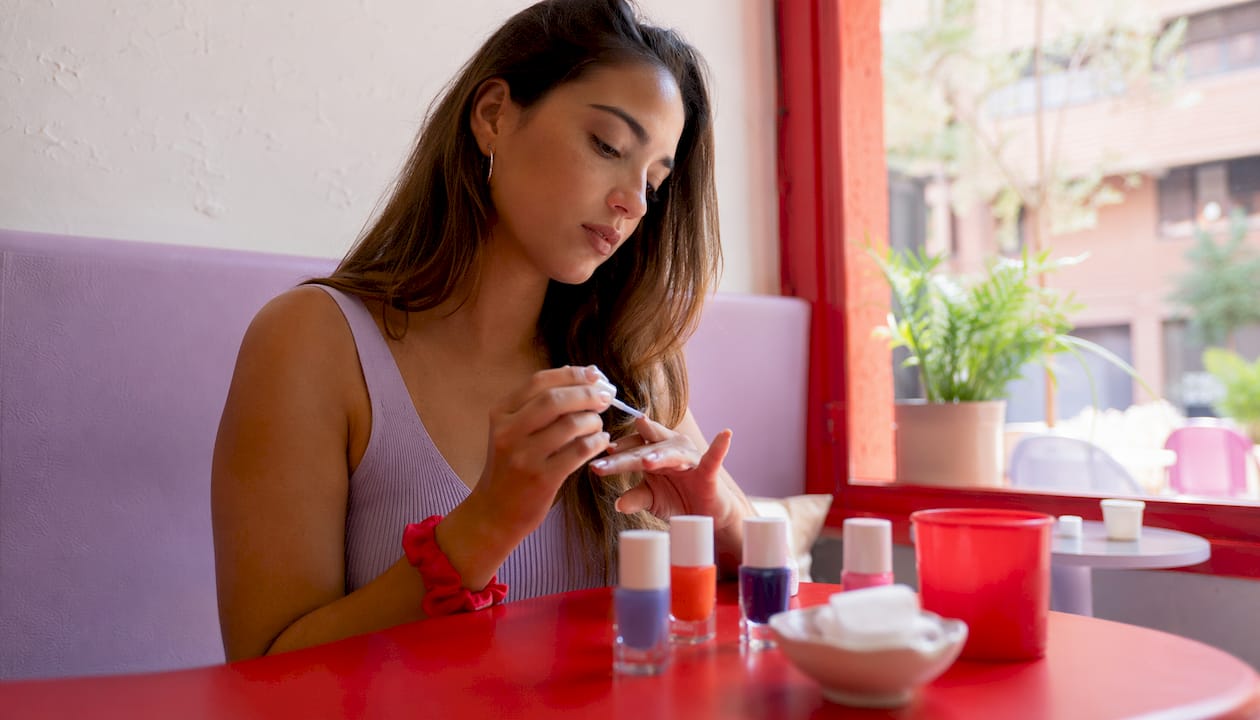
A nail strengthener is a topical, polish-like treatment applied directly to the natural nail plate to nourish, protect, and rebuild weak or damaged keratin. Used consistently, it can meaningfully reduce breakage over a few weeks of consistent use. It is not a fast-growth drug, and it cannot fix what’s happening inside your body on its own.
TL;DR: Strengtheners work best for brittle, splitting, or post-manicure-damaged nails. If your nails are already overly rigid, a hardener may make things worse, not better. Soft, peeling nails? A strengthener is likely your better starting point.
Table of Contents
What is a nail strengthener doing to your nail plate?
Your nail plate is built from layers of compacted keratin protein. Daily exposure to water, detergents, acetone, and physical stress gradually strips moisture and weakens those layers. A nail strengthener works through two complementary mechanisms at once.
The first is surface protection: a film-forming layer that shields the nail from environmental damage and slows moisture loss. The second goes deeper. Ingredient penetration into the keratin structure is what separates a genuinely effective formula from one that just sits on top and looks shiny.
Here is how the key mechanisms break down:
Keratin and hydrolyzed protein delivery: Small protein molecules penetrate the nail plate and fill structural gaps, reinforcing the keratin matrix from within.
Humectants and oils: Ingredients like jojoba oil and glycerin attract and retain moisture, keeping the plate flexible rather than brittle.
Film-formers: Polymers create a surface barrier that reduces chipping and physical wear while the deeper ingredients do their work.
Vitamins and minerals: Biotin, vitamin E, and calcium support the nail matrix, the living tissue at the base where new nail cells are produced.
Cosmetic chemists point out that molecule size matters enormously here. A formula engineered to deliver hydrolyzed proteins and lipids into the plate will outperform one that simply deposits a brittle film on the surface, even if both bottles look identical on the shelf.
How does a nail strengthener differ from a nail hardener?
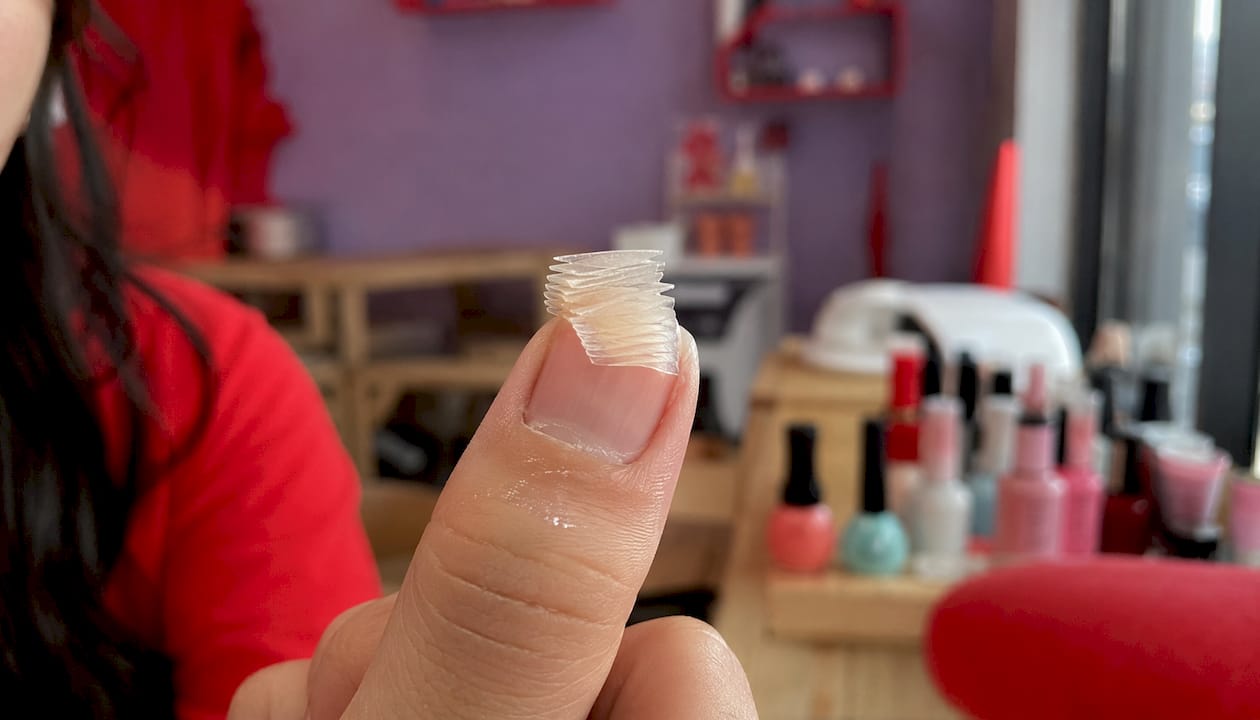
People use these terms interchangeably, but they describe genuinely different products with different goals.
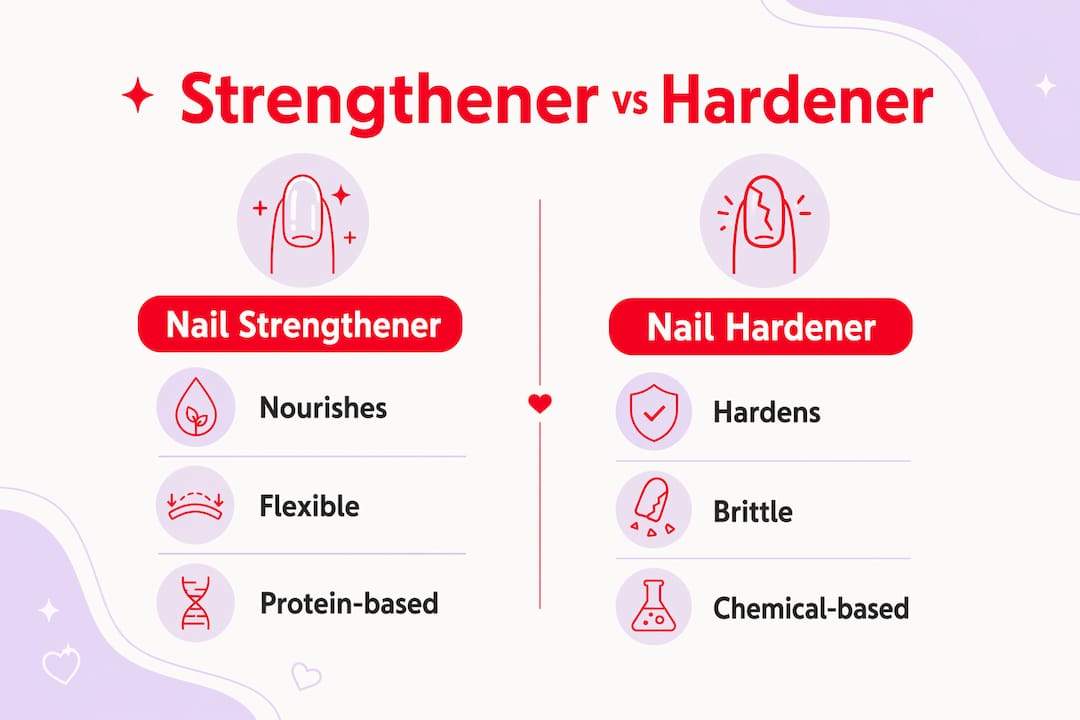
Feature | Nail Strengthener | Nail Hardener |
Primary goal | Nourish and rebuild from within | Create a rigid surface shell |
Effect timeline | Gradual (weeks to months) | Immediate |
Flexibility | Maintains or improves flexibility | Reduces flexibility |
Long-term outcome | Healthier, more resilient nail | Risk of increased brittleness over time |
Key ingredients | Hydrolyzed proteins, oils, vitamins | Film-formers, sometimes formaldehyde |
Best for | Soft, peeling, or post-damage nails | Temporarily fragile nails needing quick protection |
Nail strengtheners focus on improving overall nail health by promoting flexibility and resilience, while hardeners create immediate rigidity that can compromise long-term nail integrity. Dermatologists note that nails need a balance of flexibility and strength. Forcing them to be too rigid raises the real risk of snapping rather than bending under pressure.
Ingredient to avoid: Formaldehyde-containing hardeners are permitted in U.S. cosmetics at concentrations up to 5%, but clinicians consistently warn against them. Users often notice an initial improvement, then watch their nails separate and worsen over time as the formaldehyde causes dehydration and paradoxical brittleness.
Do nail strengtheners actually work?
The short answer is yes, with conditions attached. Strengtheners can significantly reduce breakage caused by weakness or brittleness, but they cannot make nails indestructible, and they cannot compensate for nutritional deficiencies or ongoing damage from harsh salon practices.
Expert consensus points to two factors that determine whether a product delivers: formulation quality (specifically, whether active ingredients penetrate the keratin plate) and behavioral changes made alongside product use. Reduced acetone exposure, glove use for household chores, and consistent cuticle moisturization all amplify results.
Here is a realistic timeline:
Milestone | Timeframe | What affects it |
Reduced flaking and surface smoothness | 2–4 weeks | Hydration level, product consistency |
Noticeable resilience improvement | Formula quality, nutrition, acetone use | |
Full regrowth of damaged nail plate | a longer period | Growth rate, ongoing damage, diet |
Deficiencies in biotin, iron, and calcium can limit outcomes regardless of how good the product is. If your nails fail to improve after 6–8 weeks of correct use, a blood panel is worth discussing with your doctor before spending more on products.
How to apply a nail strengthener correctly
Getting the application right matters as much as choosing the right product. Here is the routine that most nail professionals recommend:
Remove all existing polish using an acetone-free remover. Acetone strips moisture and undermines the strengthener before it starts.
Clean and dry nails completely. Any oil or residue on the plate prevents adhesion.
Apply one thin coat of strengthener to bare nails, treating it as a base layer. Cap the free edge (the tip) to seal it.
Let it dry fully before applying color polish on top, typically 60–90 seconds.
Reapply 2–3 times per week, or as directed by the product. Most formulas benefit from a fresh thin coat rather than building up thick layers.
Remove and restart every 1–2 weeks using a gentle, acetone-free remover. Letting product build up can trap moisture and cause lifting.
Pro Tip: Massage a cuticle oil into the base of each nail every night. The cuticle seals the nail matrix, and keeping it hydrated directly supports the quality of new nail growth coming through.
Pair your nail care routine with dietary awareness. If you are eating a restrictive diet or have recently been ill, your nails will reflect that, and no topical product fully compensates.
What to look for when choosing a nail strengthener
The ingredient list tells you more than the marketing copy on the front of the bottle.
Look for | Avoid |
Hydrolyzed keratin or wheat protein | Formaldehyde or formalin |
Jojoba oil, argan oil, or vitamin E | Harsh solvent-heavy formulas |
Phospholipids or ceramides | Products marketed as “hardening” without hydration |
Biotin or panthenol | Toluene or dibutyl phthalate (DBP) |
“Formaldehyde-free” label claim | Unlisted or vague “strengthening complex” |
A good formula reads something like: aqua, hydrolyzed keratin, panthenol, tocopheryl acetate, jojoba esters, phospholipids. That combination addresses both structural reinforcement and hydration. A formula leading with nitrocellulose and listing no proteins or oils is essentially just a film-former with a premium price tag.
Pro Tip: Before applying any new nail product, do a small patch test on one nail and wait 48 hours. Allergic reactions to acrylates and resins are more common than most people realize, and catching a reaction early prevents a lot of discomfort.
Nail serum treatments can complement a strengthener routine by delivering concentrated actives between polish applications.
Side effects and when to see a dermatologist
Most nail strengtheners are well-tolerated when used as directed. Problems usually arise from overuse, poor formulation, or an underlying condition the product cannot address.
Watch for these red flags:
Increasing brittleness or new cracking after starting a product (stop use immediately)
Pain, swelling, or redness around the nail fold
Nail plate separating from the bed (onycholysis)
Persistent discoloration that does not grow out
Allergic rash on fingers or surrounding skin
Brittle nails that fail to respond to topical treatment after consistent use are often signaling an internal issue. Ask your doctor about testing for iron-deficiency anemia, thyroid dysfunction, or low biotin before assuming the product is simply not strong enough.
Salon services carry their own risks when done incorrectly. Aggressive filing, forceful removal of gel or acrylic, and repeated acetone soaks all thin the nail plate over time. If you are using a strengthener to recover from salon damage, review safe removal techniques before your next appointment.
Key Takeaways
Nail strengtheners reduce breakage by nourishing the keratin plate from within, but results require consistent use over 4–6 weeks for noticeable resilience and several months for full regrowth, alongside behavioral changes.
Point | Details |
What it is | A topical, polish-like treatment that nourishes and protects the natural nail plate. |
Strengthener vs. hardener | Strengtheners build lasting flexibility; hardeners create rigidity that can worsen brittleness long-term. |
Realistic timeline | Expect reduced flaking in 2–4 weeks and noticeable resilience after 4–6 weeks of consistent use. |
Ingredients that matter | Look for hydrolyzed keratin, oils, and humectants; avoid formaldehyde and solvent-heavy formulas. |
Bradentonnails option | When home care stalls, a professional nail consultation at Bradentonnails can identify damage and guide the right treatment. |
The gap between what strengtheners promise and what actually changes nails
The most common mistake people make with nail strengtheners is treating them like a standalone fix. They buy a well-reviewed product, apply it for two weeks, see modest improvement, and conclude the category doesn’t work. What they miss is that the product is doing maybe half the job.
The nails that respond best to strengtheners belong to people who also cut back on acetone, start wearing gloves for dishes, and actually drink enough water. That combination is not glamorous advice, but it is what the evidence consistently points to. A formula with hydrolyzed keratin and jojoba oil is genuinely useful. It becomes dramatically more useful when the nail is not being re-damaged every other day.
The other thing worth saying plainly: if your nails have been weak for years and no product has helped, that is a signal, not a product-selection problem. Thyroid issues, iron deficiency, and autoimmune conditions all show up in the nails first. A dermatologist visit is not an overreaction. It is the logical next step when topical care has been done correctly and the nails still will not cooperate.
Professional nail care as a next step

When home strengtheners are not moving the needle, a professional assessment changes the picture fast. At Bradentonnails in Bradenton, FL, skilled technicians can evaluate the condition of your nail plate, identify whether damage is surface-level or structural, and apply professional-grade treatments tailored to what your nails actually need. That kind of hands-on diagnosis is something no bottle label can replicate.
Whether you are dealing with post-gel damage, chronic peeling, or nails that simply will not grow past a certain length, a nail care consultation gives you a clear path forward. Bradentonnails offers flexible hours including Sundays, so fitting in an appointment is straightforward. Book your visit and get a professional read on what your nails need next.
Sources and further reading
NailKnowledge: Nail Strengthener — Glossary-level definition covering who benefits and who should avoid strengtheners; good starting reference.
University of Miami Health System: How Can I Get Healthier Nails? — Dermatologist-reviewed guidance on formaldehyde risks and the balance between flexibility and hardness.
Nails Magazine: Chemist’s Corner on Nail Strengtheners — Cosmetic chemist breakdown of ingredient penetration, molecule size, and what separates effective formulas from surface-only films.
Glamour: How to Strengthen Nails According to Dermatologists — Expert commentary on nutrition’s role (biotin, iron, calcium) and when to seek medical evaluation.
Miami Herald: Nail Care and Timeline for Improvement — Timeline data on realistic milestones: 4–6 weeks for resilience, several months for full plate regrowth.
Byrdie: What Are Nail Strengtheners? We Asked the Experts — Accessible expert roundup covering ingredients, realistic outcomes, and behavioral changes that improve results.
Recommended
Comments