
What Is a Textured Nail Design? Your 2026 Guide
Updated: 1 day ago
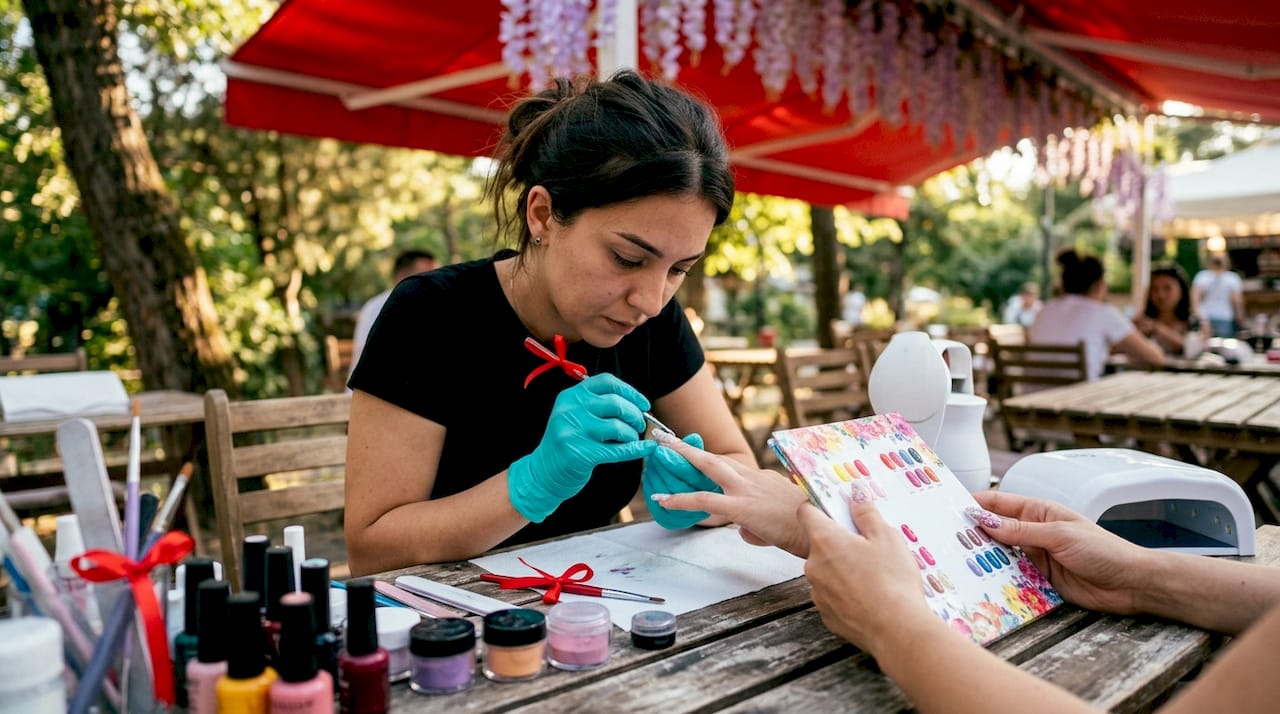
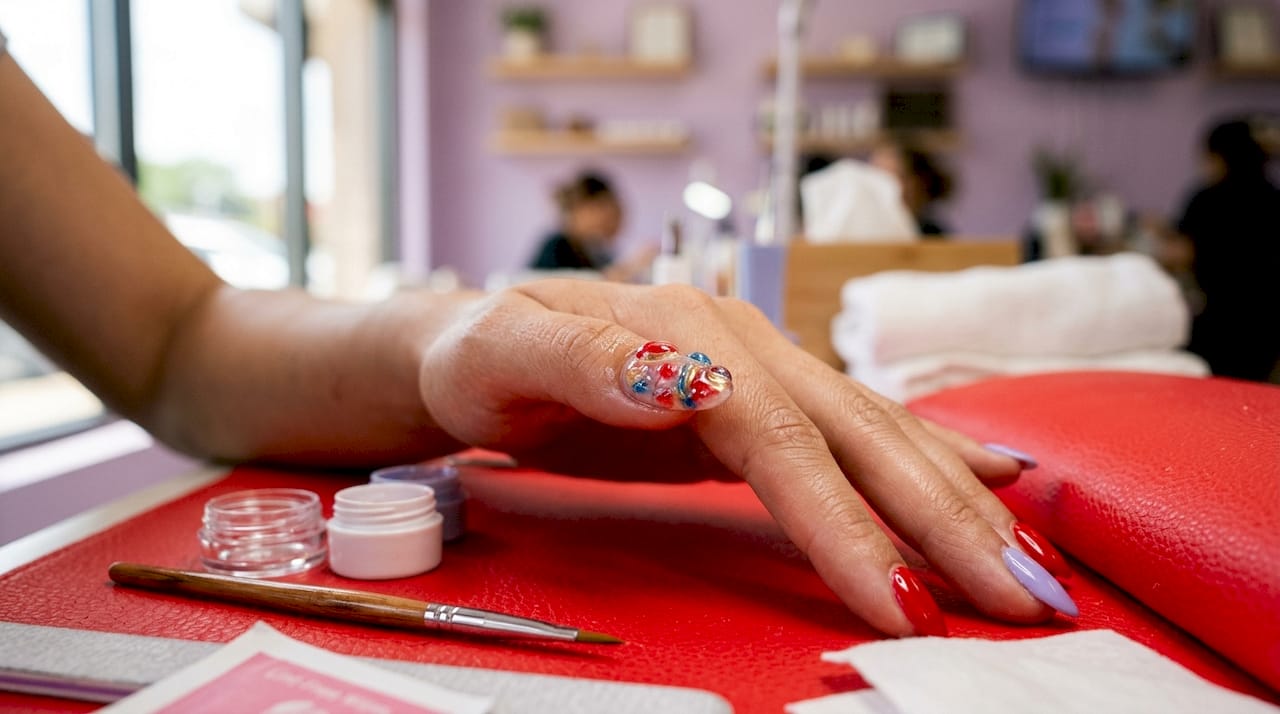
A textured nail design is a manicure style that adds tactile dimension and visual depth to nails using specialized materials beyond flat polish. Where standard gel polish self-levels into a smooth surface, textured designs use products like 3D sculpting gels, poke gels, flocking powders, and magnetic gels to create raised, fuzzy, ribbed, or sculpted effects. Trending styles in 2026 include Baccarat nails, which mimic the ribbed surface of luxury crystal glassware, and velvet nails, which produce a soft, fabric-like finish. These techniques transform nails from a simple color statement into a form of wearable art that reflects genuine personal style and creative intent.
What is a textured nail design made of?
The foundation of any textured manicure is the material. Regular gel polish is self-leveling, meaning it flows flat and cures smooth. That property makes it useless for building raised or sculpted effects. Textured designs require products engineered to hold their shape.
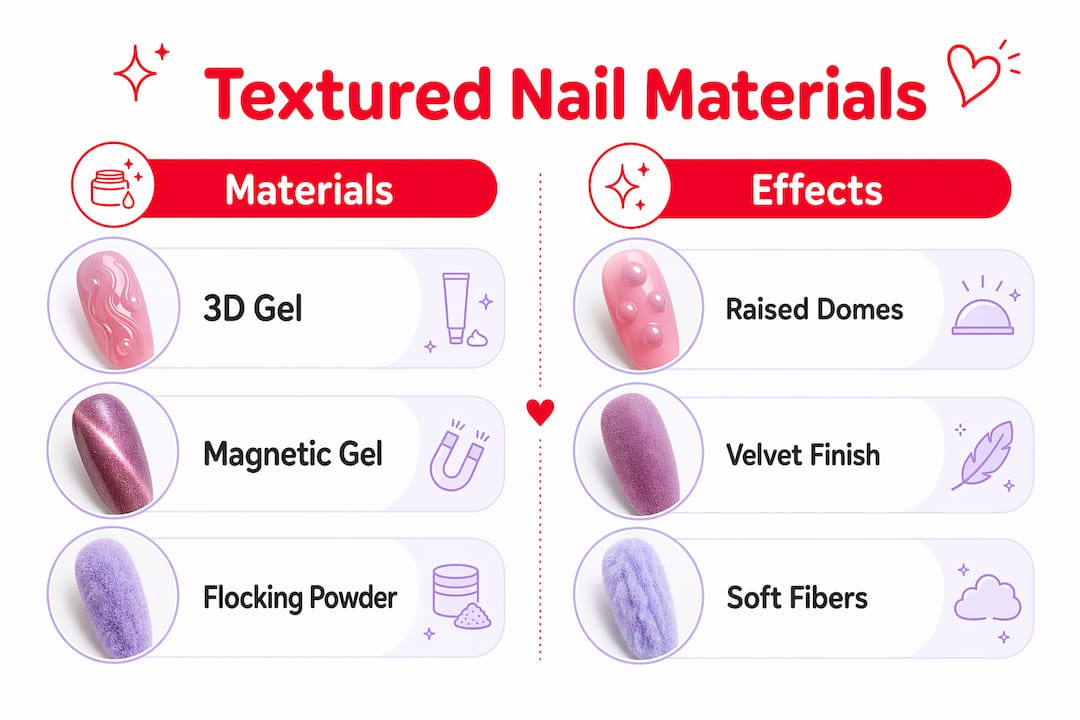
3D sculpting gels are high-viscosity products that stay put before curing. A nail artist can mold them into domes, ridges, or peaks, and the gel holds that form under the lamp. Poke gels work differently: they spread and diffuse when manipulated with a tool, creating organic holes or a watercolor-like surface that looks almost accidental but takes real skill to control.
Flocking powders and magnetic gels serve the velvet and shimmer end of the spectrum. Flocking powders are fine fibers pressed into wet polish to create a fuzzy, fabric-like surface. Magnetic gels contain metal particles that shift when a magnet passes over the wet surface, producing a shimmering optical effect without any actual fuzz.
Material | Effect | Durability | Best for |
3D sculpting gel | Raised domes, ridges, peaks | High (with proper cure) | Baccarat nails, sculptural art |
Poke gel | Organic holes, watercolor texture | Moderate | Abstract, organic designs |
Magnetic gel | Shimmering velvet illusion | 2–3 weeks | Velvet nails, cat-eye effects |
Flocking powder | Fuzzy, fiber-like surface | A few days | Velvet nails, seasonal looks |
Pro Tip: When choosing between magnetic gel and flocking powder for a velvet finish, pick magnetic gel for clients who need longevity. Flocking powder looks stunning but wears off within days, making it better suited for special occasions than everyday wear.
How do Baccarat nails and velvet nails actually work?
Baccarat nails are the most talked-about textured trend of 2026. The style draws directly from luxury ribbed crystal glassware, replicating those precise, repeating ridges on a nail surface using 3D sculpting gel. The result is a nail that catches light the same way a fine glass does. It signals that nail art has moved well beyond color into the territory of material culture and design.
The process requires a high-viscosity sculpting gel applied in careful rows, then cured under a lamp before the next ridge is added. Precision matters here. Uneven spacing or inconsistent ridge height breaks the illusion immediately. This is not a beginner technique, but understanding it helps you ask the right questions when booking a professional appointment.
Velvet nails split into two distinct methods:
Magnetic velvet: The nail artist applies magnetic gel polish, then holds a magnet close to the wet surface. The metal particles inside the gel align and shift, creating a shimmering, velvety optical illusion without any actual texture. The finish cures hard and lasts 2–3 weeks.
Flocking powder velvet: Fine fibers are dusted or pressed onto wet polish. The result is genuinely fuzzy and tactile. The downside is durability. Flocking powder finishes are more temporary, often lasting only a few days before the fibers begin to shed.
Optical depth: Both methods use light refraction to enhance the sense of texture. Magnetic gels create depth through particle alignment, while flocking powders create depth through fiber density and shadow.
The choice between these methods comes down to your lifestyle. Magnetic velvet suits daily wear. Flocking powder suits a weekend event or a photo shoot.
What is nail art grain and why does it matter?
Nail art grain is a concept that surprises most people the first time they encounter it. Grain is a micro-texture phenomenon that appears as subtle speckling or cloudiness, especially visible in close-up photos. It has nothing to do with glitter or visible particles. It comes from layering finishes that have incompatible light-refraction properties.
The most common cause is applying a metallic or shimmer layer over a matte base. The two finishes interact at a microscopic level and scatter light unevenly. The result looks grainy or muddy rather than crisp and dimensional. Understanding this is what separates a professional-looking textured design from one that falls flat.
Overworking polish increases unwanted grain. Every extra brush stroke disrupts the finish layer and compounds the light-scattering problem. The fix is fewer strokes, not more. Apply each layer with confidence and stop touching it once it is down.
For textured designs specifically, grain management is critical. A beautifully sculpted 3D ridge loses its visual impact if the surrounding polish looks cloudy. Matching finish types across layers, such as pairing metallic with metallic or matte with matte, keeps the light refraction consistent and the overall design sharp. This principle connects directly to how visual texture perception works in beauty across multiple disciplines.
Pro Tip: Test your finish combinations on a nail tip before committing to a full set. A metallic top coat over a matte base looks elegant in theory but often produces grain in practice. Swatching first saves the entire appointment.
How do you create and maintain textured nail designs?
Creating textured nails at home is possible, but the process demands patience and the right products. Here is a practical sequence that works for both DIY attempts and salon reference:
Prep the nail plate. Push back cuticles, lightly buff the surface, and apply a bonding base coat. Adhesion is the foundation of any lasting textured design.
Apply your base color. Use a standard gel polish in your chosen shade. Cure fully under a 48W LED lamp for the time specified by the product.
Build your texture layer. For 3D sculpting gel, apply small beads or ridges using a detail brush or dotting tool. Work one nail at a time so the gel does not spread before curing. For magnetic gel, apply the layer and immediately pass the magnet over the wet surface before curing.
Cure with intention. Failure to fully cure the interior of a thick gel layer leads to soft centers that crack quickly. Use a minimum 60-second cure time under a 48W LED lamp for any raised or high-viscosity element. Thick, pigmented gels can block UV light, so never rush this step.
Bond 3D elements cleanly. A thin bead of top coat bonds 3D elements better than gel polish. It gives more working time and creates a cleaner edge, so the accent looks intentional rather than stuck on.
Seal and protect. Apply a top coat suited to your finish type. Matte top coats preserve velvet effects. Glossy top coats enhance the light-catching quality of Baccarat ridges.
Maintenance is straightforward but non-negotiable. Avoid submerging textured nails in water for extended periods during the first 24 hours after application. Use cuticle oil daily around the base of the nail to keep the surrounding skin healthy without softening the gel bond. For 3D nail art designs, expect fills or replacements every two to three weeks, depending on your nail growth rate and the complexity of the design.
Realistic wear expectations matter. Magnetic velvet nails hold up well for daily tasks. Flocking powder finishes need gentle handling and are not suited for clients who work with their hands. Knowing this before you commit to a style saves disappointment later.
Key Takeaways
Textured nail designs use specialized materials and finish-compatible layering to create dimensional, long-lasting nail art that goes far beyond color alone.
Point | Details |
Material choice defines the result | 3D sculpting gels, poke gels, magnetic gels, and flocking powders each produce distinct textures and durability levels. |
Cure time is non-negotiable | A minimum 60-second cure under a 48W LED lamp prevents soft centers and cracking in raised gel elements. |
Grain is a finish compatibility issue | Layering incompatible finishes like metallic over matte causes grain; matching finish types keeps designs sharp. |
Velvet nails have two methods | Magnetic gel lasts 2–3 weeks; flocking powder is more temporary and better suited for special occasions. |
Top coat bonds 3D elements best | Using top coat instead of gel polish to attach 3D accents creates cleaner edges and longer-lasting results. |
Texture is where nail art stops being decoration
Most nail art conversations focus on color. I get it. Color is immediate and personal. But after years of watching textured techniques evolve, I am convinced that texture is where nail art stops being decoration and starts being design.
Texture makes nail art feel intentional and alive in a way that a flat coat of polish simply cannot. A Baccarat ridge catches afternoon light differently than it catches overhead fluorescents. That responsiveness to environment is what makes textured nails genuinely interesting to wear, not just to photograph.
The mistake I see most often is going all-in on texture across every nail. One or two accent nails with strong 3D or velvet elements, paired with smooth, complementary nails, creates far more visual tension and interest than a full set of competing textures. Restraint is the skill that separates a good textured manicure from a great one.
The Baccarat trend also signals something worth paying attention to: nail art is borrowing from luxury design fields in ways that feel genuinely new. Ribbed glassware, velvet upholstery, woven fabric. These are not nail-specific references. They are design language applied to a new surface. That cross-disciplinary thinking is what makes this moment in nail art so interesting to follow.
If you are curious about how nail artists create patterns with gels and tools, the technical side is more approachable than it looks. The barrier is not talent. It is knowing which product to reach for and why.
— MinhHieu
Textured nail art at Bradentonnails in Bradenton
Bradentonnails at TJ Nails in Bradenton, FL, offers professional textured nail services including 3D sculpting gel designs, magnetic velvet polish, and the latest styles like Baccarat nails.
The technicians at Bradentonnails work with high-viscosity sculpting gels and finish-matched top coats to deliver results that hold up in real life, not just in photos. Whether you want a full set of ribbed Baccarat accents or a subtle velvet finish for daily wear, the team tailors every manicure in Bradenton to your style and schedule. Appointments are available seven days a week, including Sundays. Book online and bring your nail design inspiration.
FAQ
What is a textured nail design?
A textured nail design is a manicure technique that adds tactile and visual dimension using materials like 3D sculpting gels, magnetic gels, and flocking powders, creating raised, fuzzy, or sculpted effects distinct from flat polish.
How long do textured nail designs last?
Durability depends on the technique. Magnetic velvet nails typically last 2–3 weeks, while flocking powder finishes are more temporary and often last only a few days.
What causes grain in nail art?
Nail art grain is a micro-texture effect caused by layering finishes with incompatible light-refraction properties, such as metallic polish over a matte base, and is worsened by overworking the polish.
What are Baccarat nails?
Baccarat nails are a 3D textured style that replicates the ribbed surface of luxury crystal glassware using sculpting gel applied in precise, repeating ridges that catch and refract light.
Can you do textured nail designs at home?
Yes, with the right products and patience. Use a 48W LED lamp, cure each layer fully, and apply 3D elements with a thin bead of top coat for the cleanest, most durable result.
Recommended
Comments