
Reflexology Pedicure: What Salon Clients Need to Know
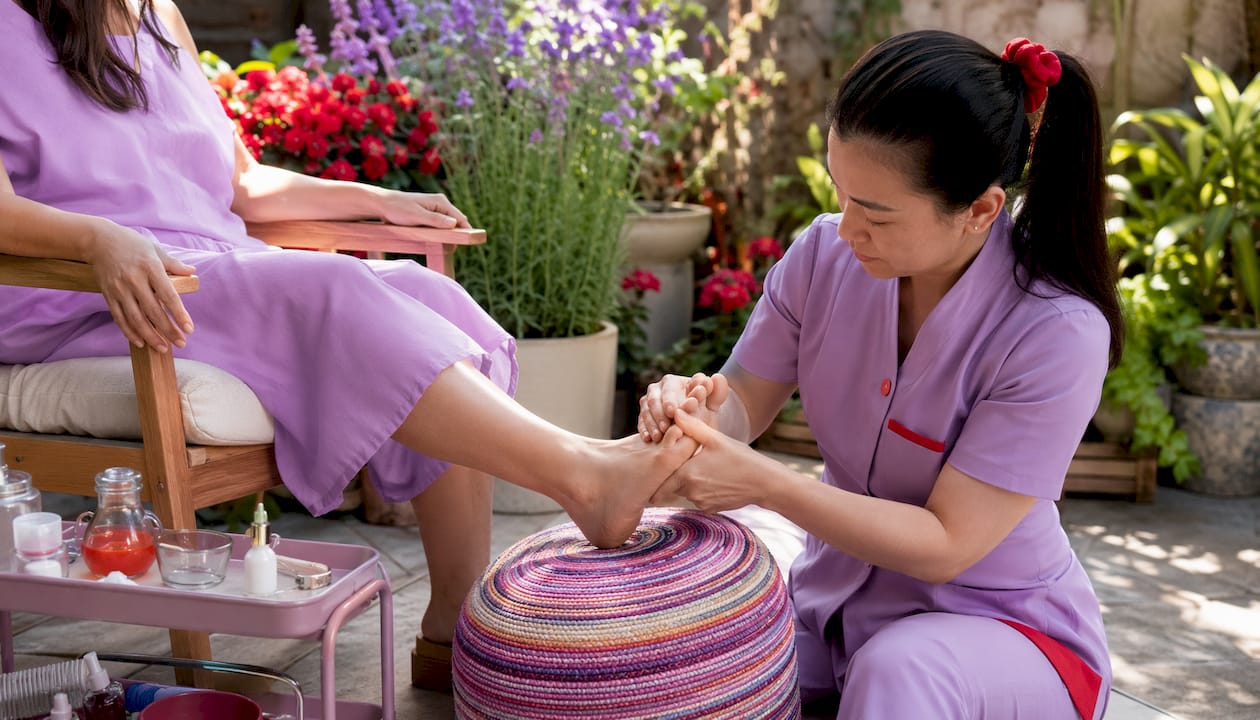
A reflexology pedicure combines standard cosmetic nail care with targeted pressure applied to mapped reflex points on the soles, with the goal of supporting whole-body relaxation while still delivering a polished finish. It’s the service to book when you want more than pretty nails — when you’re carrying stress, feeling run-down, or just want a treatment that works on your whole system, not just your feet.
The quick version:
What it is: A pedicure that adds structured reflex-point pressure work (thumb-walking, sustained holds) to the usual soak, nail, and polish steps
How it differs: A regular pedicure focuses on cosmetic results; a foot massage targets sore muscles; a reflexology pedicure aims at whole-body balance through mapped pressure zones
When to choose it: When you want the cosmetic benefits of a pedicure and a wellness effect that goes beyond local muscle relief
Pro Tip: Tell your technician about any health conditions, medications, or pregnancy before the session starts. It takes 30 seconds and lets them adapt the pressure and skip any zones that need caution.
Table of Contents
What is a reflexology pedicure, and how does it work?
Reflexology is a practice rooted in zone therapy, the idea that specific points on the feet correspond to organs, glands, and body systems. Pressing those points is thought to send signals through the nervous system that support balance and relaxation in the corresponding areas. The foot as a body map is the organizing principle: toe tips link to the head and sinuses, the inner arch to the spine, the ball of the foot to the chest and upper organs, and the outer edge to the limbs.
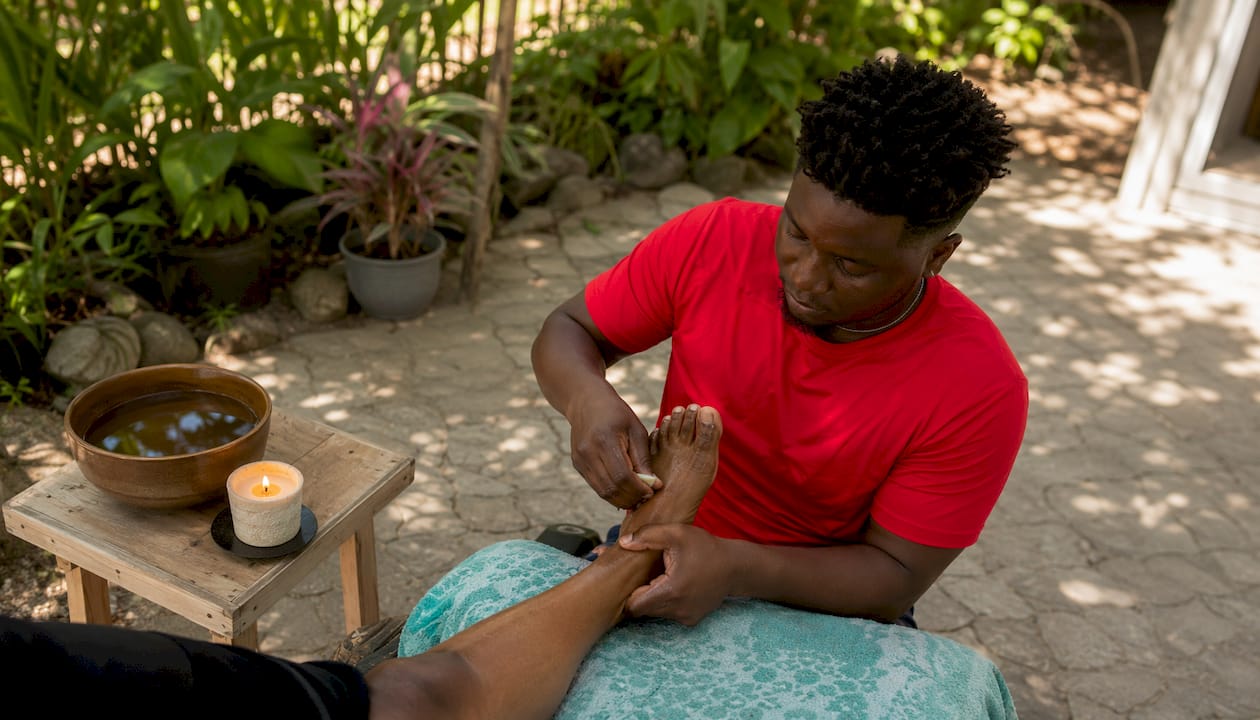
When a technician integrates reflexology into a pedicure, the pressure work slots in after exfoliation and before the finishing polish. The technique looks and feels different from a standard massage. Instead of long gliding strokes, the technician uses a “caterpillar-like” thumb-walking movement — a slow, inching press that moves across a reflex zone with deliberate precision. Sustained holds on specific points are common too.
Key technique differences at a glance:
Thumb-walking: The signature move; a rhythmic, forward-creeping pressure along reflex zones
Sustained holds: Firm, stationary pressure on a single point for several seconds
Minimal lubricant: Less oil than a standard massage, so the thumb keeps tactile contact with the exact point
Mapped sequence: Work follows a zone map, not just wherever feels tight
A standard pedicure massage, by contrast, uses effleurage (long gliding strokes) and kneading to relax the calf and foot muscles. Both feel good. The difference is intent: one targets soft tissue comfort, the other targets reflex zones.
How does a reflexology pedicure compare to a regular pedicure and foot massage?
The three services overlap in feel but diverge in purpose and technique.
Feature | Reflexology pedicure | Regular pedicure | Foot massage |
Primary intent | Whole-body balance + cosmetic nail care | Cosmetic nail and skin care | Local soft-tissue relief |
Core technique | Thumb-walking, point holds on reflex zones | Exfoliation, cuticle work, gliding massage | Kneading, effleurage, stretching |
Pressure work duration | 30–50 min added for full sequence | 5–10 min light massage | 30–60 min focused on feet/calves |
Feel during treatment | Precise, occasionally tender at active points | Relaxing, smooth | Soothing, muscle-focused |
Cosmetic finish | Yes (polish, skin nourishment) | Yes | No |
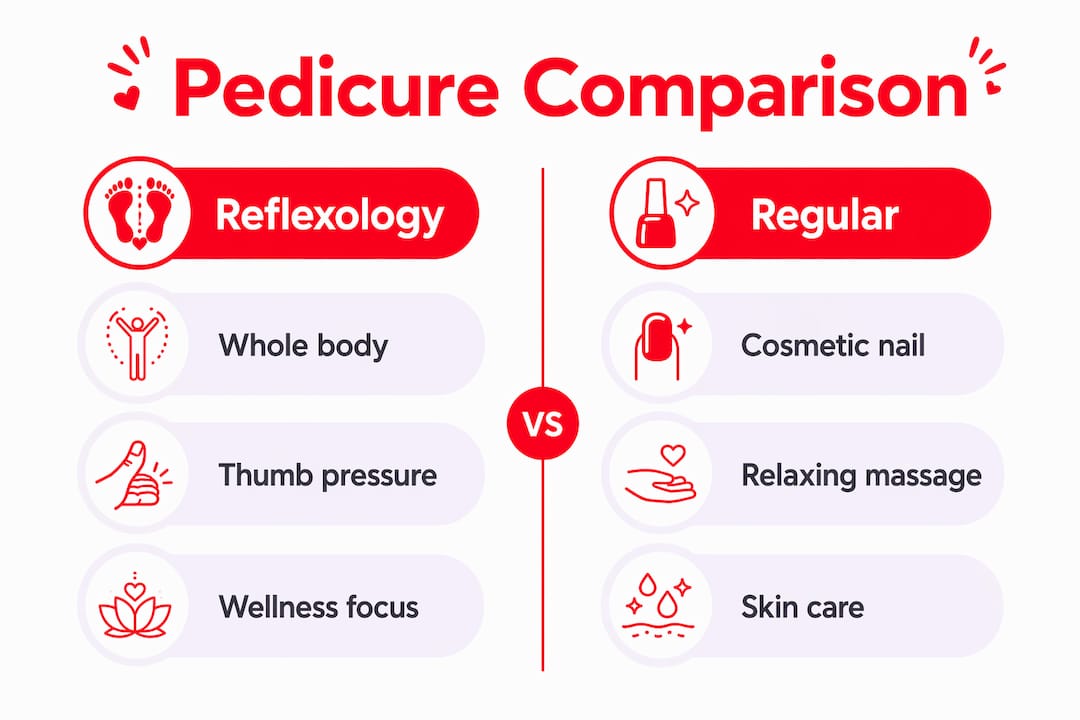
Foot reflexology uses precise manipulation of mapped pressure points to stimulate effects in other parts of the body, while foot massage uses focused and diffused pressure to loosen and realign tendons, muscles, and fascia. That’s the clearest way to separate them.
Quick decision guide:
Pick a reflexology pedicure if you want systemic relaxation and a cosmetic result in one appointment
Pick a regular pedicure if your goal is purely nail and skin care
Pick a standalone foot massage if you have specific muscle soreness or fatigue to address
What happens during a session, and what does it cost?
A full reflexology pedicure runs longer than a standard pedicure because the pressure work takes time to do properly. A thorough reflexology sequence requires a dedicated period per foot to cover the main zones, adding significant time to the total appointment.
Typical session flow:
Warm soak (5–10 min): Softens skin, relaxes the foot, and prepares reflex zones for pressure work
Nail and cuticle care (10–15 min): Trimming, shaping, cuticle cleanup
Exfoliation and callus work (5–10 min): Scrub or file to remove dead skin
Reflexology pressure sequence (30–50 min total, both feet): Technician works through mapped zones using thumb-walking and holds; reflexology is sandwiched between the exfoliation and polish steps
Finishing massage and skin nourishment (5–10 min): Richer cream applied, transitioning from therapeutic to cosmetic
Polish application (10–15 min): Color, top coat, drying
Duration and price overview:
Service type | Typical total time | General price range (U.S.) |
Standard pedicure | About an hour | Moderate pricing |
Pedicure with reflexology upgrade | Extended session | Higher pricing |
Full reflexology pedicure | Long session, often up to two hours | Premium pricing |
Prices vary by region and salon; Bradenton-area pricing may differ. Confirm with your salon at booking.
Tell your technician before the session:
Pregnancy (any stage)
Circulation problems or blood clots
Recent foot, ankle, or leg surgery
Blood thinners or anticoagulant medications
Open wounds, active infections, or broken skin on the feet
Uncontrolled diabetes with neuropathy
Block extra time in your schedule. If both feet receive a full reflexology sequence, allow a longer appointment window to ensure a thorough treatment.
What benefits do clients report, and what does the evidence actually say?
Clients often describe these effects after a reflexology pedicure:
Deep relaxation and stress reduction
A feeling of lighter, less swollen feet and legs
Temporary relief from discomfort or tension
Improved sleep or calmer mood following the session
Cosmetic benefits similar to a standard pedicure (soft skin, neat nails)
The honest caveat: clinical evidence is mixed. Reflexology often shows outcomes comparable to general relaxation or massage in studies, which means the measurable benefit may come from the relaxation response itself rather than the specific reflex-point work. That’s not a reason to skip it. Relaxation has real physiological value. It just means you shouldn’t book a reflexology pedicure expecting it to treat a diagnosed medical condition.
Pro Tip: Try a single session first and notice how you feel for the 24 hours after. Some clients notice the most benefit after a short course of two or three sessions rather than a single visit.
Who should avoid reflexology pedicures, and when should you check with a doctor?
Reflexology is generally safe for healthy adults, but several conditions require caution or a clinician’s clearance first.
Avoid or consult a doctor if you have:
Deep vein thrombosis or any active clotting disorder
Recent surgery on the foot, ankle, or lower leg
Uncontrolled diabetes with peripheral neuropathy
Open wounds, ulcers, or active skin infections on the feet
Certain stages of pregnancy, particularly the first trimester (some reflex points near the uterus and ovaries require adapted pressure or avoidance; pregnant clients need a trained technician with specific prenatal reflexology knowledge)
Anticoagulant medications (blood thinners)
Salon safety checklist before you book:
Technician holds a current nail technician license
Tools are visibly sanitized between clients
Salon uses a written health intake form
Technician asks about medical history before starting pressure work
Clear protocol for clients with open wounds or infections (they should decline service on affected areas)
This article is general information, not medical advice. If you have a chronic condition or are unsure whether reflexology is appropriate for you, confirm with your clinician before booking.
How can you try reflexology safely at home?
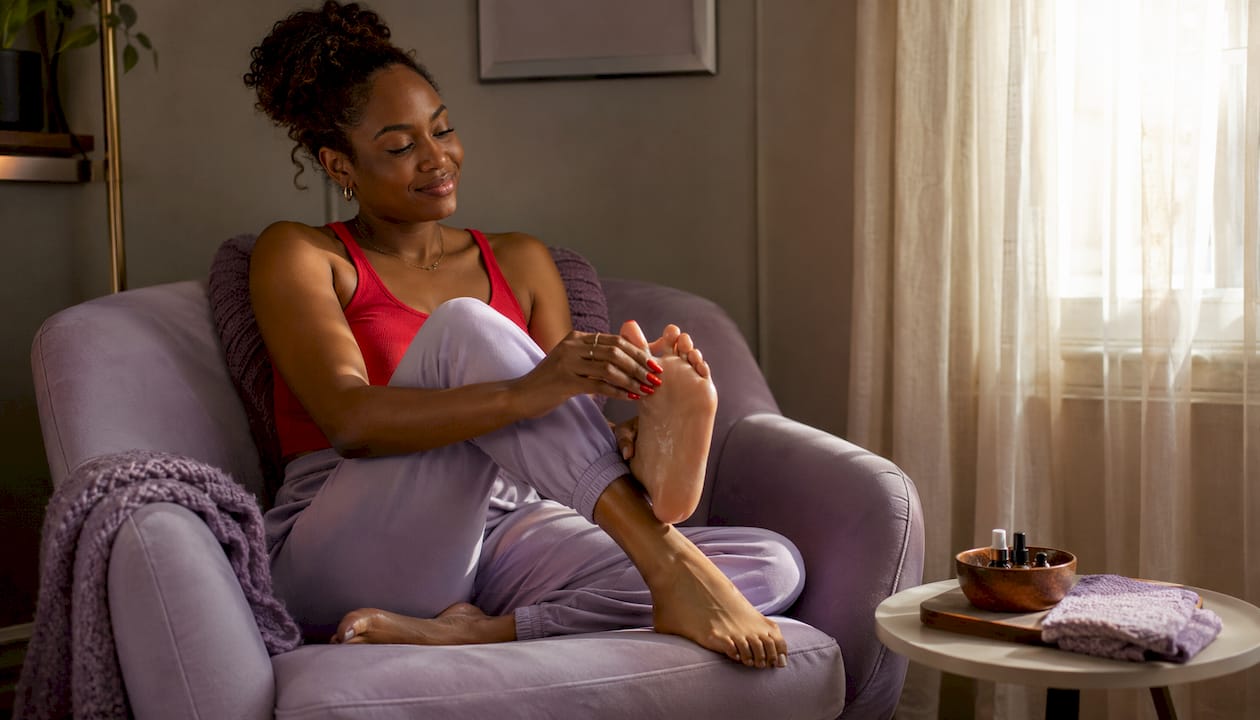
A basic at-home routine won’t replicate a full salon session, but it’s a reasonable way to maintain the relaxation benefits between visits or test whether you respond well to reflex-point pressure.
Simple at-home sequence:
Soak feet in warm water for 5–10 minutes to soften tissue
Use a rounded wooden reflexology stick or your thumb to apply firm, steady pressure to the solar plexus point (center of the arch) for 30–60 seconds
Thumb-walk slowly along the inner arch (spine zone) from heel to big toe base, three passes per foot
Apply gentle sustained pressure to the ball of the foot (chest/upper organ zone) for 30 seconds
Finish with a quality foot cream massaged in circular motions
Tools worth having:
A rounded wooden reflexology stick (widely available at U.S. wellness retailers)
A quality foot cream or shea butter lotion for the finishing step
A small basin for the warm soak
Use oil or cream sparingly during the pressure work itself. Minimal lubricant improves tactile feedback for thumb-walking; save the richer cream for after the point work is done. Never press directly on broken skin, blisters, or sore spots. Pregnant clients should follow guidance from a trained practitioner before attempting any reflex-point work at home.
For a broader look at keeping your feet in good shape between appointments, the nail care routine guide at Bradentonnails covers practical maintenance steps.
How do you choose the right salon or technician?
Not every salon that lists “reflexology pedicure” on its menu delivers actual reflex-point work. Some offer an extended foot massage with the same name. Here’s how to tell the difference before you book.
What to look for:
Licensed nail technician with documented reflexology training or continuing education
Written health intake form completed before the session
Visible sanitation: autoclaved or single-use tools, lined foot basins
Positive local reviews that specifically mention the reflexology component
Clear answer when you ask how long the reflexology portion runs per foot
Questions to ask when booking:
“How much reflexology training does your technician have?”
“How many minutes of reflex-point work do I get per foot?”
“Can you adapt the session if I’m pregnant or have a circulation condition?”
Red flags:
Technician skips or deflects health questions
Heavy oil applied at the start (makes precise thumb-walking nearly impossible)
No distinction made between reflexology and a standard foot massage
No intake form or health screening
Book a shorter upgrade session first rather than committing to a 90-minute appointment with an unfamiliar technician. If the reflex work feels purposeful and mapped rather than just a longer massage, you’ve found someone who knows what they’re doing. For a broader sense of what a professional nail spa environment should look like, the nail spa services guide at Bradentonnails is a useful reference.
Key Takeaways
A reflexology pedicure delivers both cosmetic nail care and mapped reflex-point pressure work in a single appointment, making it the most efficient option for clients who want wellness benefits alongside a polished finish.
Point | Details |
What it is | A pedicure that adds thumb-walking and zone pressure to standard nail and skin care steps |
How it differs | Regular pedicures focus on cosmetics; foot massages target muscles; reflexology pedicures aim at whole-body balance |
Time and cost | Full sessions typically run up to about two hours and generally have a premium price in the U.S. |
Safety first | Disclose pregnancy, circulation issues, diabetes, or blood thinners to your technician before any session |
Bradentonnails | TJ Nails in Bradenton, FL offers professional pedicure services; book online for a personalized appointment |
The part most reflexology articles skip
There’s a gap between what reflexology promises and what most salon clients actually need from it, and it’s worth naming directly. The clinical debate about whether reflex-point pressure genuinely affects internal organs is real and unresolved. But that debate misses the point for most people walking into a nail salon.
What clients are actually seeking is a treatment that takes the whole session seriously. A regular pedicure can feel transactional. A reflexology pedicure, done by someone who has trained in the technique, feels intentional. The technician is paying attention to your feet in a way that goes beyond shaping a nail. That quality of attention, combined with 30–50 minutes of structured pressure work, produces a relaxation response that most clients find meaningfully different from a standard appointment.
The mistake is expecting it to replace medical care. The opportunity is using it as a consistent wellness practice, the way you’d use yoga or a regular massage, where the cumulative effect over several sessions tends to be more noticeable than any single visit. Clients who get the most from reflexology pedicures are the ones who treat it as a regular habit rather than a one-off experiment.
Book a reflexology pedicure at TJ Nails in Bradenton
TJ Nails brings together professional nail care and wellness-focused pedicure services at one location in Bradenton, FL. The team is trained to adapt sessions for individual needs, whether that means a standard pedicure upgrade or a longer appointment that includes structured reflex-point work.
What you get when you book a pedicure at TJ Nails: skilled technicians, clean tools and sanitized equipment, flexible hours including Sundays, and a relaxed environment that takes the appointment seriously from soak to polish. Reflexology is a complement to your wellness routine, not a medical treatment, and the team will ask about your health history before starting any pressure work.
Ready to experience the difference? Book your appointment online and let the team know you’re interested in a reflexology pedicure upgrade when you schedule.
Sources and further reading
Cleveland Clinic: Reflexology — Balanced clinical overview of what reflexology is, what the evidence shows, and when to consult a doctor. Start here for the medical perspective.
NAILS Magazine: Integrate reflexology into your pedi services — Practitioner-focused guide on sequencing reflexology within a pedicure appointment, lubricant use, and adapting for pregnancy. Best resource for technique detail.
BeautyNFacts: Reflexology foot massage points during a pedicure — Covers reflex zone maps, thumb-walking technique, and session timing. Useful for understanding the foot map and what a thorough sequence covers.
Verywell Health: Foot Reflexology — Clear explanation of how reflexology differs from foot massage, with accessible descriptions of technique and goals.
NCCIH (National Center for Complementary and Integrative Health): Reflexology — U.S. government health agency overview of reflexology evidence and safety. Authoritative source for evidence limits and safety guidance.
University of Minnesota: Taking Charge of Your Health — Reflexology — Integrative health perspective on reflexology as a wellness practice, with practical guidance on what to expect.
Recommended
Comments