
Why Nail Maintenance Saves Time: Tips for Busy People

Regular nail maintenance saves time by preventing the structural damage, polish lifting, and bacterial growth that turn a quick touch-up into a lengthy repair session. Nail technicians call this approach preventive nail care, and it works on the same logic as car maintenance: small, consistent attention costs far less time than waiting for a breakdown. Fingernails grow approximately 3mm per month, which means unattended nails shift out of structural balance faster than most people realize. Busy people who build a simple routine spend less time in the salon chair and less money fixing avoidable problems.
Why nail maintenance saves time in the long run
Nails grow continuously, and that growth creates structural imbalance when left unattended. The nail plate extends beyond its support point, making it vulnerable to cracks, chips, and lifting at the free edge. Once a crack travels toward the nail bed, a technician needs significantly more time to repair it than to prevent it.
Professional maintenance every 2–3 weeks is the industry standard for keeping nails structurally balanced. That interval aligns with the natural growth cycle and keeps the nail plate supported before stress points develop. Clients who follow this schedule consistently report shorter appointment times because there is less corrective work to do.
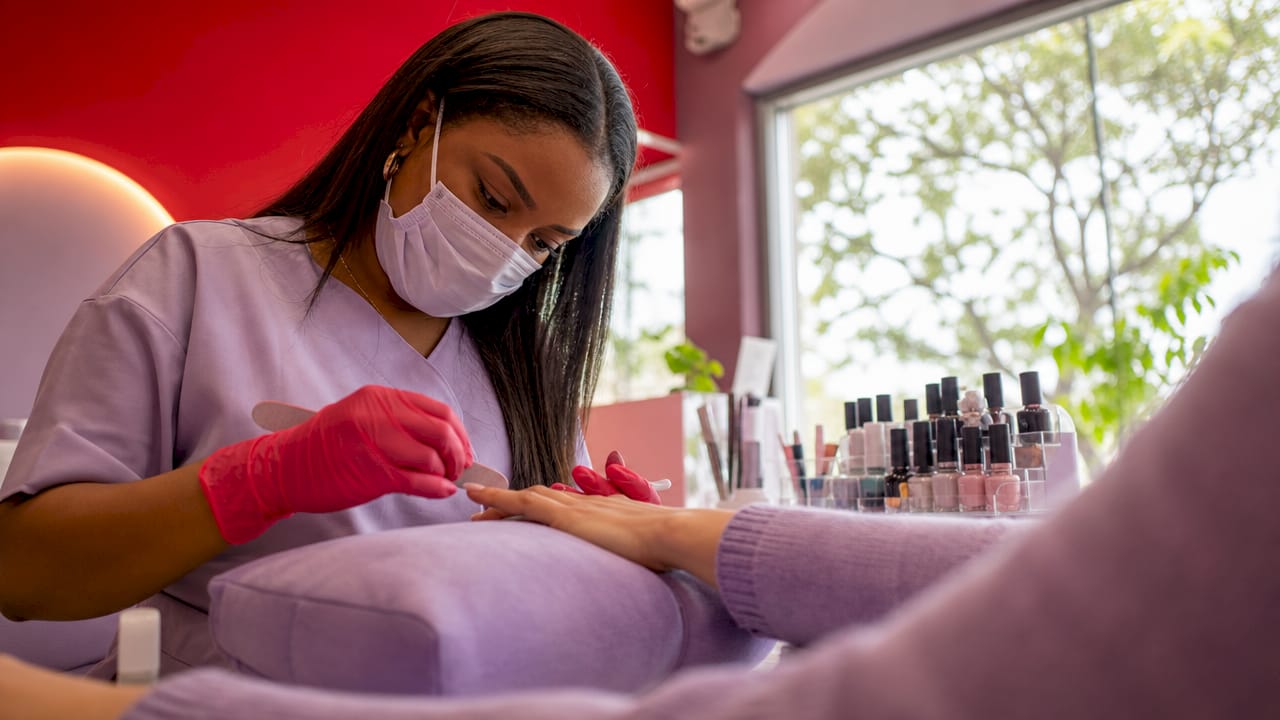
The benefits of nail maintenance compound over time. Strong, well-hydrated nails accept polish and enhancements more evenly, which means applications go on faster and last longer. A nail plate in good condition is the difference between a 30-minute manicure and a 60-minute repair session.
Here is what happens when maintenance is delayed:
Lifting and separation: The gap between the enhancement and the natural nail becomes a breeding ground for moisture and bacteria, a condition technicians call “greenies.”
Structural cracks: Outgrown nails flex more under pressure, causing splits that require filing back or full replacement.
Polish peeling: Unbalanced nails stress the polish bond, causing premature chipping that sends you back to the salon sooner.
Longer appointments: Every skipped visit adds corrective work to the next one, turning a maintenance session into a repair session.
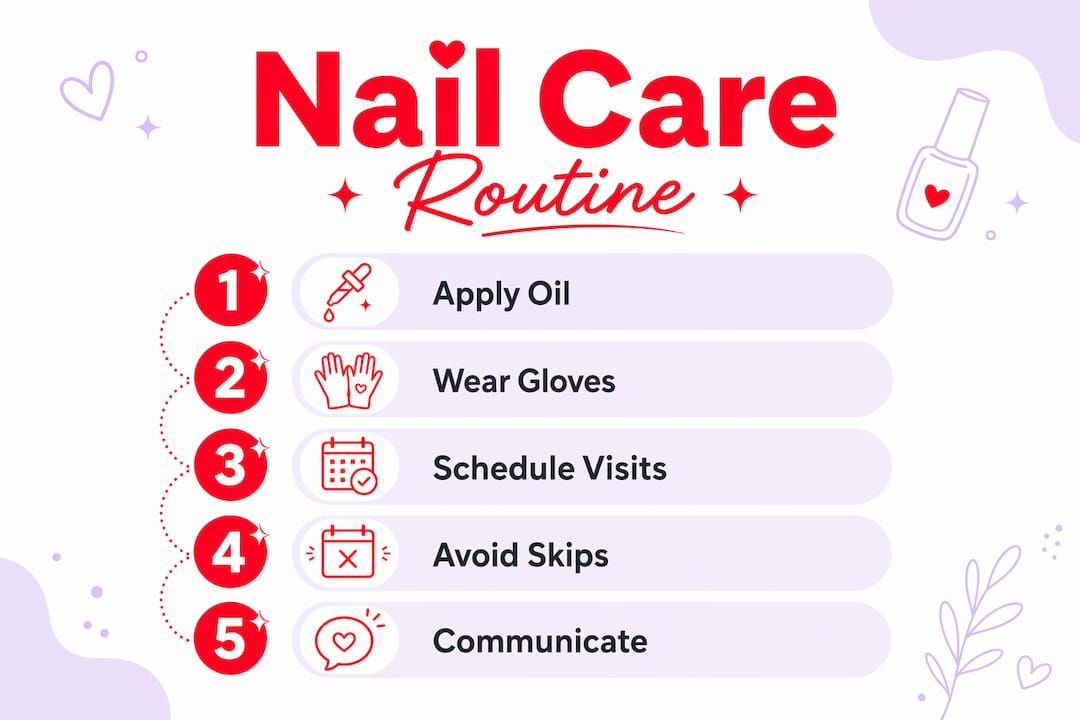
Pro Tip: Schedule your next appointment before you leave the salon. Booking in advance locks in your preferred time slot and removes the mental effort of remembering to call.
Daily and weekly home routines that extend your manicure
The fastest way to reduce salon time is to protect your nails between visits. A 2–3 minute daily routine of cleaning, moisturizing, and cuticle oil application keeps the nail plate flexible and the surrounding skin healthy. That small daily investment prevents the brittleness and breakage that force unplanned salon trips.
Follow this weekly home care sequence to get the most out of every salon visit:
Day 1 (after salon visit): Apply a thin layer of cuticle oil around each nail. This seals moisture into the nail plate immediately after a fresh application.
Days 2–4: Wear rubber or nitrile gloves during dishwashing, cleaning, and any task involving prolonged water exposure. The water absorption cycle causes nails to expand when wet and contract when dry, which stresses the polish bond and causes lifting.
Days 5–7: Do a quick visual check. If you notice any lifting at the edges, press the nail gently and apply a drop of cuticle oil. Do not pick or peel.
Weekly shaping: Use a fine-grit file and work in one direction only. Trimming nails every 10–14 days and filing in a single direction prevents micro-tears that weaken the nail edge.
Before bed, every night: Apply cuticle oil to each nail and massage it into the surrounding skin. Nighttime application allows maximum absorption without the interruption of handwashing.
Pro Tip: Apply cuticle oil before bed as your last step before sleep. Absorption overnight is significantly better than daytime application because your hands stay still and dry.
Glove use alone can extend manicure life by about one week. That extra week means fewer salon visits per year without any reduction in how your nails look. For busy people, that trade is straightforward math.
Common mistakes that cost you more time at the salon
The biggest time thief in nail care is not neglect. It is the specific habits that accelerate damage without the person realizing it. Understanding these pitfalls is a core part of any time-saving nail routine.
Skipping appointments: Clients who delay visits face lifting and bacterial growth that require longer, more invasive repairs. A standard maintenance appointment takes 30–45 minutes. A repair session for lifted or infected nails can take twice as long.
Peeling off gel or enhancements: Pulling off gel polish removes layers of the natural nail plate with it. That microscopic damage accumulates, and the nail plate becomes thinner and weaker with each peel. Thinner nails require more prep time and more product at the next appointment.
Improper removal technique: The correct method for gel removal is the 10-second hold technique. Soak a cotton pad in acetone, press it firmly against the nail for 10 seconds, then wipe in one smooth motion. Scrubbing back and forth damages the surface and forces the technician to spend extra time smoothing the plate.
Skipping base coat at home: A base coat protects the nail plate from staining and creates a smoother surface for polish adhesion. Without it, polish chips faster and the nail surface degrades more quickly.
Ignoring cuticle health: Dry, overgrown cuticles slow down every salon appointment. The technician must spend extra time softening and pushing them back before any polish or enhancement can be applied.
Clients who think skipping visits saves time often face more invasive repair sessions, losing more total time than the visits themselves would have taken. The math consistently favors regular maintenance.
How healthy nails make every salon visit faster
A well-maintained nail is a clean canvas. Technicians can apply polish or enhancements directly without spending time on corrective prep work. That efficiency shows up in shorter appointment times and better-looking results.
Consistent care between appointments builds nail strength that enables longer-lasting manicures. Stronger nails hold enhancements more securely, which means fewer fills and fewer emergency visits. The cumulative effect is a nail care routine that gets more efficient the longer you maintain it.
Regular clients at professional salons also benefit from the technician’s familiarity with their nail shape, growth pattern, and preferences. That familiarity cuts consultation time and reduces the chance of corrections mid-appointment. You can learn more about building this kind of routine in the nail care between visits guide from Bradentonnails.
Here is a practical comparison of what a maintained nail versus a neglected nail means for your appointment:
Factor | Maintained nail | Neglected nail |
Prep time | Minimal, surface is clean and smooth | Extended, requires filing, soaking, or repair |
Polish adhesion | Strong, lasts 2+ weeks | Weak, chips within days |
Appointment length | 30–45 minutes | 60–90 minutes or more |
Cost | Standard service rate | Higher due to corrective work |
Nail health trend | Improves over time | Degrades with each visit |
Pro Tip: Tell your technician about your home routine at the start of each appointment. That 30-second conversation helps them skip steps they do not need and focus on what your nails actually require that day.
The role of nail care in appearance and confidence extends beyond aesthetics. Nails serve as diagnostic indicators of overall health, and regular care helps you notice changes early. Catching a problem at the maintenance stage is always faster and cheaper than treating it after it has progressed.
Key Takeaways
Consistent preventive nail care is the single most effective way to reduce total time spent on nail grooming, both at home and in the salon.
Point | Details |
Maintenance frequency matters | Schedule professional care every 2–3 weeks to stay ahead of structural imbalance. |
Daily habits compound | Two to three minutes of cuticle oil and moisturizing daily prevents breakage and extends manicure life. |
Gloves save a week | Wearing gloves during chores protects against the water absorption cycle and extends polish by about one week. |
Skipping costs more time | Delayed appointments lead to lifting, bacterial growth, and repair sessions that run twice as long. |
Healthy nails mean faster visits | A well-maintained nail plate requires less prep, shorter appointments, and fewer corrections. |
What I have learned about nail care and time
Most people frame nail maintenance as something they do not have time for. I have found the opposite is true. The clients who spend the least time on nail care overall are the ones who show up consistently and do the small things between visits.
The compounding concept is real. When you apply cuticle oil every night and wear gloves while cleaning, you are not just protecting today’s manicure. You are building a stronger nail plate that holds the next application better, which makes the next appointment shorter, which makes the whole routine easier to sustain. Small daily efforts multiply over months in a way that skipping never does.
The mistake I see most often is treating nail care as an all-or-nothing activity. People either go to the salon regularly or they stop entirely when life gets busy. The middle path, a quick home routine plus a professional visit every few weeks, is where the real time savings live. It takes less total effort than either extreme.
One more thing worth saying directly: cutting corners on removal is where most nail damage starts. Peeling off gel polish feels fast in the moment. The repair work it creates is never fast. Use the soak-off method every time, without exception.
— MinhHieu
Professional nail care at Bradentonnails, built for busy schedules
Bradentonnails at TJ Nails in Bradenton, FL offers professional manicure and nail enhancement services designed for clients who value both quality and efficiency. The salon operates with flexible hours, including Sundays, so you can fit a visit into a schedule that does not slow down for anyone.

Regular clients who combine home care with professional visits at Bradentonnails consistently get more out of every appointment. Technicians familiar with your nails work faster and more accurately, which means you spend less time in the chair and more time with results that last. Book your next manicure in Bradenton online and start building the kind of nail health that makes every visit shorter than the last.
FAQ
How often should I get a professional nail appointment?
Professional maintenance every 2–3 weeks is the industry standard. That interval keeps nails structurally balanced as they grow and prevents the lifting and cracking that require longer repair sessions.
What is the fastest daily habit for healthier nails?
Applying cuticle oil before bed is the single most effective daily habit. Daily hydration prevents structural breakage that forces emergency salon repairs, and nighttime application maximizes absorption.
Why does skipping nail appointments take more time overall?
Delayed visits allow lifting and bacterial growth to develop, which require longer, more invasive corrections. A standard maintenance visit takes 30–45 minutes. A repair session for neglected nails routinely takes twice as long.
How do gloves save time on nail care?
Gloves block the water absorption cycle, where nails expand when wet and contract when dry, stressing the polish bond. Wearing gloves during chores extends manicure life by about one week, reducing how often you need a fresh application.
What is the correct way to remove gel polish at home?
Use the 10-second hold technique: press an acetone-soaked cotton pad firmly against the nail for 10 seconds, then wipe in one smooth motion. Avoiding scrubbing keeps the nail plate smooth and reduces prep time at your next salon visit.
Recommended
Comments