
Why Nail Trends Change Seasonally: A Practical Guide
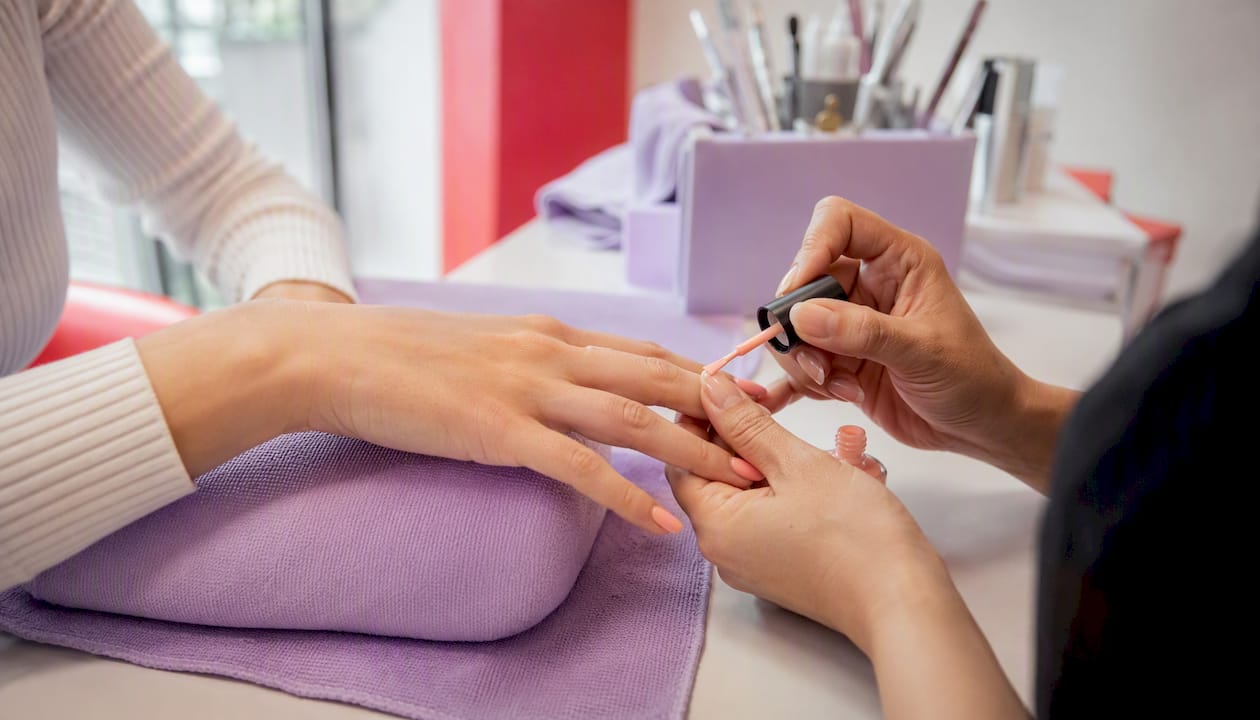
Nail trends shift with the seasons because light quality, wardrobe, weather, cultural moments, and industry forecasting make certain colors and finishes look better — and hold up better — at different times of year. Most people update their nail look regularly with the seasons, and that rhythm is not accidental.
The strongest drivers are:
Fashion calendar and industry timing: Color forecasters like WGSN publish seasonal palettes months ahead; nail brands plan launches around those windows.
Weather and wearability: Humidity, cold, and activity level all affect which finishes last and which chip.
Cultural moments and events: Valentine’s Day, summer festivals, Halloween, and the holiday season each create short-term spikes in specific colors and motifs.
Color psychology: Mood shifts with daylight and temperature, and clients actively seek a visual reset with each new season.
Bottom line: Pick one anchor color per season and adjust accents monthly. That single habit keeps your look current without chasing every microtrend.
Key Takeaways
Seasonal nail trends shift because light, weather, wardrobe, cultural events, and industry forecasting all push certain colors and finishes to perform better at specific times of year.
Point | Details |
Anchor color strategy | Choose one seasonal anchor color and vary accents monthly rather than doing a full change every appointment. |
Service matches season | Gel or SNS dip powder suits summer’s moisture exposure; matte and velvet finishes fit fall and winter layering. |
Industry timing drives launches | Forecasters like WGSN publish palettes months ahead; nail brands plan launches around that quarterly calendar. |
UV safety is manageable | Berkeley research supports cerium carbonate sprays like Magan’s HandShield as a practical protective option during gel curing. |
Climate adjusts the calendar | In warm climates like Bradenton, summer palettes and durable finishes stay relevant well into fall. |
Table of Contents
1. Why spring nail trends lean toward pastels and glazed finishes
4. Winter favors depth, longevity, and occasion-ready accents
9. How runways, retail, and social media shape what you see at the salon
10. Historical and cultural traditions behind seasonal nail colors
11. How your climate changes which seasonal trends actually work for you
1. Why spring nail trends lean toward pastels and glazed finishes
Spring’s shift toward lighter colors is not just aesthetic preference. Softer, luminous shades genuinely read better in the diffused, brightening light of March through May, and they pair naturally with the transitional clothing most people reach for: linen, soft florals, and lighter layers.
The dominant spring palettes for 2026 include:
Dessert-inspired pastels: lavender, pistachio, soft peach
Milky whites and sheer nudes: the “glazed donut” finish remains a strong carry-over
Soft corals and blush pinks for warmer complexions
Glossy and glazed finishes amplify spring’s luminosity. A matte finish that looked grounded in January can read flat and dull against spring’s brighter backdrop. Seasonal nail color trends for 2026 consistently show March as the month dessert pastels peak, with milky neutrals bridging the gap from February.
Pro Tip: Choose one spring anchor color — say, a soft pistachio — and use it as your base for the full season. Swap accent nails between blush and white to stay fresh without booking a full color change every two weeks.
2. Summer calls for saturation, brightness, and durability
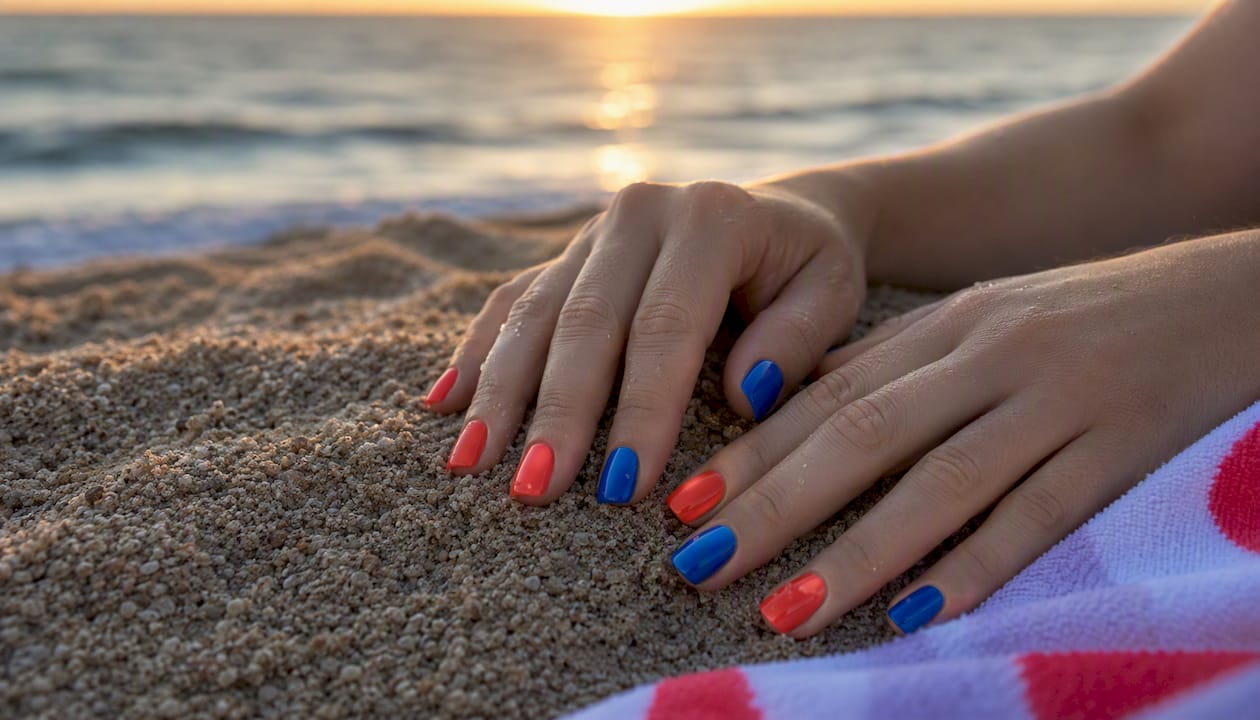
Summer is where nail color earns its keep visually. Bright, saturated pigments perform in direct sunlight in a way that pale or muted shades simply do not. Tomato red, coral, neon accents, and optic white all catch light outdoors and photograph well at the beach, festivals, and outdoor events.
Key summer palette picks:
Gelato brights: cobalt, watermelon, electric yellow
Tomato red and coral: perennial summer staples
Optic white: clean, high-contrast, reads sharp in sun
Neon accents on one or two nails for a festival-ready pop
Durability matters more in summer than any other season. Swimming, sunscreen, and frequent hand-washing are hard on regular lacquer. Salon guidance on seasonal nail wear recommends gel or SNS dip powder for summer specifically because both resist moisture and UV exposure better than standard polish. If you swim regularly, sealing the free edge at every application is non-negotiable for longevity.
Swimwear color trends also push specific nail palettes. Summer 2026 swimwear is running heavy on bold coral and electric blue, which tracks directly with what salons see clients requesting in June and July.
3. Fall palettes go deeper, textured, and grounded
When light angles drop in September and October, warm earth tones stop looking muddy and start looking rich. That is the simplest explanation for why fall nail trends shift toward terracotta, moss green, espresso, and tortoiseshell. The cooler, lower-angle light of autumn flatters deeper pigments in a way that summer’s overhead sun does not.
Popular fall shades and finishes:
Terracotta and burnt sienna
Moss green and olive
Espresso brown and deep plum
Tortoiseshell nail art (amber, brown, and black swirled)
Matte and velvet powder finishes that complement layered knitwear and suede
The texture shift is as important as the color shift. Matte and velvet finishes pair with fall’s heavier fabrics in a way that high-gloss does not. A glossy coral that looked perfect in August reads slightly off against a camel coat in October.
Pro Tip: You do not need a full removal to transition from summer to fall. Ask your technician to add a deep topcoat in espresso or burgundy over a lighter summer base. It buys you two to three weeks before a full seasonal refresh.
4. Winter favors depth, longevity, and occasion-ready accents
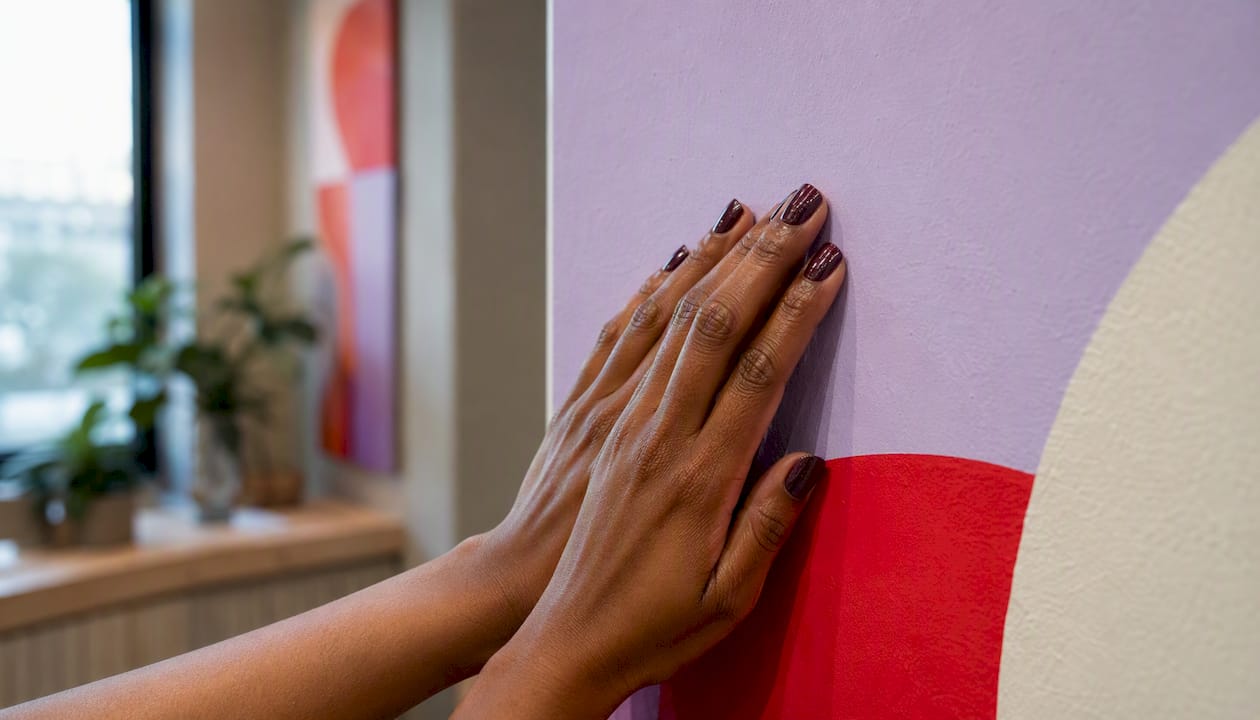
Winter nail trends split into two clear lanes: everyday deep tones built for durability, and festive statement details for the holiday season. Burgundy, forest green, navy, and deep plum anchor the everyday lane. Chrome, metallic, and subtle glitter step in for December events.
Winter palette essentials:
Burgundy and oxblood: the most versatile winter shade across skin tones
Forest green and navy: strong alternatives to the standard red
Chrome and metallic finishes for holiday occasions
Subtle glitter topcoats that add festive detail without committing to a full glitter nail
Cold, dry air and frequent handwashing in winter are genuinely hard on nail health. Shorter lengths chip less, and high-gloss or gel finishes hold better than regular lacquer when hands are exposed to temperature swings throughout the day. Month-by-month trend data places festive chrome and glitter firmly in December, with dense, rich shades carrying through January.
5. How nail treatments and finishes adapt across seasons
The service you choose matters as much as the color. Gel, SNS dip powder, and regular lacquer each behave differently depending on the season’s demands.
Matching service to season:
Spring: Regular lacquer or soft gel works well. Activity levels are moderate, and lighter colors show chips more visibly, so a two-week gel cycle fits.
Summer: Gel or SNS dip powder for anyone swimming or traveling. Dip powder resists moisture better and tends to last three to four weeks without lifting.
Fall/Winter: Gel extensions or structured overlays suit the season’s heavier wear. Longer wear cycles make sense when hands are mostly covered by gloves.
Seasonal maintenance checklist:
Apply cuticle oil daily in fall and winter — cold air dehydrates the nail plate and surrounding skin faster than any other season.
Schedule a rest phase from gel every eight to twelve weeks to let the natural nail recover.
In summer, reapply a protective topcoat at the one-week mark if you swim frequently.
Ask your technician to seal the free edge on every application, regardless of season.
One structural note: nail plates expand slightly in humid summer conditions and contract in dry winter air. Applying polish to a well-hydrated nail and sealing the edge carefully reduces premature lifting in both extremes.
6. What actually drives seasonal nail trends to shift
The mechanics behind nail fashion seasonality are more coordinated than most people realize. Color forecasting agencies like WGSN publish seasonal palettes six to eighteen months ahead of retail. Nail brands and salons plan product launches and color campaigns around those quarterly windows, which is why a new collection of fall shades appears in stores in August rather than October.
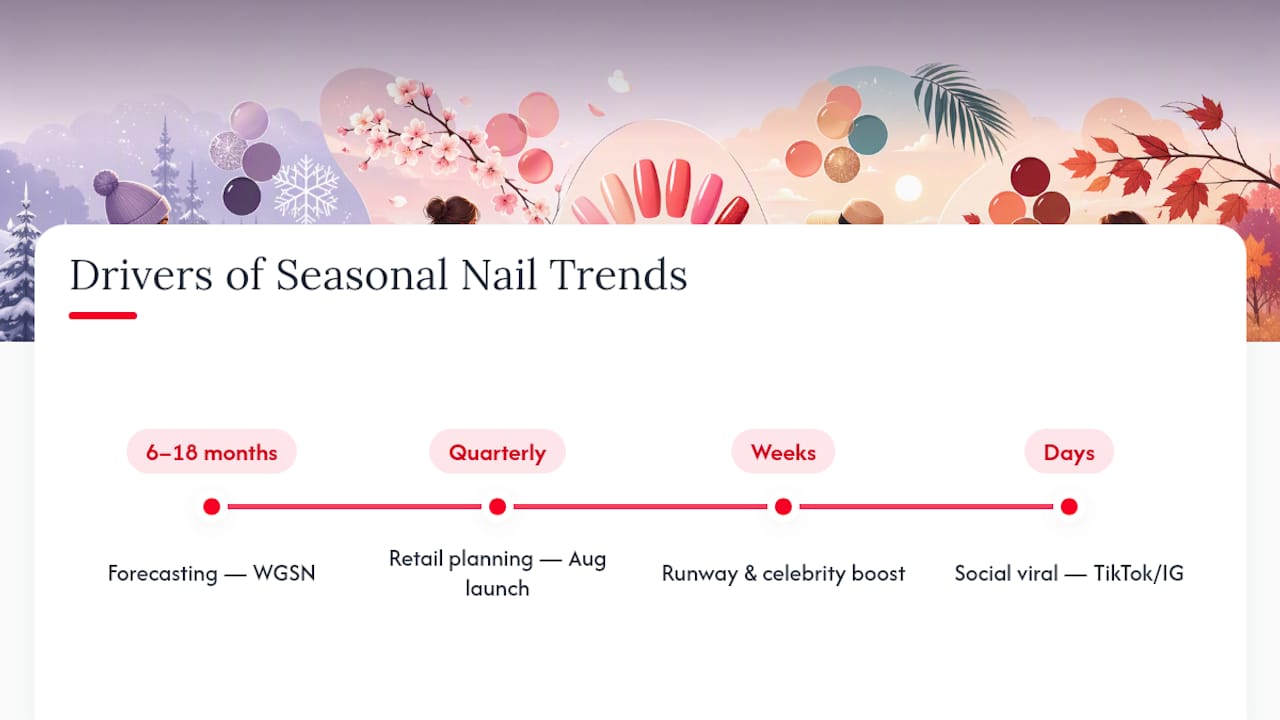
Runway shows and celebrity moments accelerate specific palettes. When a high-profile manicurist debuts a particular shade at a February fashion week, that color appears in salon requests within weeks. Social platforms compress that cycle further: a trending nail post on TikTok or Instagram can move a color from niche to mainstream in days.
Psychology plays a real role too. Clients seek a mood reset with each season, and color is one of the fastest ways to signal that shift. Allure and other editorial outlets have noted that even the minimalist “bare nail” trend functions as an intentional aesthetic choice, a palette cleanser against more elaborate designs rather than an absence of style.
Cultural events create reliable short-term spikes. Booking data and trend calendars show consistent surges around Valentine’s Day (reds and pinks), May weddings (soft nudes and florals), July festivals (neons and brights), Halloween (black, orange, graphic art), and the holiday season (metallics and deep reds).
7. How to pick a seasonal manicure that fits your life
A simple three-step framework works better than chasing every new color drop:
Choose a seasonal anchor color. One shade that works with most of your wardrobe for the next eight to twelve weeks. Trend guidance consistently recommends anchoring around a single core color and varying accents monthly rather than doing a full color change every appointment.
Match your finish to your lifestyle. High-gloss and gel for active, wet-exposure seasons. Matte or velvet for fall and winter when you want texture. Chrome or metallic for specific occasions.
Decide on accents versus full color. One or two accent nails in a contrasting shade or finish extend the life of a look without a full redo.
Questions worth asking your technician before you commit:
Which finish will last longest given my activity level this month?
Should I do a rest phase before this appointment?
Can we add an accent detail that works for an upcoming event without changing the whole look?
Pro Tip: If you want to follow trends with minimal upkeep, pick a neutral anchor (milky white in spring, espresso in fall) and use accent nails for trend-driven colors. You get the seasonal update without the full commitment.
For more color combination ideas that work across seasons, the anchor-plus-accent approach is the most practical starting point.
8. UV/LED curing safety: what the research actually says
Gel nails require UV or LED curing, and the skin exposure that comes with it is worth understanding. Research from UC Berkeley describes a cerium carbonate spray called Magan’s HandShield that reduces UVA-generated reactive oxygen species on skin during LED/UV nail curing without interfering with gel adhesion. The spray was developed at Berkeley and has since been commercialized as a practical salon option.
Practical salon safety checklist:
Ask your salon about HEMA-free gel formulas, which reduce the risk of sensitization with repeated exposure.
Use a protective hand shield or ask about protective sprays during curing.
Schedule gel rest phases every eight to twelve weeks.
If you have fair skin or a history of UV sensitivity, apply a broad-spectrum SPF to the backs of your hands before curing.
The risk from occasional gel appointments is low for most people, but cumulative UV exposure across years of regular gel manicures is worth mitigating with simple steps. Industry guidance for 2026 specifically highlights HEMA-free options and planned rest cycles as the two most practical protective habits.
9. How runways, retail, and social media shape what you see at the salon
Fashion runways set the directional palette roughly two seasons ahead. When designers send models down the runway with specific nail looks, those choices filter into editorial coverage, then retail product launches, then salon menus. The cycle from runway to your appointment is typically four to six months.
Retail accelerates the process. Mass-market nail brands watch the same forecasting calendars as luxury houses and release seasonal collections timed to coincide with the fashion calendar. By the time a color feels “everywhere,” it has been in production for six months or more.
Celebrity influence compresses timelines dramatically. A single viral moment — a red carpet manicure, a music video close-up — can push a specific shade into the top requested colors at salons within a week. Social media sustains that momentum: tutorial videos, nail checks, and “what I got done” posts keep a trending color visible for weeks after the initial spike.
Practical drivers matter just as much as aesthetic ones. Weather genuinely changes what people want on their nails. Seasonal nail planning reflects both the fashion calendar and the real-world conditions clients are dressing for.
10. Historical and cultural traditions behind seasonal nail colors
Seasonal nail color preferences have roots older than the modern beauty industry. Red nails in winter trace back to early 20th-century Hollywood glamour and the association of deep reds with warmth and festivity. Pale, natural shades in spring connect to longstanding Western associations between light colors and renewal. These associations became commercial conventions, and commercial conventions became trend cycles.
In East Asian beauty culture, seasonal nail changes have historically tracked with traditional calendar events: soft pinks for Lunar New Year, white and gold for summer festivals, deep jewel tones for autumn harvest celebrations. Those traditions have influenced global nail aesthetics as Korean and Japanese nail art gained international reach through social media.
Bridal culture also shapes seasonal preferences. May and June remain peak wedding months in the United States, which drives consistent demand for soft nudes, sheer pinks, and delicate nail art in spring. That demand is large enough to influence what salons stock and promote.
11. How your climate changes which seasonal trends actually work for you
The standard seasonal nail calendar assumes a four-season temperate climate. For much of the United States, that assumption holds. But in Florida, Southern California, and the Gulf Coast, “fall” does not arrive until November at the earliest, and “winter” rarely brings the dry cold that makes matte finishes and darker shades feel seasonally appropriate.
In Bradenton and the broader Tampa Bay area, summer palettes extend well into October. Bright corals, optic whites, and durable gel finishes remain practical choices long after the rest of the country has moved to espresso and velvet. Conversely, the humidity that persists through fall means free-edge sealing and moisture-resistant formulas stay relevant year-round.
Clients in the Pacific Northwest face the opposite challenge: overcast light for much of the year means that the “spring pastels look best in bright light” rule applies for a shorter window. Deeper, richer shades read well even in April and May when the sky stays gray.
The practical takeaway: use the seasonal calendar as a starting framework, then adjust for your actual climate. A nail tech who knows your local conditions will give you better advice than any national trend report.
What the seasonal rhythm means in practice
The conventional wisdom treats seasonal nail changes as purely trend-driven, as if clients are just following whatever color houses decree. The reality is more interesting. Seasonal shifts work because they are correct in a functional sense: light changes, wardrobes change, activities change, and the colors and finishes that look and wear best genuinely shift with those conditions. The trend industry did not invent seasonal nail changes; it codified something that was already happening.
What the industry did add is the acceleration. A color that might have taken two years to move from runway to mainstream now moves in weeks. That compression creates the feeling that trends are arbitrary or exhausting. They are not arbitrary, but the pace can be. The anchor-color approach is the practical antidote: commit to one seasonal shade that fits your wardrobe and life, use accents for trend interest, and let the microtrends pass without chasing them.
One thing worth pushing back on: the idea that following seasonal trends requires frequent full changes. It does not. A well-chosen anchor color in a durable finish, refreshed with a new accent or topcoat detail every few weeks, keeps a look current with minimal time and cost. That is how working salons actually advise clients, and it is a more honest picture than the “new nails every two weeks” narrative that benefits product sales more than it benefits clients.
Sources
Recommended
Comments