
How to Choose Nail Salon Cleanliness Standards
Updated: Sep 12
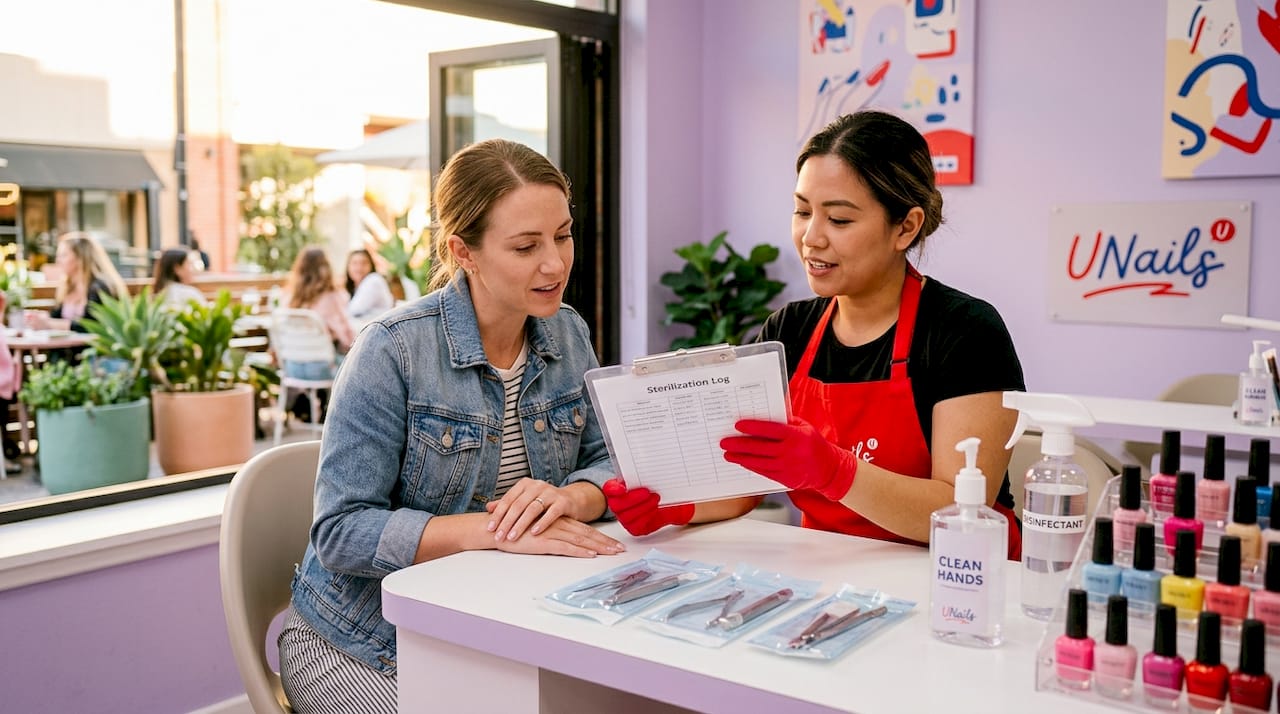
Most people pick a nail salon based on price, proximity, or Instagram photos. That approach works fine until you walk out with a fungal infection or a bacterial skin reaction. Knowing how to choose nail salon cleanliness standards before you book is what separates a relaxing appointment from a medical problem. This guide gives you the specific benchmarks, questions to ask, and red flags to watch for, so you can make a genuinely informed decision about where your nails get done.
Table of Contents
Key takeaways
Point | Details |
Three-tier sanitation is required | Reputable salons clean, disinfect, and autoclave metal tools — all three steps matter. |
Disposable liners protect pedicure clients | Foot bath liners must be replaced for every client, not just rinsed between uses. |
Ask direct questions and watch reactions | Staff hesitation when asked about sterilization schedules is itself a red flag. |
Technician skill affects infection risk | Overly aggressive filing creates microscopic skin breaks that let pathogens in. |
UV sterilizers alone are not enough | UV boxes only reduce surface bacteria and cannot substitute for autoclave sterilization. |
Choose nail salon cleanliness standards you can actually verify
Not every salon that looks clean actually operates clean. The difference lies in documented protocols, not decorative aesthetics. There are three distinct levels of tool sanitation that any reputable nail salon must follow, and skipping even one of them creates real health risk.
The first level is physical cleaning: removing visible debris from tools using soap, water, and sometimes an ultrasonic bath. Proper sterilization starts with this mechanical step before any chemical treatment. The second level is disinfection: soaking cleaned tools in an EPA-registered disinfectant solution at the right concentration and for the correct contact time. The third level is autoclaving: using pressurized steam to kill all microbial life, including bacterial spores. Cuticle nippers and pushers require all three tiers, and porous items like nail files must be single-use only.
Beyond metal tools, the salon environment itself tells you a lot. Look for:
Clean workstations wiped between every client, not just at the end of the day
Proper ventilation that moves chemical fumes away from breathing zones
Clearly labeled waste containers for used disposables
Foot bath liners that are fresh, sealed, and replaced per client
On that last point: disposable polyethylene tub liners are a non-negotiable standard for pedicure safety. Reusable foot baths harbor pathogens in jets and crevices that basic rinsing cannot reach.
Pro Tip: Ask to see the salon’s sterilization log. Reputable salons post written SOPs and keep visible documentation of disinfectant changes and autoclave cycles. If no log exists, treat that as a serious gap.
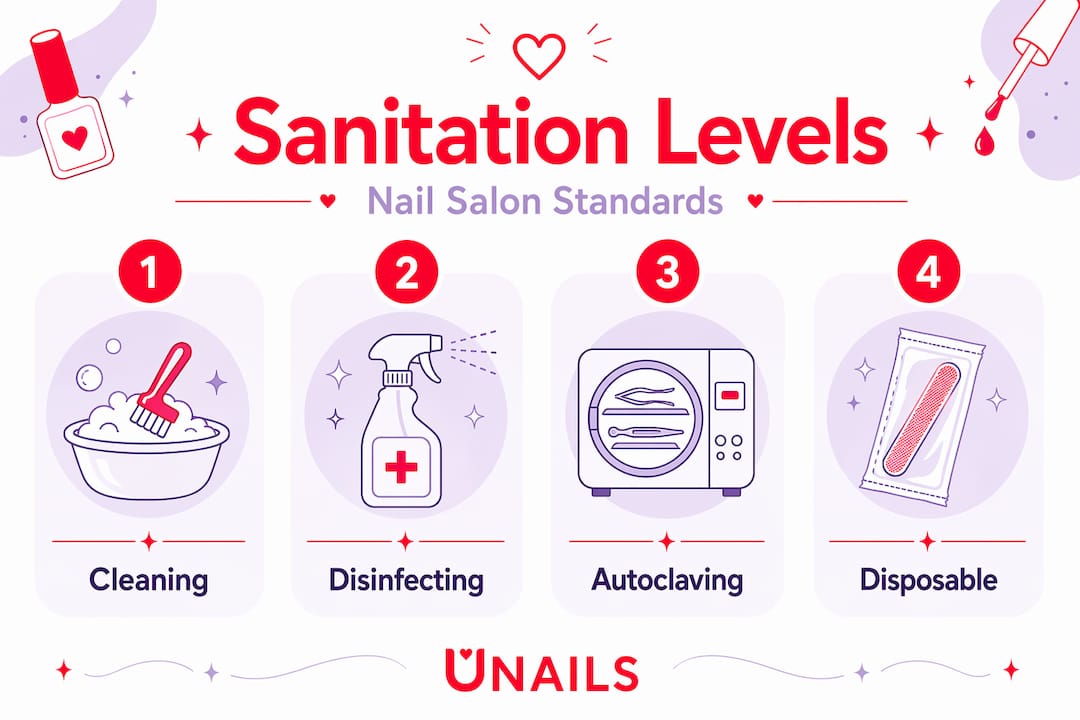
The table below gives you a quick reference for what sanitation level applies to which tools.
Tool type | Required sanitation level | Disposable? |
Cuticle nippers | Clean + disinfect + autoclave | No (if stainless steel) |
Nail files and buffers | N/A | Yes, single-use |
Foot bath basins | Full multi-step disinfect protocol | Liner required per client |
Drill bits | Clean + disinfect + autoclave | No (metal bits) |
Orangewood sticks | N/A | Yes, single-use |
How to verify salon sanitation yourself
Walking into a salon and looking around for thirty seconds gives you almost nothing useful. Verification requires a short checklist and a few direct questions. Here is a practical sequence you can follow on your next visit.
Observe the technician’s hands. They should wash hands or apply sanitizer before touching you and before putting on gloves. No gloves is an immediate red flag.
Watch how tools arrive at your station. Autoclaved tools come sealed in pouches. If a technician pulls tools from an open drawer or a jar of blue liquid alone, the sterilization chain is incomplete.
Check the foot bath before your pedicure. A fresh liner should already be in place when you sit down. Asking about the liner is not rude. It is your right as a paying client.
Ask one direct question about disinfectant schedules. Something like, “How often do you change the disinfectant solution?” is enough. A confident, specific answer signals proper training.
Look at the workstation surface. It should be wiped with disinfectant between clients. If the table still has product residue from the previous appointment, that tells you everything.
Notice the ventilation. Chemical fumes from acrylics and gels should not be suffocating. Proper salon hygiene practices include air filtration or exhaust systems to protect both clients and staff.
Red flags worth leaving for include: staff who get defensive when asked sanitation questions, pedicure tubs with no liners, tools that arrive unwrapped, and any sign that files or buffers are being reused between clients. Client questions improve salon transparency across the board. The salons that welcome questions are almost always the ones doing things right.
Pro Tip: Before booking, check your state’s cosmetology board website. Many states publish inspection reports for licensed salons. A recent passing inspection score paired with your own in-person check gives you a much clearer picture than reviews alone.
Also consider reviewing a nail salon visit checklist before your appointment so you arrive prepared with the right questions.
Why technician training matters as much as tools
Here is something most cleanliness checklists miss entirely: a fully sterilized set of tools in the wrong hands still creates infection risk. Nail technician skill is not separate from sanitation. It is part of it.
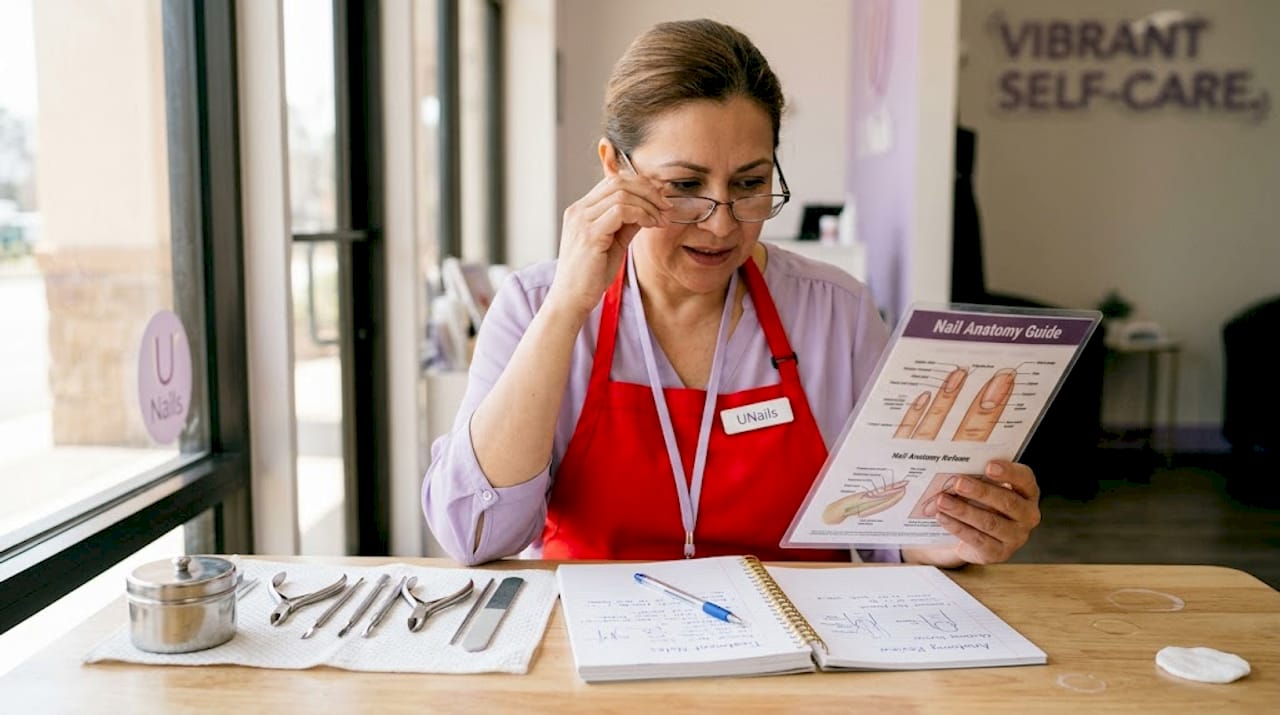
Trained nail technicians understand nail anatomy and product chemistry in ways that prevent two of the most common salon injuries: over-filing and improper chemical application. Over-filing thins the nail plate and creates micro-damage. Improper use of primers or adhesives causes allergic sensitization that can make clients permanently reactive to gel products.
Good technique also means knowing where not to cut. Cuticles are a protective barrier. Cutting too aggressively opens a pathway for bacteria and fungi to reach the nail matrix. Safe technician technique avoids microtears specifically because even a sterile environment cannot compensate for damage the technician causes with pressure and angle.
When evaluating a salon, consider these technician-related factors:
Active state cosmetology license, which should be visibly posted at the workstation
Participation in a Healthy Nail Salon Recognition Program. These third-party programs provide a framework that builds genuine client trust, not just a certificate on the wall.
Experience with the specific service you want, since gel, SNS, and acrylic applications each carry distinct chemical and technique requirements
Willingness to explain what they are doing and why, which reflects both confidence and proper training
Professional products also go through safety testing that consumer products do not face. A salon using professional-grade materials is giving you more consistent, predictable results with fewer adverse reactions. This matters more than most clients realize when choosing between a budget and a quality nail salon.
You can read more about nail damage prevention and how skilled salons approach it before it becomes a problem.
Common sanitation mistakes that put clients at risk
Even well-intentioned salons make errors that compromise safety. Knowing what these mistakes look like helps you catch problems before they affect you.
The most widespread mistake is improper tool storage after sterilization. Sterilized tools tossed into open drawers are exposed to airborne contaminants immediately. The moment a sealed autoclave pouch is opened and the tools are set in an unclean space, the sterilization is effectively undone. Properly handled tools stay sealed until the moment of use.
The second most common error is over-relying on UV sterilizer boxes. These devices are everywhere in nail salons, and many clients see them as proof of a clean operation. They are not. UV-C sterilizers cannot reach shaded areas on tools, meaning any surface not directly exposed to light remains potentially contaminated. The autoclave is the industry standard for total microbial kill. UV is a secondary storage aid at best.
“Even a sterile environment cannot compensate for poor technician technique causing nail damage.” — The Conversation, on infection risks from manicures
Other mistakes to watch for:
Reusing disposable items. Files, buffers, and orangewood sticks used on a previous client should never appear at your station, even if they look clean.
Aggressive cuticle removal. Cutting rather than pushing cuticles creates open wounds at the nail base. This is both a technique failure and a sanitation risk combined.
Skipping footwear precautions. Warm, moist environments in pedicure tubs favor fungal growth. Wearing flip-flops to and from your pedicure station reduces your contact with potentially contaminated surfaces.
No visible product labeling. Professional disinfectants should be clearly labeled and stored correctly. Mystery liquids in unlabeled containers are a sign of shortcuts.
The risks associated with DIY nail treatments are well documented, but the same categories of risk apply when a professional salon cuts corners on hygiene. The setting changes. The biology does not.
My take on where salon hygiene standards are heading
I have spent years talking with nail professionals, reviewing sanitation protocols, and watching how clients interact with salons. What I have noticed most is a widening gap. On one side are salons that have raised their standards significantly, investing in autoclaves, documentation, and technician education. On the other are salons coasting on appearances while skipping the fundamentals.
What I have learned is that the best salons are not necessarily the most expensive ones. They are the ones where staff answer sanitation questions without hesitation, where you can see sterilization pouches being opened at your station, and where the foot bath liner is already in place when you sit down. Those details cost the salon very little. They just require discipline.
I also think consumers underestimate their own power here. When you ask a direct question about tool sterilization and the technician gives you a confident, detailed answer, you are not just learning something. You are signaling that these things matter to you. Salons that hear that from enough clients change their behavior. Nail techs who understand microbiology see this dynamic clearly. Your engagement makes the whole industry safer.
The balance between science and care is what separates a genuinely safe salon from one that just smells like disinfectant.
— MinhHieu
Experience clean nail care at Bradentonnails
At Bradentonnails, nail salon sanitation standards are not an afterthought. Every station is disinfected between clients, metal tools are autoclaved and arrive sealed to your appointment, and single-use items are never reused. The team at TJ Nails follows documented SOPs and uses professional-grade products across every service. Whether you are booking a manicure in Bradenton or a pedicure with proper foot bath liner protocol, you get a clean, skilled experience every time. TJ Nails also offers flexible hours including Sundays, so safe nail care fits your schedule. Book your appointment at Bradentonnails and see the difference that real hygiene standards make.
FAQ
What are the three levels of nail salon tool sanitation?
The three levels are cleaning (physical removal of debris), disinfecting (chemical treatment with an EPA-registered solution), and autoclaving (pressurized steam sterilization). All three are required for metal tools like cuticle nippers.
How do I know if a nail salon uses proper pedicure hygiene?
Look for a sealed polyethylene liner in the foot bath before your service begins. Reusable tubs without fresh liners carry high contamination risk and do not meet best sanitary nail salon practices.
Are UV sterilizer boxes enough to sanitize nail tools?
No. UV-C sterilizers only reduce bacteria on directly exposed surfaces and cannot reach shaded areas on tools. Autoclaving is the industry standard for full microbial kill and should not be replaced by UV boxes alone.
What questions should I ask a nail salon about cleanliness?
Ask how often disinfectant solutions are changed, whether tools arrive in sealed autoclave pouches, and how pedicure basins are cleaned between clients. Hesitation or vague answers from staff are a signal to reconsider your choice.
Can poor nail technique cause infections even in a clean salon?
Yes. Overly aggressive filing or cuticle cutting creates microscopic breaks in the skin that allow bacteria and fungi to enter, regardless of how sterile the tools are. Technician skill and proper technique are part of nail salon sanitation best practices.
Recommended
Comments