
The Role of Nail Art in Grooming Your Personal Style
Updated: 1 day ago
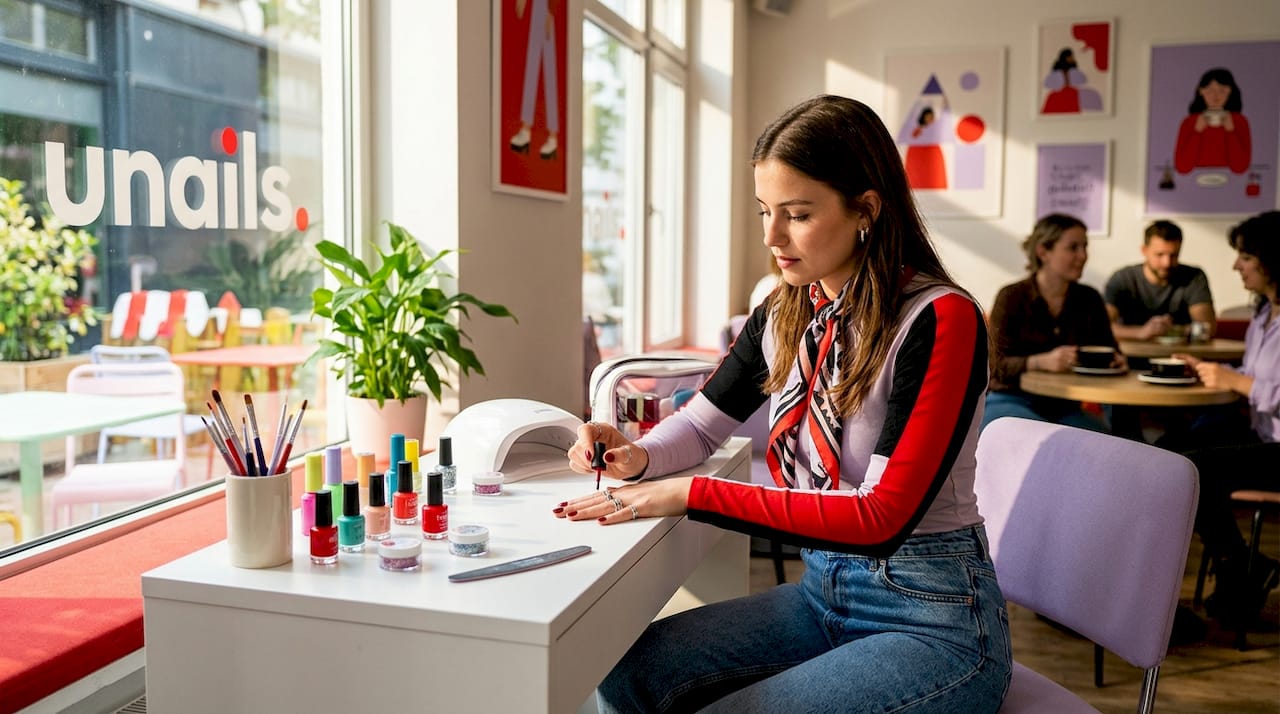
Nail art is defined as the practice of creating designs on nails, and it sits at the center of modern grooming as both a technical skill and a form of personal expression. According to the Cambridge English Dictionary, nail art encompasses the designs themselves and the activity of making them, placing it firmly within the manicure and grooming process rather than outside it. The role of nail art in grooming goes far beyond decoration. It signals identity, communicates mood, and transforms a basic nail care routine into a deliberate style statement. Whether you prefer a clean, natural finish or intricate hand-painted florals, nail art is where grooming meets artistry.
How nail grooming techniques enable and enhance nail art
Nail grooming techniques are the foundation that determines whether nail art lasts two days or two weeks. Skipping preparation steps is the single most common reason nail art chips, peels, or lifts prematurely. The nail prep process involves cleaning, shaping, buffing, cuticle care, and dehydrating the nail plate, and NailStyleLab experts confirm this routine takes 8 to 12 minutes per hand. That time investment directly determines how long your nail art holds its look.
Here is the correct sequence for nail prep that supports long-lasting nail art:
Clean the nail plate. Remove all traces of oil, old polish, and residue using an acetone-based cleanser. Oil is the primary enemy of adhesion.
Shape the nails. Use a file to create your preferred shape, whether square, oval, almond, or coffin. Consistent shaping prevents uneven stress on the nail edge.
Buff the surface. Light buffing removes shine and creates microscopic texture for products to grip. Over-buffing thins the nail, so one or two passes is enough.
Care for the cuticles. Push back and remove excess cuticle tissue. Cuticle overgrowth causes product to lift at the base within days.
Dehydrate the nail plate. Apply a nail dehydrator or primer to strip remaining moisture. This step is the most frequently skipped and the most consequential.
Skipping even one step compounds the risk of lifting and chipping, undermining both the artistry and the grooming effort. Nail prep is the reason a $5 polish applied correctly outlasts a $30 gel applied carelessly.
Pro Tip: Apply a thin layer of base coat before any nail art design. It protects the natural nail from staining and gives color products a uniform surface to bond to, which extends wear by several days.
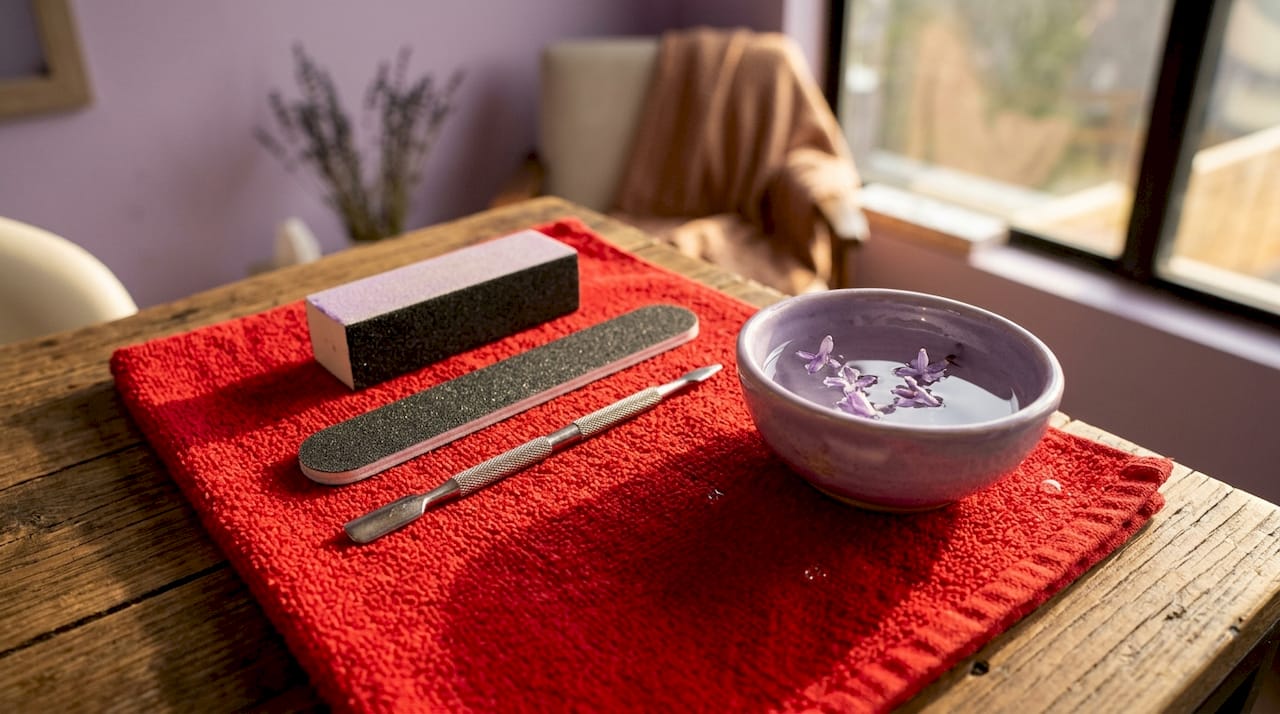
The techniques used by nail artists to create patterns depend entirely on the nail surface being properly prepared. A bumpy, oily, or uneven nail plate distorts fine lines, causes gel to bubble, and makes stamped designs bleed at the edges.
What is the significance of nail art for personal style and self-expression?
Nail art has evolved into a recognized form of personal identity expression, functioning the way clothing or jewelry does as a signal of who you are and what you value. Starfish Magazine describes nails as “tiny canvases” that convey individual beliefs, personality, and mood in a way that is visible in every handshake, gesture, and photograph. That description captures something real. A person who chooses geometric black nail art is communicating something different from someone who selects soft pink with gold leaf, and both choices are deliberate.
The cultural weight of nail art has grown considerably in recent years. Several specific dimensions explain why nail art significance has expanded beyond the salon:
Social media amplification. Platforms like Instagram and TikTok have turned nail art into a visual language with global reach. Social media has mainstreamed nail art techniques that were once exclusive to editorial fashion shoots, making elaborate designs accessible to everyday clients.
Professional context. Nail art now appears in corporate offices, medical settings, and formal events. The shift reflects broader acceptance of personal expression within professional grooming standards.
Cultural symbolism. Specific colors and designs carry meaning across cultures. Red nails signal confidence in many Western contexts; white nails have become associated with minimalism and clean aesthetics; coffin-shaped acrylics carry their own subcultural identity.
Mood and mental health. Many clients report that getting their nails done functions as a reset, a deliberate act of self-care that affects how they carry themselves for the following weeks.
“Nail art is not just decoration. It is a statement about who you are and how you choose to show up in the world.” — Starfish Magazine
Nail art for self-expression also works within professional grooming contexts. A subtle nude gel with a single accent nail reads as polished and intentional in a boardroom. A full set of hand-painted botanicals works equally well at a creative agency or a weekend market. The design choice adapts; the expressive function stays constant.
Minimalist versus elaborate nail art: which style fits your grooming goals?
The spectrum of nail art runs from the barely-there to the architecturally complex, and choosing where you land on that spectrum depends on your lifestyle, maintenance tolerance, and grooming priorities.
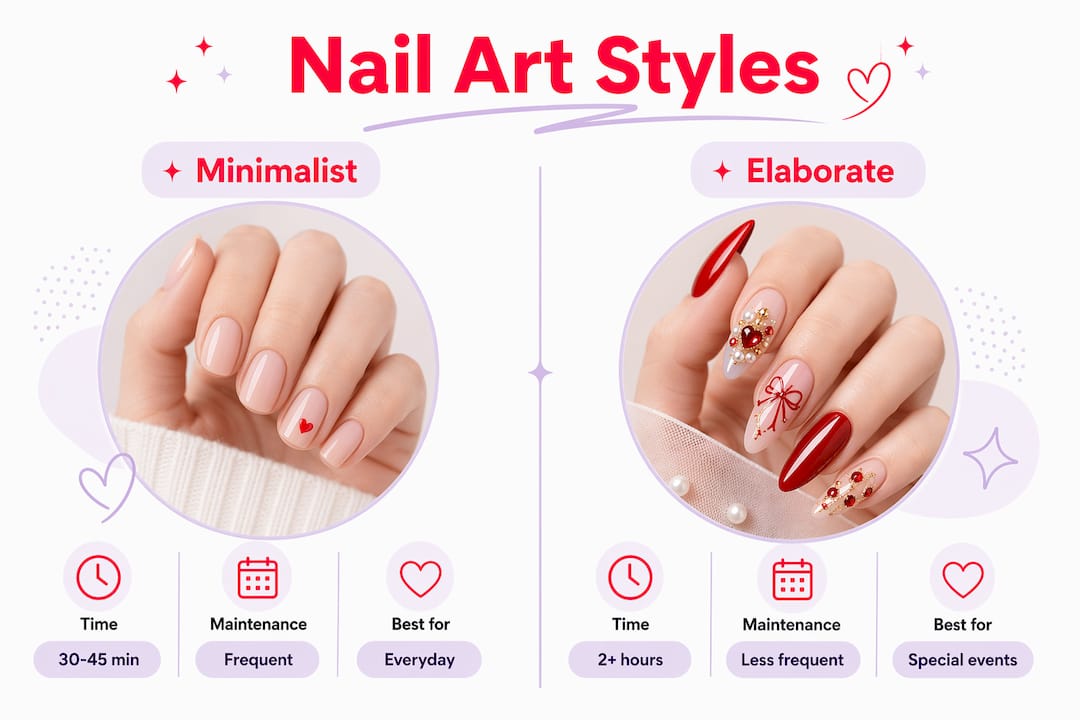
Style | Time per appointment | Maintenance frequency | Best for |
Bare manicure | 30 to 45 minutes | Every 3 to 4 weeks | Daily wear, professional settings |
Solid color gel | 45 to 60 minutes | Every 2 to 3 weeks | Versatile, low upkeep |
Accent nail art | 60 to 90 minutes | Every 2 to 3 weeks | Style-conscious, moderate commitment |
Full elaborate nail art | 2 hours or more | Every 2 to 3 weeks | Special occasions, high creative investment |
The bare manicure sits at the minimalist end of the spectrum and has gained significant traction as a grooming-first aesthetic. An OPI ANZ educator describes it as emphasizing natural nail health through tidy shaping, buffing, and cuticle care, with no polish required. The result reads as expensive and intentional precisely because it demands consistent upkeep. Maintenance every 3 to 4 weeks keeps the look sharp.
Elaborate nail art sits at the opposite end. Detailed nail art appointments can require two hours or more, reflecting the integration of grooming and artistry into a single extended session. Acrylic enhancements alone run 60 to 90 minutes before any design work begins. Treating these appointments as process events rather than quick add-ons protects both your schedule and the quality of the result.
Pro Tip: If you are new to nail art, start with a single accent nail on each hand. You get the creative payoff without the full time commitment, and it gives you a chance to test how a particular design wears with your lifestyle before committing to all ten nails.
Even no-polish aesthetics rely on expert grooming techniques including cuticle polishing, precise shaping, and buffing to maintain shine and nail health. The minimalist look is not lower effort. It is differently directed effort.
How to integrate nail art into your grooming routine effectively
Integrating nail art into your grooming routine works best when you treat it as a planned appointment rather than an impulse decision. The complexity of the design you want determines how much time you need to block, and arriving without a plan often results in a rushed outcome that does not reflect what you actually wanted.
Practical steps for making nail art a consistent part of your grooming practice:
Plan by design complexity. A solid gel color fits into a lunch break. A full set of hand-painted nail art does not. Review your calendar before booking and give yourself a realistic window.
Choose your salon based on specialization. Not every nail technician specializes in detailed nail art. Look for portfolios, client photos, and reviews that match the style you want. A technician skilled in gel overlays may not have the same precision with freehand painting.
Follow a nail care routine between appointments. Applying cuticle oil daily, wearing gloves for cleaning tasks, and avoiding using your nails as tools all extend the life of your nail art significantly.
Use a salon visit checklist to prepare. Arriving with clean, bare nails saves time and allows the technician to focus on prep and design rather than removal.
Balance wearability with creativity. A design you love but cannot maintain will frustrate you by week two. Match the design to your actual lifestyle, not just your aspirations for it.
The broader connection between cosmetic artistry and grooming is worth understanding. Nail art sits within a wider ecosystem of personal presentation that includes skincare, hair, and makeup. Treating it as one coordinated element rather than an isolated choice produces more cohesive results.
Key takeaways
Nail art functions as both a grooming discipline and a form of identity expression, and its quality depends entirely on the preparation that precedes the design.
Point | Details |
Nail prep drives longevity | An 8 to 12 minute prep routine determines how long nail art holds, more than product brand or price. |
Style choice reflects lifestyle | Minimalist bare manicures and elaborate designs both require consistent upkeep, just directed differently. |
Self-expression is the core function | Nail art communicates personality, mood, and identity in every professional and social context. |
Appointment time varies widely | Basic manicures take 30 to 45 minutes; detailed nail art can require two hours or more. |
Routine maintenance extends results | Daily cuticle oil, protective habits, and timely refills keep nail art looking intentional between appointments. |
Why nail art changed how I think about grooming
The conversation around nail art used to center on whether it was “appropriate,” as if creativity and professionalism were in conflict. What I have observed over years of watching grooming culture shift is that the question has flipped entirely. Now the more interesting question is what your nails say when you walk into a room, and whether that message is intentional.
What strikes me most is how the technical side of nail art gets underestimated. People focus on the design and overlook the prep, which is exactly backwards. The prep is where the result is won or lost. A flawless set of hand-painted florals applied to an unprepped nail plate will look terrible by day five. The same design on a properly cleaned, shaped, buffed, and dehydrated nail will still look sharp at week two. Technique over cosmetics, every time.
The other shift I find genuinely interesting is the rise of the bare manicure as a luxury signal. Choosing to wear no polish and still maintaining a precise, healthy, buffed nail is a statement of confidence. It says you invest in the quality of your nails themselves, not just what covers them. That is a more sophisticated grooming position than most people give it credit for.
My honest advice: experiment with nail art styles the same way you would experiment with a new haircut. Start with something close to your comfort zone, observe how it affects your confidence and how others respond, then push further. The nails grow back. The experience of finding a style that genuinely feels like you is worth the exploration.
— MinhHieu
Discover expert nail art and grooming services at Bradentonnails
Bradentonnails at TJ Nails Salon and Spa in Bradenton, FL brings together skilled nail technicians who treat grooming prep and artistic design as one connected process. Whether you want a clean, polished bare manicure near you or a full set of detailed nail art, every appointment starts with the thorough nail prep that makes designs last. The salon offers gel, shellac, acrylic enhancements, and SNS dipping powder options to match your style and maintenance preferences. Flexible hours including Sundays make it easy to fit a quality nail appointment into your actual schedule. Book online and arrive ready to express exactly who you are.
FAQ
What is the role of nail art in grooming?
Nail art is defined as the practice of designing nails and sits directly within the manicure and grooming process. It transforms basic nail care into a form of personal expression and style communication.
How do nail grooming techniques affect nail art results?
Proper nail prep including cleaning, shaping, buffing, cuticle care, and dehydration determines how long nail art adheres and how sharp it looks. Skipping any single step significantly increases the risk of chipping and lifting.
How often should you maintain nail art?
Maintenance frequency depends on the style. Bare manicures and elaborate nail art both require professional upkeep every 2 to 4 weeks to keep the look intentional and the nails healthy.
Can nail art work in professional settings?
Nail art works in professional contexts when the design matches the environment. Subtle gel colors, neutral tones, and single accent nails read as polished and deliberate in most workplace settings.
Does nail art design choice affect grooming quality?
The design choice does not affect grooming quality, but the prep behind it does. A well-groomed nail with any design will always look more intentional than an elaborate design applied to an unprepared nail surface.
Recommended
Comments