
What Is a Nail Care Consultation? Your Full Guide
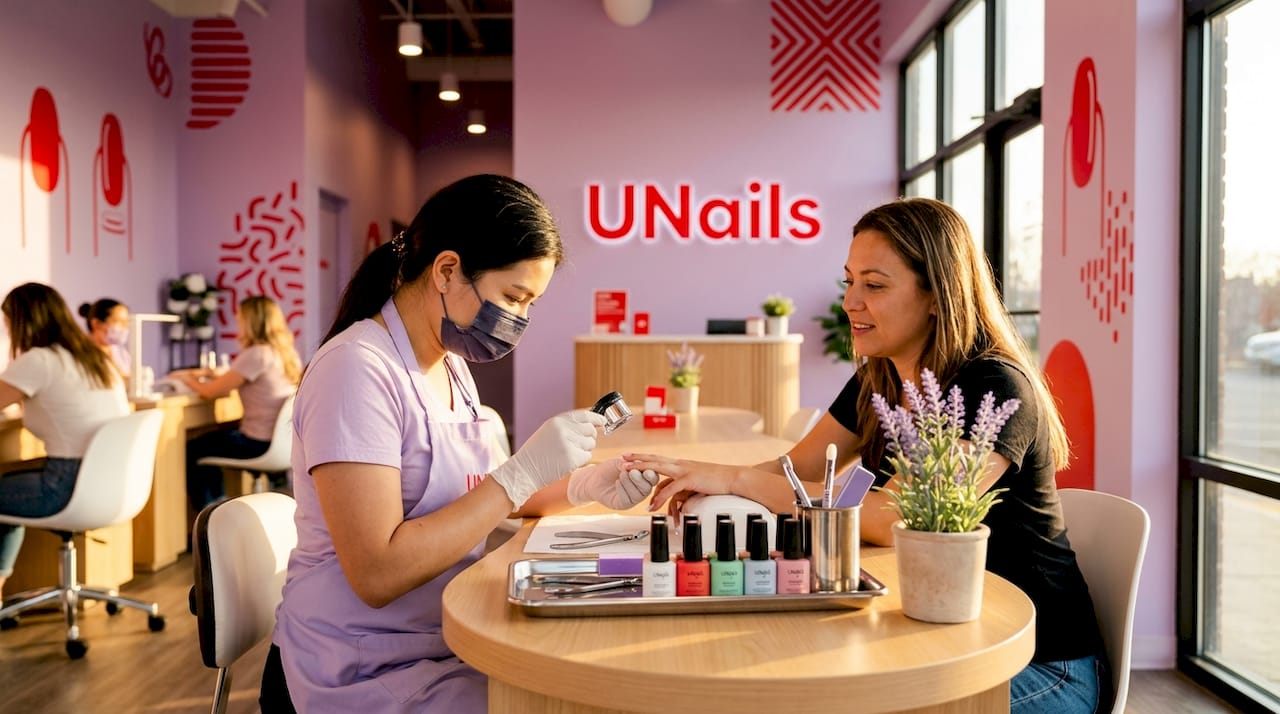
A nail care consultation is a structured conversation and screening process where a nail technician assesses your nail health, preferences, and lifestyle to design a safe, personalized treatment plan. This session happens before any filing or polish touches your nails. It covers everything from your daily hand use and wear expectations to allergy history and visible nail concerns. Skipping this step is one of the most common reasons clients end up with chipping, lifting, or worse. A thorough nail health assessment protects both your nails and your satisfaction.
What is a nail care consultation and why does it matter?
A nail care consultation is the foundation of every professional nail service worth booking. Rather than jumping straight into shaping or color, a skilled technician starts by gathering information that shapes every decision made during your appointment. This is where personalized nail care begins, not at the polish rack.
The core purpose is twofold. First, the technician learns what you want. Second, and more critically, they learn what your nails can safely handle. These two things are not always the same, and a good consultation closes that gap before any damage is done.
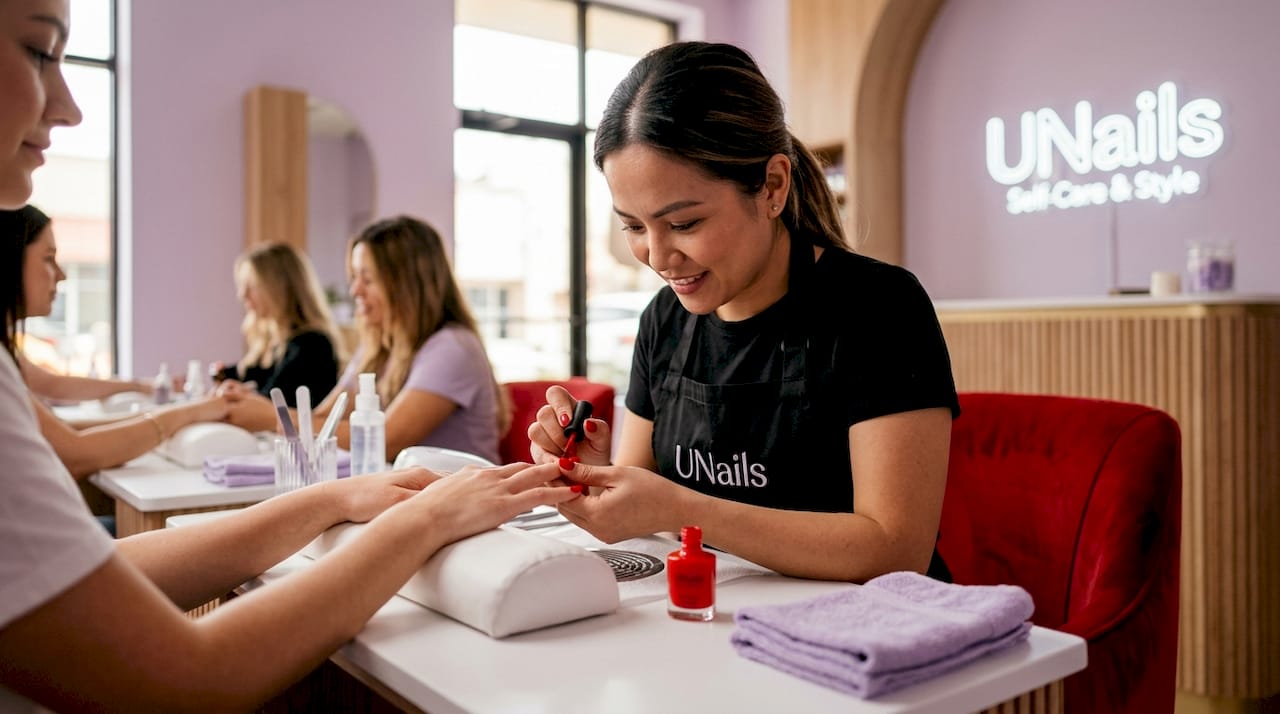
Most clients think of a nail care session as a luxury preamble. Professionals treat it as a clinical necessity. The difference in outcomes between salons that skip this step and those that don’t is visible in the longevity of your manicure and the health of your nail bed over time.
What happens during a nail care consultation
The nail consultation directly affects how the appointment proceeds, starting with prep decisions like shaping style and cuticle care approach. A standard nail care session follows a clear sequence once the consultation wraps up: soaking, shaping, cuticle care, exfoliation, massage, moisturizing, and then polish or enhancement application.
During the consultation itself, your technician will ask a focused set of questions covering several areas:
Wear expectations: How long do you need this to last? Two weeks, four weeks, or longer?
Length and shape preferences: Square, almond, coffin, or short and practical?
Lifestyle factors: Do you type all day, work with your hands, or swim regularly?
Nail history: Have you had lifting, chipping, or breakage with past services?
Extension comfort: Are you open to tips or overlays, or do you prefer natural nail work only?
Technicians use a consultation checklist that includes prompts like “I need this to last _ weeks” and “I usually experience chipping at _ days.” This is not small talk. These answers directly determine which products get used and how aggressively your nails get prepped.
Pro Tip: Before your appointment, write down the last two or three services you had and any problems you noticed afterward. Lifting at the tips, peeling at the cuticle line, or staining are all details your technician needs to hear.
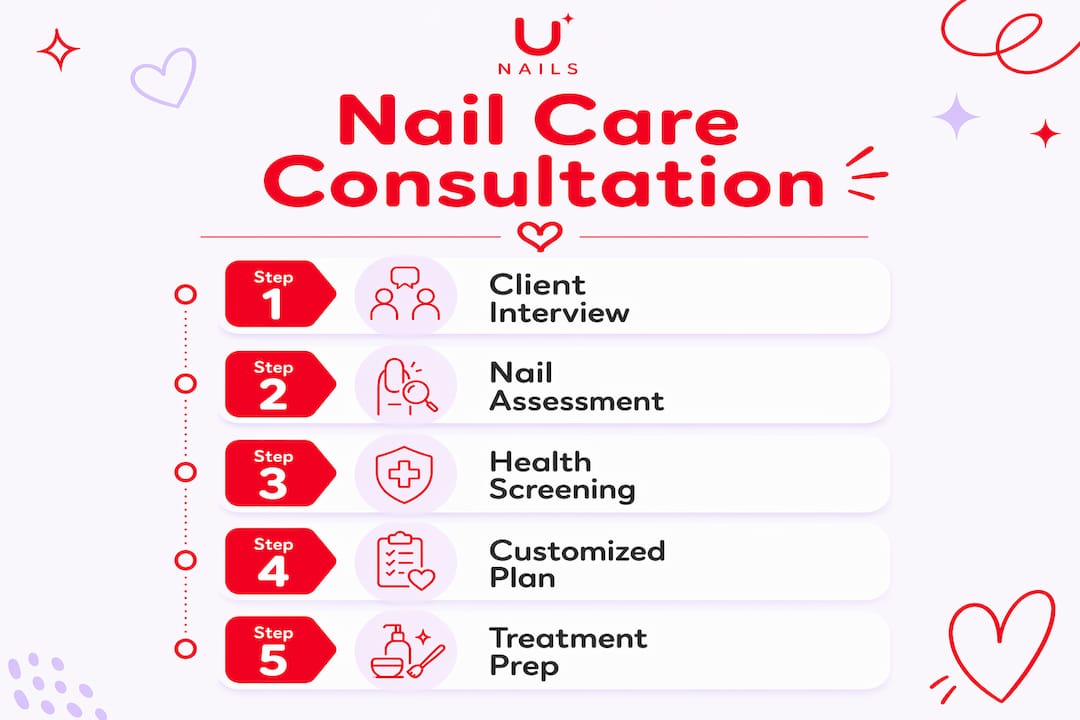
A visual nail assessment also happens at this stage. The technician looks at your nail plate, free edge, cuticles, and surrounding skin. They are checking for signs of damage, overly thin nails from previous enhancements, or anything that might affect product adhesion.
Why health screening is critical in nail consultations
Health screening during a nail consultation goes well beyond aesthetics. Client screening questions cover nail changes, risk factors, medication use, allergies, and habits to identify contraindications and prevent complications before they happen.
The specific areas a technician screens for include:
Discoloration or texture changes: Yellow, white, or thickened nails can signal fungal infection or psoriasis.
Pain or sensitivity: Tenderness around the nail bed may indicate trauma or infection.
Trauma history: Recent injuries can affect how the nail plate accepts products.
Medications: Blood thinners, immunosuppressants, and certain antibiotics affect healing and skin sensitivity.
Allergies: Reactions to acrylics, gel monomers, or formaldehyde-based hardeners are more common than most clients realize.
“Thorough client screening is foundational to safe nail care and helps identify when medical referral is necessary.” — nailcarehub.com
When a technician spots something concerning, such as a nail with unusual discoloration that does not match trauma or polish staining, the right move is a referral. Fungal nail infections require lab testing using nail clippings or scrapings to confirm diagnosis. A nail technician cannot and should not attempt to treat what looks like onychomycosis with cosmetic products. Covering it up with enhancement products can make the infection significantly worse.
Salon hygiene practices also get addressed during this phase. Reputable salons discuss their sterilization standards with clients. Autoclave sterilization is the gold standard for metal tools, and aggressive cuticle cutting is actively discouraged because it creates open pathways for infection. Knowing your salon follows these protocols is part of what makes a consultation valuable.
How technicians use consultation data to customize your treatment
Once a technician has your full picture, they build your service around it. This is where the benefits of nail care consultation become concrete and measurable. Matching wear-life expectations and lifestyle to the right service type reduces chipping and lifting, which are the two most common client complaints.
Here is how that customization typically plays out:
Service selection: A client who swims three times a week gets steered toward a hard gel or SNS dip rather than a standard gel polish, which lifts faster with water exposure.
Prep intensity: Clients with naturally oily nail beds need more thorough dehydration before product application. Clients with thin, damaged nails from previous acrylics need gentler prep and possibly a nail strengthener base.
Length adjustment: A client who works in healthcare or food service gets an honest conversation about why very long nails create hygiene and safety issues, and shorter options get explored.
Cuticle care approach: Clients on blood thinners or with diabetes get a no-cut cuticle approach to reduce infection risk.
Product substitution: Clients with known acrylate allergies get directed toward HEMA-free gel formulas or alternative enhancement systems.
Setting realistic expectations is a core part of this process. A technician who promises four weeks of perfect wear on naturally short, flexible nails is not doing their job. The consultation is where honesty about what is achievable protects the client relationship long term.
What to expect and how to prepare for your consultation
Walking into a nail consultation prepared makes the entire nail care session more productive. Most salons use a client intake form, and medical spa intake forms recommend completing these 24 to 48 hours before your appointment for the most accurate information. The same principle applies to nail consultations.
Expect to answer questions in these categories:
Current nail condition and any recent changes you have noticed
Past reactions to nail products, including itching, redness, or swelling
Medical conditions that affect circulation, immunity, or skin health
Current medications and any known allergies
Your daily routine and how much wear your hands take
Pro Tip: Take a few photos of your nails in natural light before your appointment. If you have noticed changes over the past few weeks, photos give your technician a timeline that words alone cannot provide.
Clear communication about your lifestyle is one of the most underused tools clients have. If you garden, do dishes without gloves, or type for eight hours a day, say so. That information changes which products your technician reaches for. You can also check out this nail salon visit checklist to walk in fully prepared.
Do not hesitate to ask your technician about their hygiene practices, the products they plan to use, and why. A confident, knowledgeable technician welcomes those questions. One who deflects them is a red flag worth noting.
Key takeaways
A nail care consultation is the single most important step in getting a manicure or pedicure that is both safe and long-lasting, because it aligns your technician’s choices with your actual nail health and lifestyle.
Point | Details |
Consultation comes first | The nail health assessment happens before any prep or product application begins. |
Health screening prevents harm | Screening for medications, allergies, and nail changes stops complications before they start. |
Lifestyle drives product choice | Daily hand use and wear expectations determine which service and products your technician selects. |
Referrals are part of the process | Suspected fungal infections or unusual nail changes require medical testing, not cosmetic coverage. |
Preparation improves outcomes | Completing intake forms and noting recent nail changes helps your technician make better decisions. |
Why I think most clients underestimate the consultation
Most people walk into a nail salon focused entirely on the color they want. That is understandable. But after watching hundreds of appointments, the clients who leave happiest are almost always the ones who spent the most time talking before anything touched their nails.
The consultation pitfall I see most often is clients downplaying their nail history. Someone will say their nails are “fine” while sitting across from a technician looking at clear signs of product damage from a previous salon. That gap between what clients report and what technicians observe is where problems get missed.
The other issue is technicians who rush the consultation to move the appointment along faster. A two-minute intake that skips allergy and medication questions is not a consultation. It is a liability waiting to happen. The client-technician relationship works best when both sides treat this conversation as genuinely useful, not a formality.
My honest observation is that clients who ask questions during the consultation get better results. Not because asking questions magically improves the service, but because it signals to the technician that you are paying attention. That attention tends to be returned. You can also build on what you learn by following a solid nail care routine between visits to protect the work done in the salon.
— MinhHieu
Experience personalized nail care at Bradentonnails
Bradentonnails at TJ Nails in Bradenton, FL takes every appointment seriously, starting with a thorough consultation before any service begins. The team asks the right questions about your nail health, lifestyle, and goals so that every manicure or pedicure is built around what your nails actually need. Hygiene standards are non-negotiable, and technicians are trained to spot concerns before they become problems. Whether you are exploring gel manicure options for the first time or returning for a regular nail care session, Bradentonnails makes the consultation the starting point for every visit. Book your appointment online and experience the difference that personalized, consultation-led nail care makes.
FAQ
What is a nail care consultation?
A nail care consultation is a structured conversation between you and your nail technician that covers your nail health, preferences, lifestyle, and any medical or allergy history before treatment begins. It guides every decision made during your appointment, from product selection to prep technique.
How long does a nail consultation take?
A thorough nail consultation typically takes five to fifteen minutes at the start of your appointment. Salons that use intake forms may ask you to complete these 24 to 48 hours in advance to save time.
What questions are asked during a nail health assessment?
Technicians ask about your desired wear duration, nail history, daily hand use, current medications, known allergies, and any visible nail changes like discoloration, pain, or texture shifts. These answers shape the entire service plan.
When should a nail technician refer me to a doctor?
A referral is appropriate when a technician spots signs of possible fungal infection, unusual discoloration, or nail changes that do not match cosmetic causes. Fungal nail conditions require lab confirmation before any treatment, cosmetic or medical.
Can I do a nail consultation for DIY nail care at home?
You can apply the same principles at home by assessing your nail color, texture, and thickness before applying any product. Checking for lifting, peeling, or sensitivity and adjusting your products accordingly mirrors what a professional does during a formal consultation.
Recommended
Comments