
How Nail Art Became Mainstream: A Cultural History
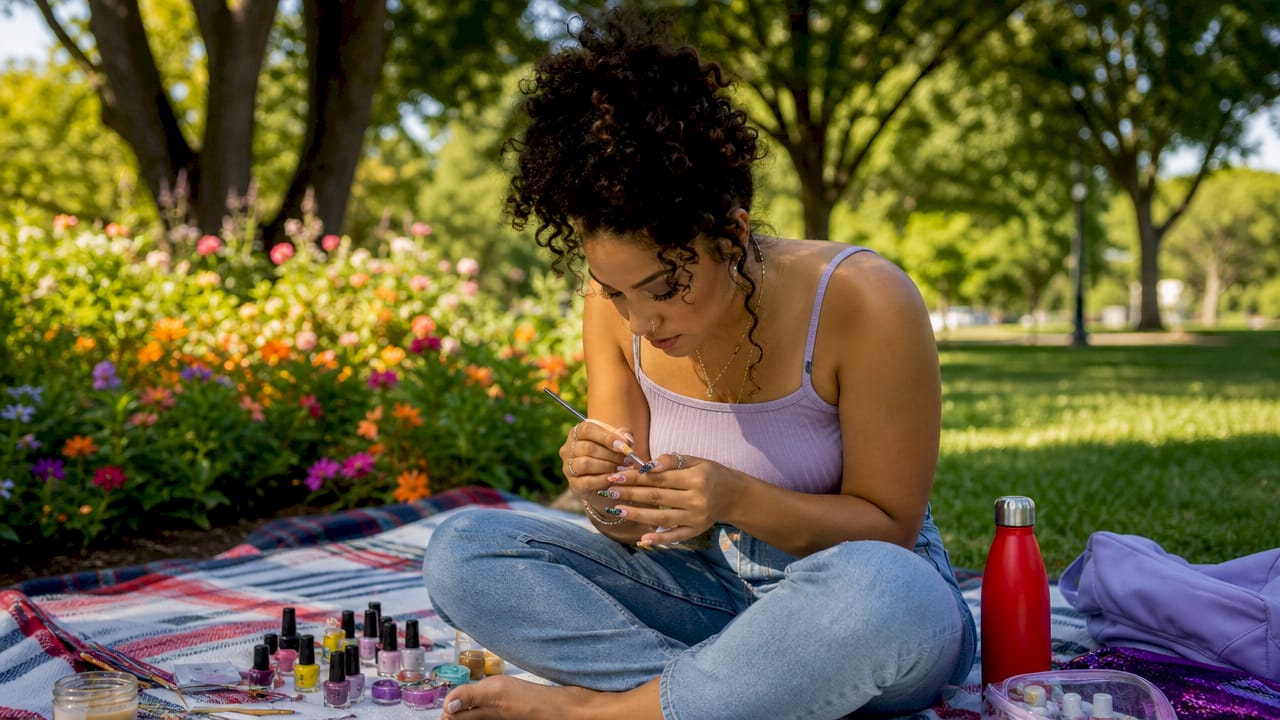
Nail art is defined as the decorative practice of painting, embellishing, or sculpting fingernails and toenails as a form of personal expression. Understanding how nail art became mainstream requires tracing three converging forces: a century of accessible beauty products, the visual power of social media, and a generational shift in how people use appearance to communicate identity. What started as a luxury ritual for the wealthy is now a global industry worth hundreds of billions of dollars, practiced by professionals and DIY enthusiasts alike.
How did nail art become mainstream? the historical foundation
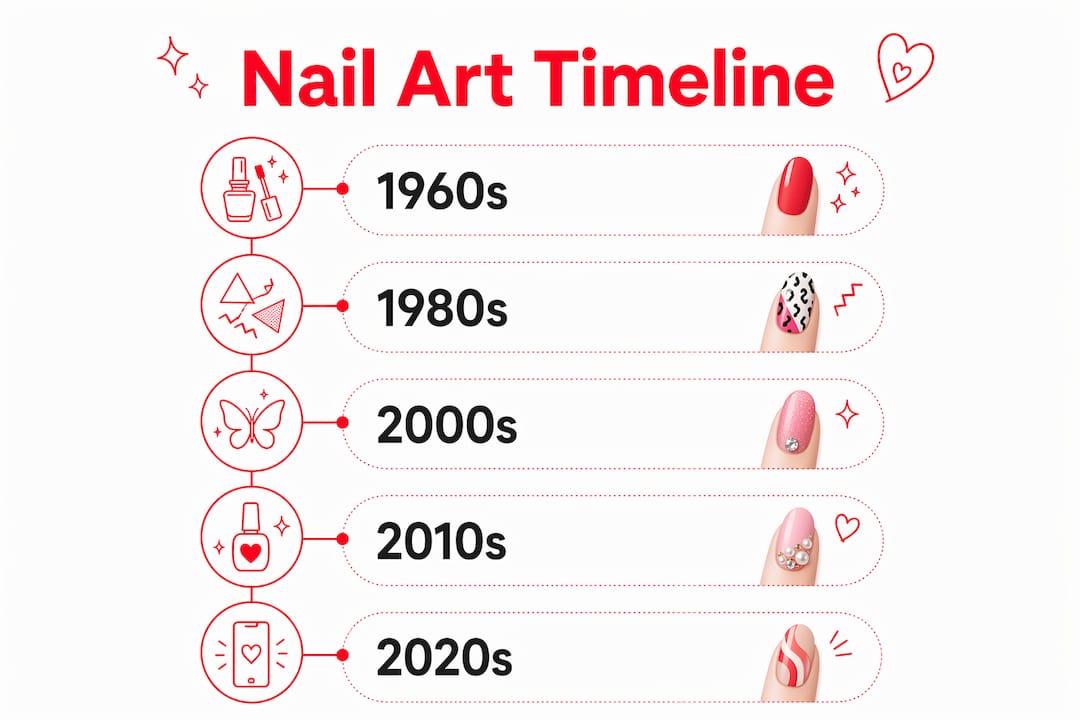
The groundwork for nail art’s popularity was laid long before Instagram existed. The history of nail art stretches back thousands of years, but the modern chapter begins with the commercialization of nail polish in the early 20th century.
Key milestones that shaped the path to mainstream adoption:
1911: Cutex was established, originally selling cuticle remover before pivoting to nail care.
1917: Cutex introduced liquid nail polish, transforming polish from a niche luxury product into a mass consumer good. That shift made decorated nails accessible to working-class women for the first time.
1920s: Flappers adopted bold red nails as a symbol of rebellion and modernity, connecting nail color to cultural identity for the first time in American popular culture.
1970s: The French manicure emerged as a salon staple, standardizing the idea that nails could carry a specific aesthetic “look” rather than just a coat of color.
1980s–1990s: Acrylic nail extensions entered mainstream salons, and nail care became a regular service rather than an occasional indulgence.
Women’s magazines played a significant role before the internet age. Nail art popularity was amplified by publications like Vogue and Harper’s Bazaar throughout the late 20th century, though it remained a niche interest until digital platforms arrived. The growth of neighborhood nail salons, many owned by Vietnamese immigrant entrepreneurs in the United States, also made professional nail care affordable and geographically accessible to millions of new customers.
Pro Tip: If you want to understand a nail art trend, look at who is wearing it and why. Every major nail trend in history has been tied to a broader cultural moment, not just a color preference.
How did social media turn nail art into a global trend?
Social media is the single biggest reason nail art crossed from specialty service to cultural phenomenon. The visual format of platforms like Instagram, Pinterest, and TikTok made nail art a perfect content category. A set of intricate nails photographs beautifully, requires no caption to explain, and generates immediate engagement.
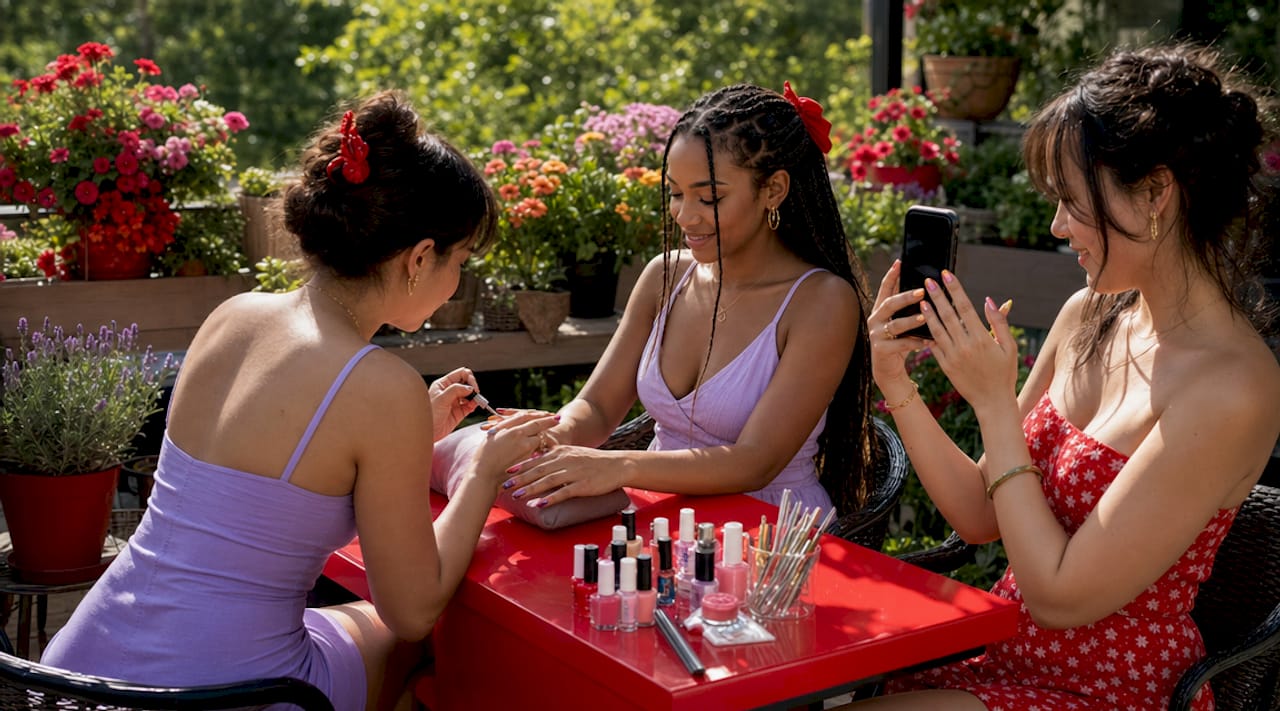
The numbers confirm the timing. U.S. nail polish sales reached $768 million in 2012, a 32% increase over 2011. That spike directly coincided with Instagram’s explosive early growth. The platform launched in October 2010 and had 100 million users by 2012. Nail art content flooded the feed, and consumers responded by spending.
Here is how the digital acceleration unfolded in sequence:
Pinterest (2010–2013): Nail art boards became some of the most shared content on the platform. DIY tutorials spread designs that previously required a salon visit, putting complex patterns into home kitchens.
Instagram (2012–2018): Professional nail artists like Madeline Poole and nail accounts like @thenailartist built massive followings. Brands like OPI and Essie gained direct consumer channels. Nail art became aspirational content.
YouTube (2013–2019): Step-by-step nail art tutorials democratized technique. Channels teaching gel application, stamping, and freehand art reached millions of viewers who had never set foot in a nail school.
TikTok (2020–present): Short-form video accelerated trend cycles dramatically. A nail design posted on Monday could be replicated by thousands of users by Friday. The impact of social media on nail art compressed trend timelines from seasons to weeks.
The visual nature of nail art fits social media’s core mechanic perfectly. Nails are small, close-up, and endlessly variable. They generate content that is easy to produce, easy to consume, and easy to replicate. That combination is rare in the beauty industry.
What cultural shifts made nail art an identity statement?
Nail art’s rise is not purely a marketing story. Cultural forces gave it staying power that no algorithm alone could provide.
The feminist reclamation of beauty rituals played a major role. By the 2000s, nail art was reframed not as vanity but as self-authorship. Women and nonbinary individuals began treating their nails as a canvas for political statements, cultural pride, and personal storytelling. Nail art as a form of personal style and grooming became a recognized concept in fashion media.
Gen Z accelerated this shift further. Gen Z transformed nail art from a beauty service into an identity marker and, for many, a career path. Where millennials saw nail art as a treat, Gen Z sees it as a baseline form of self-expression, comparable to clothing or hairstyle. This generation also normalized nail art for men and gender-nonconforming individuals, expanding the market significantly.
Cultural traditions around the world also contributed to nail art’s global spread:
South Asia: Intricate henna-inspired nail designs have deep cultural roots, and the transition to gel-based versions of these patterns brought traditional aesthetics into modern salons.
East Asia: Japanese nail art, known as nail bijou, pioneered 3D embellishments and extreme length designs that later influenced Western trends.
Latin America: Vibrant color palettes and bold geometric patterns from Latin American nail traditions fed directly into the maximalist nail art aesthetic that dominates social media today.
Pro Tip: When choosing a nail art design, consider what the style communicates about you. The most satisfying nail art choices are the ones that feel like an extension of your personality, not just a trend you copied.
What innovations define modern nail art trends?
Modern nail art is defined by technical precision and materials science as much as artistic vision. The gap between a salon-quality manicure and a home attempt is largely a function of technique and product knowledge.
Technique | What It Does | Why It Matters |
Gel extensions | Builds length and structure using UV-cured gel | Allows complex art on short natural nails |
3D nail art | Adds dimensional elements like flowers, gems, and sculpted shapes | Creates tactile designs that photograph well |
Multi-cure cat-eye | Uses magnetic particles activated by multiple curing passes | Produces shifting color effects impossible with standard polish |
Dip powder (SNS) | Bonds colored powder to the nail with adhesive | Delivers durability without UV exposure |
Stamping and foils | Transfers pre-made patterns onto the nail surface | Makes intricate designs accessible to non-artists |
Tactile and dimensional nail trends are the defining aesthetic of 2026. Designs combine futuristic visual effects with physical texture, making them compelling both in person and on camera. That dual appeal, physical and photographic, is what keeps these styles dominant on social media. You can explore 3D nail art examples to see how dimensional techniques translate across different nail shapes and lengths.
Technical execution matters as much as design choice. Hygiene and precise cuticle preparation are the foundation of any long-lasting manicure. Skipping proper nail plate prep causes chipping within days, regardless of how expensive the products are. Complex techniques also require layering and curing thin coats meticulously to avoid product failure and potential nail damage.
How big is the nail art industry today?
Nail art has grown into a serious economic force. The industry supports a wide range of business models, from large salon chains to solo freelance artists working from home studios.
The business ecosystem includes several distinct layers:
Nail salons: The most visible part of the industry, with tens of thousands of locations across the United States alone. Many are small businesses owned by immigrant entrepreneurs, particularly within Vietnamese American communities, who built much of the modern American nail salon infrastructure.
Product manufacturers: Brands like OPI, CND, Gelish, and Kiara Sky supply both professional salons and retail consumers, generating billions in annual revenue.
Education and certification: Nail technician schools and online courses have multiplied as demand for skilled artists grows.
Freelance and gig economy: Approximately 100,000 freelance nail artists operate in India alone, illustrating how the gig economy has absorbed nail art as a viable income source globally.
The growth projections are striking. India’s salon industry is projected to reach ₹2.14 lakh crore by 2033, with nail art and gel extension demand listed as primary drivers. That figure reflects a pattern repeating across Southeast Asia, Latin America, and Eastern Europe.
“Nail art became a global phenomenon because it combines grooming with self-expression, creating repeat customer loyalty across demographics.”
The low barrier to entry in nail salons has also encouraged entrepreneurship. Startup costs for a nail salon are significantly lower than for most other beauty businesses, which has made it a preferred path for small-business owners worldwide.
Key takeaways
Nail art became mainstream because it merges a universal grooming need with unlimited creative potential, amplified by social media’s visual format and Gen Z’s identity-driven consumption.
Point | Details |
Social media was the tipping point | U.S. nail polish sales jumped 32% in 2012, directly coinciding with Instagram’s rise. |
History built the foundation | Cutex’s 1917 liquid polish made decorated nails accessible to everyday consumers for the first time. |
Gen Z redefined the category | Gen Z treats nail art as identity expression, not just beauty maintenance, expanding the market to new demographics. |
Technology drives modern trends | Gel extensions, 3D art, and multi-cure cat-eye effects keep nail art technically evolving and visually fresh. |
The industry is a real economic force | With 100,000 freelance nail artists in India alone, nail art supports a global professional ecosystem. |
Why nail art’s mainstream moment is permanent
I have watched a lot of beauty trends peak and fade. Nail art is not one of them. The reason is structural, not cyclical.
Most beauty trends are about a specific look. Nail art is about a practice. The look changes every season, but the habit of decorating your nails does not. That distinction is what separates nail art from, say, a contouring craze or a specific lip color moment. The canvas stays the same. The art evolves.
What strikes me most is how nail art solved a problem that most beauty categories never crack: it is both a professional service and a DIY hobby. You can spend $80 at a salon or $15 on supplies at Sally Beauty. Both experiences satisfy the same core desire. That flexibility is rare, and it is why nail art has built loyalty across income levels and age groups.
Social media will keep accelerating trend cycles, but the underlying demand is not dependent on any single platform. If TikTok disappeared tomorrow, nail art would survive. The practice is too embedded in daily grooming routines and too tied to personal identity to disappear with an algorithm change.
The professionals who will thrive are the ones who treat nail art as a craft, not a service. Precision, hygiene, and genuine artistic skill are what separate a $30 manicure from a $120 one. Clients who have experienced the difference do not go back.
— MinhHieu
Experience expert nail art at Bradentonnails in bradenton
Nail art’s rise from niche hobby to cultural staple means the bar for professional quality has never been higher. Clients know what good work looks like, and they expect it every visit.
Bradentonnails at TJ Nails in Bradenton, FL delivers exactly that standard. The skilled technicians there specialize in everything from classic manicures to gel nail services and dimensional 3D designs, all in a clean, welcoming environment. Whether you want a subtle French tip or a bold statement set, the team tailors every service to your style. Bradentonnails is open seven days a week, including Sundays, making it easy to fit a professional nail appointment into any schedule. Book your manicure online and see why clients across West Bradenton, Palmetto, and Ellenton keep coming back.
FAQ
When did nail art become mainstream in the u.s.?
Nail art reached mainstream status in the United States around 2012, when nail polish sales hit $768 million, a 32% increase over the prior year. The growth coincided directly with the rise of Instagram and Pinterest as visual content platforms.
What role did celebrities play in nail art trends?
Celebrities like Rihanna, Cardi B, and Kylie Jenner brought bold and elaborate nail designs to mass audiences through red carpet appearances and social media posts. Their visibility normalized high-investment nail art as a standard part of personal style.
What is the difference between nail art and a regular manicure?
A regular manicure focuses on nail shaping, cuticle care, and a single color application. Nail art adds decorative elements such as patterns, 3D embellishments, stamping, or hand-painted designs on top of that base.
How has gen z influenced nail art trends?
Gen Z treats nail art as a form of identity expression rather than simple grooming, driving demand for personalized, bold, and culturally referential designs. This generation also expanded nail art beyond women, normalizing it across genders.
What are the most popular nail art techniques in 2026?
The most popular techniques in 2026 include 3D sculptural designs, multi-cure cat-eye gel effects, and dip powder applications. These styles combine durability with visual complexity and perform well both in person and on social media.
Recommended
Comments