
How Nail Decals Differ from Art: A Clear Guide
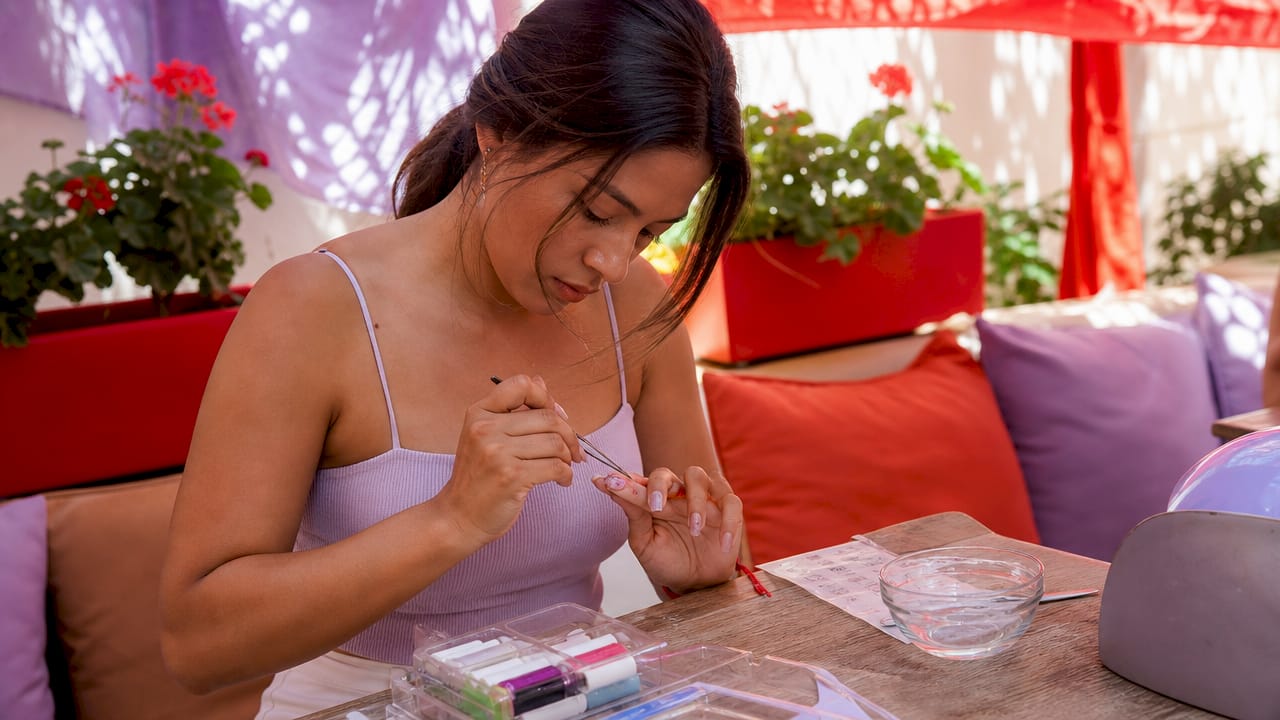
Nail decals are pre-made, ultra-thin design elements applied directly to polished nails, while traditional nail art is hand-crafted using brushes, tools, and techniques like stamping, foiling, and 3D sculpting. Understanding how nail decals differ from art helps you choose the right method for your time, budget, and skill level. Decals measure 0.05mm to 0.15mm thick, making them far thinner than most painted layers. Traditional nail art, by contrast, builds depth through multiple coats and handwork. Both methods deliver beautiful results, but they serve very different needs.
How do nail decals differ from traditional nail art?
Nail decals are pre-printed designs transferred onto the nail surface, while traditional nail art is created directly on the nail by hand. That single distinction drives every other difference between the two methods, from application time to finish quality.
Decals come in two main formats. Water-slide decals require soaking in water to release from their backing paper. Self-adhesive stickers peel off directly and press onto the nail. Water-slide decals are thinner and blend more invisibly under a top coat. Self-adhesive stickers sit slightly higher on the nail surface and can have a noticeable edge.
Traditional nail art, on the other hand, is built from scratch. A nail artist applies polish, then uses fine brushes, dotting tools, stamping plates, or sculpting products to create a design. The result is unique every time. No two hand-painted nails are exactly alike, which is part of the appeal.
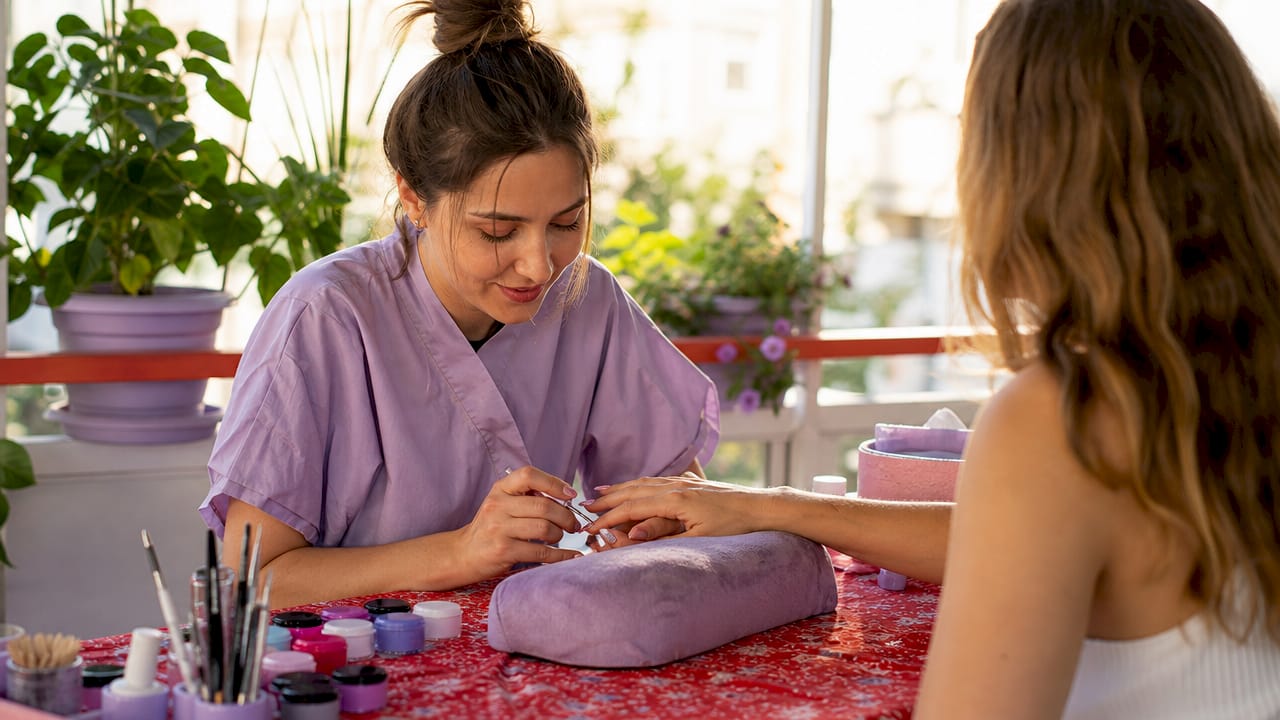
The core difference comes down to execution. Decals are manufactured off the nail and applied as a finished product. Traditional nail art is created on the nail in real time. That gap in process explains why the two methods differ so much in time, cost, and creative range.
What are nail decals? Types, materials, and how to apply them
Nail decals are decorative nail enhancements made from thin film or paper printed with a design. They are applied over a base coat or colored polish and sealed with a top coat. Most people can apply them at home in under 15 minutes, which makes them a popular nail enhancement option for beginners.
There are three main types of nail decals:
Water-slide decals: Soaked briefly in water, then slid off the backing and placed on the nail. These are the thinnest option, measuring around 0.04mm, and they disappear under a top coat for a painted-on look.
Self-adhesive stickers: Peel-and-stick designs that require no water. They are faster to apply but sit slightly thicker on the nail surface.
Nail wraps: Full-coverage adhesive films that cover the entire nail. Unlike accent decals, nail wraps replace polish entirely rather than decorating over it.
Applying decals correctly takes a few deliberate steps. Start with clean, oil-free nails. Apply a base coat and let it dry fully. Place the decal, smooth out any air bubbles, and trim the edges to fit your nail shape. Seal everything with a top coat, making sure to wrap the tip of the nail.
Pro Tip: Remove natural nail oils with a lint-free wipe and a small amount of rubbing alcohol before applying any decal. Prep quality matters more than brand choice when it comes to adhesion and longevity.
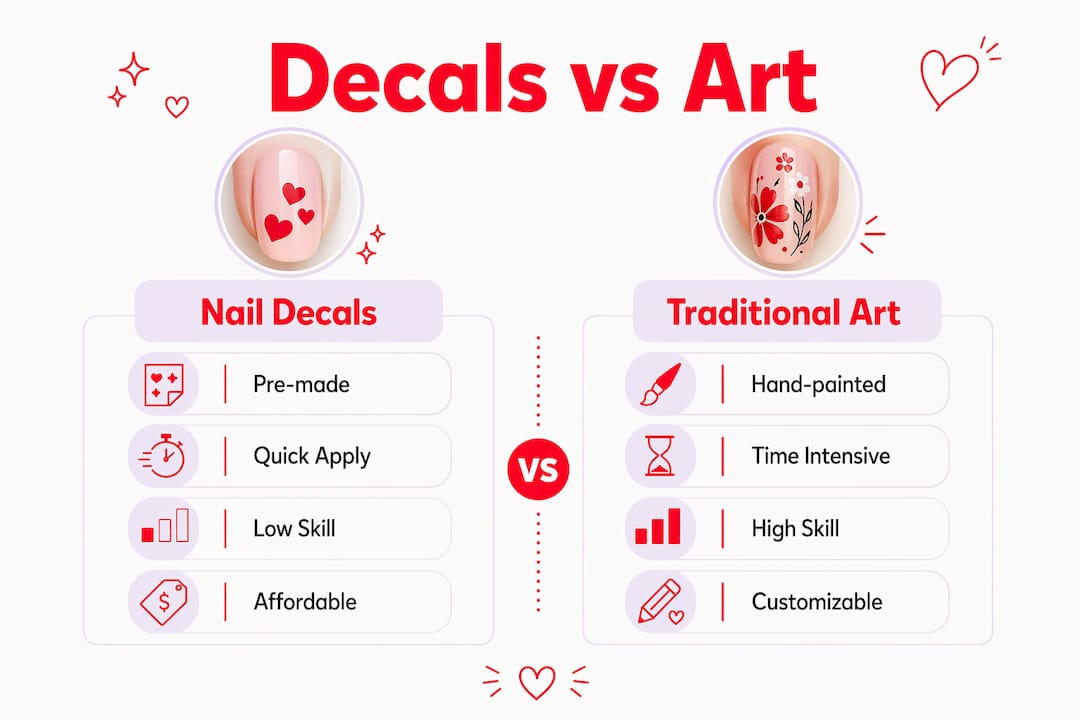
Decals cost between $0 and $15 per sheet, making them one of the most accessible nail art options available. That low price point, combined with the minimal skill required, explains why they appeal to anyone who wants polished-looking nails without salon time.
What is traditional nail art? Techniques, tools, and creative range
Traditional nail art is the practice of creating designs directly on the nail using manual tools and products. It covers a wide range of techniques, from simple freehand painting to complex 3D sculpting. The scope of traditional nail art includes foiling, stamping, magnetic effects, and hand-painted designs, all of which go well beyond what a pre-made decal can replicate.
Common traditional nail art techniques include:
Freehand painting: Using fine brushes and nail polish or gel to draw designs directly on the nail. This is the most skill-intensive method.
Stamping: Pressing an engraved metal plate inked with polish onto the nail to transfer a pattern. Faster than freehand but still requires practice.
Foiling: Pressing metallic foil onto a tacky adhesive layer to create a reflective, textured effect. Foil is a separate product from decals and produces a distinct finish.
3D sculpting: Building raised elements on the nail using acrylic, gel, or nail art clay. This technique creates texture you can feel.
Dotting and striping: Using dotting tools or striping brushes to create geometric or abstract patterns.
The skill gap between a beginner and an experienced nail artist is significant. Professional nail artists often use the paper practice method to build muscle memory before applying freehand designs to actual nails. That kind of preparation takes time and repetition.
Pro Tip: If you want to learn freehand nail art, practice your designs on paper or a plastic bag first. You will build control and confidence before committing to a full manicure.
Traditional nail art offers something decals cannot: infinite customization. A skilled artist can match any color, scale a design to any nail shape, and incorporate personal details. That creative freedom is why hand-painted nail art remains the gold standard for unique nail designs.
How do decals and traditional nail art compare in finish and durability?
The finish of a nail decal depends heavily on its thickness. Water-slide decals at 0.04mm disappear under a top coat and create a look that closely mimics hand-painted art. Thicker self-adhesive stickers leave a visible edge and a slightly raised texture. That tactile difference is one of the clearest ways to tell a decal from painted art when you run your finger across the nail.
“Decals are for quick, uniform looks. Traditional art embraces subtle imperfections that give each nail its own character.” — Professional nail artist perspective via The Nail Drop
Durability is where application technique matters most. Without capping, meaning wrapping the top coat over the nail edge, decals can lift within 2 to 3 days, especially with water or oil exposure. Properly sealed decals can last as long as a standard manicure. Traditional nail art durability depends on the number of layers, the quality of the top coat, and how well the nail was prepped.
Feature | Nail decals | Traditional nail art |
Thickness | 0.04mm–0.15mm | Varies by technique and layers |
Application time | Under 15 minutes | 30 minutes to several hours |
Finish | Smooth under top coat (water-slide) | Layered, textured, or 3D |
Customization | Limited to available designs | Fully custom |
Skill required | Minimal | Moderate to advanced |
Durability | Good with capping and prep | Good with proper sealing |
Aesthetically, traditional nail art carries a handmade quality that decals cannot fully replicate. The slight imperfections in a hand-painted floral or a freehand geometric pattern are part of what makes the design feel personal. Decals deliver consistency and speed. Traditional art delivers authenticity and originality. Both have real value depending on what you want from your manicure.
Cost, time, and skill: which method fits your needs?
Nail decals cost between $0 and $15 per sheet and require no prior skill. Hand-painted salon art costs more because it involves labor, expertise, and additional time in the salon chair. The price gap between the two methods reflects the difference in what you are paying for: a manufactured product versus a custom service.
Time is the other major factor. Applying a full set of decals takes under 15 minutes at home. A detailed hand-painted design at a salon can take 30 minutes to several hours depending on complexity. For a quick refresh before an event, decals win on speed. For a one-of-a-kind look for a wedding or special occasion, traditional nail art is worth the extra time.
Skill level also shapes the decision. Decals require no learning curve. Traditional techniques like freehand painting and 3D sculpting take practice over weeks or months. If you are new to nail art, decals let you achieve polished results immediately. If you enjoy the creative process and want to develop a skill, traditional methods offer a rewarding path. You can find inspiration for both approaches in this nail art styles guide covering looks for every occasion.
Tips for combining nail decals with traditional nail art
Mixing decals and hand-painted elements on the same manicure produces results that neither method achieves alone. A solid color base with a single water-slide decal accent nail, finished with a freehand detail on another nail, creates a layered look that feels intentional rather than simple.
Practical tips for combining both methods:
Apply your base color and let it cure fully before placing any decals. Wet polish causes decals to shift and wrinkle.
Place water-slide decals first, then add freehand details around them using a fine brush. This lets you use the decal as an anchor point for your painted design.
Use a gel top coat for the best seal when combining techniques. It bonds both the decal and the painted elements in one layer.
Seal with capping on every nail, wrapping the top coat over the free edge. This step is the single biggest factor in how long a combined manicure lasts.
Keep the overall design balanced. If one nail has a detailed decal, keep adjacent nails simpler to avoid visual clutter.
The combination approach also works well for beginners who want to add a personal touch without committing to full freehand work. A stamped base with a hand-drawn detail on one accent nail builds confidence and skill at the same time.
Key Takeaways
Nail decals and traditional nail art serve different purposes: decals deliver speed and consistency, while hand-painted techniques deliver customization and creative depth.
Point | Details |
Core difference | Decals are pre-made and applied; traditional art is created directly on the nail by hand. |
Thickness matters | Water-slide decals at 0.04mm blend invisibly; thicker stickers leave a noticeable edge. |
Durability depends on prep | Capping the top coat over the nail edge prevents lifting within 2 to 3 days. |
Cost and skill gap | Decals cost $0–$15 with no skill needed; salon hand-painted art costs more and requires expertise. |
Combining both works | Layering decals with freehand details produces results neither method achieves on its own. |
Why I think the decals-versus-art debate misses the point
After years of watching nail trends come and go, I find the framing of decals versus traditional art a little reductive. The two methods are not competing. They solve different problems for different people on different days.
What I have noticed is that decals get dismissed as “not real nail art” by purists, and that attitude does a disservice to the people who use them. A water-slide decal applied with proper prep and a clean top coat can look indistinguishable from a hand-painted design. The skill is in the application and the eye for design, not in the tool itself.
That said, traditional nail art offers something decals genuinely cannot: the satisfaction of making something by hand. The paper practice method, the hours spent learning brush control, the moment a freehand floral finally comes out right. That process has real value beyond the finished nail.
My honest take is this: use decals when you need speed and consistency. Use traditional techniques when you want to create something personal. And do not feel like you have to pick one permanently. The most interesting manicures I have seen combine both, using a decal as a starting point and building around it with paint or foil. That kind of hybrid approach is where nail art is heading in 2026, and it is worth exploring.
— MinhHieu
Professional nail services at Bradentonnails in Bradenton, FL
Whether you want to try nail decals for the first time or experience a fully hand-painted design, having a skilled technician makes a real difference in the result.

Bradentonnails at TJ Nails in Bradenton, FL offers professional manicure services covering everything from classic polish to detailed nail art and nail enhancements. The technicians there work with both decal application and traditional hand-painted techniques, so you get the right finish for your style and occasion. Bradentonnails is open Sundays and accepts online bookings, making it easy to fit a quality manicure into your schedule. If you are curious about what nail art techniques look like in practice, the nail art overview on the Bradentonnails site is a solid starting point.
FAQ
What is the main difference between nail decals and nail art?
Nail decals are pre-made designs applied to the nail surface, while traditional nail art is created directly on the nail using brushes, tools, and techniques like stamping or freehand painting. The core difference is execution: one is manufactured, the other is handmade.
Are water-slide decals better than self-adhesive nail stickers?
Water-slide decals are thinner at around 0.04mm and blend more invisibly under a top coat, giving a closer look to painted art. Self-adhesive stickers are faster to apply but sit higher on the nail and can show a visible edge.
How long do nail decals last compared to hand-painted nail art?
Both methods last a similar amount of time when applied correctly. Capping the top coat over the nail edge is the key step. Without it, decals can lift within 2 to 3 days regardless of brand or product type.
Do nail decals require any skill to apply?
Nail decals require no prior skill and cost as little as $0 to $15 per sheet. They are one of the most beginner-friendly nail enhancement options available, making them a practical starting point for anyone new to nail design.
Can you combine nail decals with traditional nail art techniques?
Yes. Layering water-slide decals over a base color and adding freehand details around them is a common approach. Using a gel top coat and capping the nail edge keeps both elements bonded and extends the life of the combined design.
Recommended
Comments