
2026 Salon Tested Nail Colors That Flatter Tan Skin at Bradentonnails
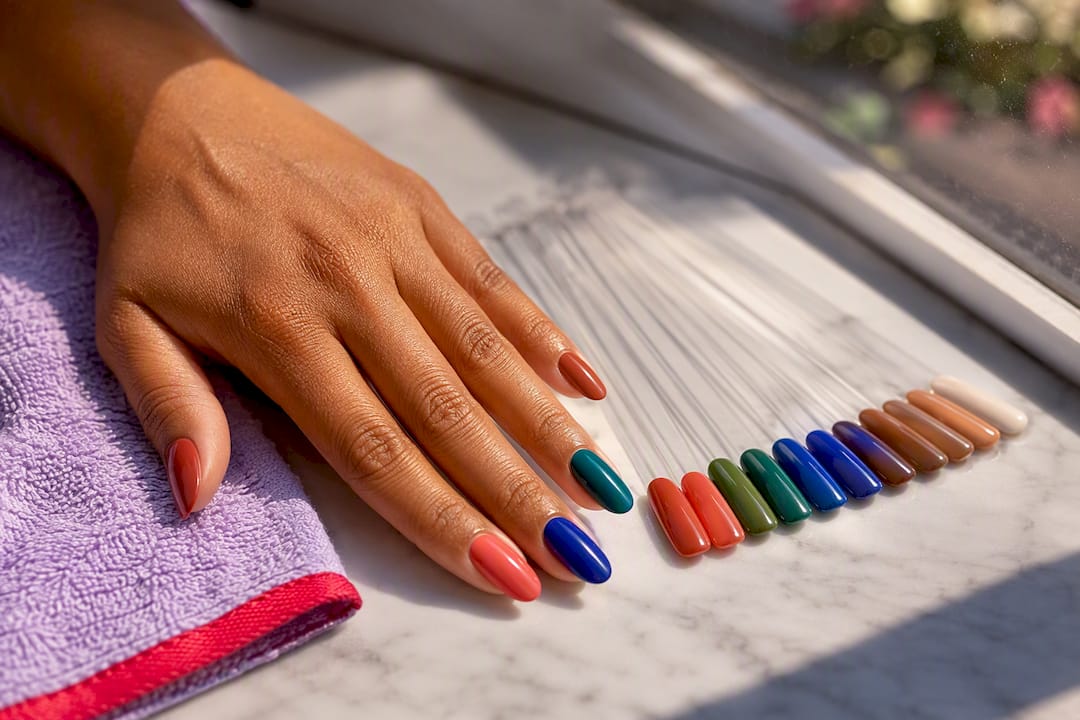
The most flattering nail colors for tan skin are warm terracotta, coral, caramel nudes, and rich jewel tones like emerald and cobalt, because they echo the golden or olive base in your skin rather than fight it. The one rule that matters more than any color chart is matching polish to your undertone, not your surface tan, which you can check with a quick vein, jewelry, or white paper test. Glossy and metallic finishes push that warmth even further, while flat matte can mute it if the shade itself leans cool.
TL;DR:
Warm undertones should prioritize coral, terracotta, and warm reds, while cool undertones benefit from blue-based reds, berries, and plums.
Choosing shades one to two tones deeper or warmer than your skin prevents a washed-out appearance and enhances natural warmth.
Matte finishes tone down warmth and saturation, whereas glossy or metallic finishes amplify these traits, making colors pop more on tan skin.
Avoid cool grey, icy pastels, and cool greiges, as their blue or grey bases clash with golden or olive undertones, resulting in muddy or dull looks.
Accurate color matching requires practicing undertone tests and working with professional salons to ensure the best complementary shades for your skin and outfit.
Table of Contents
Shade Families That Flatter Tan Skin
Tan skin has a natural advantage: it carries enough warmth and depth to handle almost any saturated color without looking flat. The trick is knowing which families do the heavy lifting and when to reach for each one.
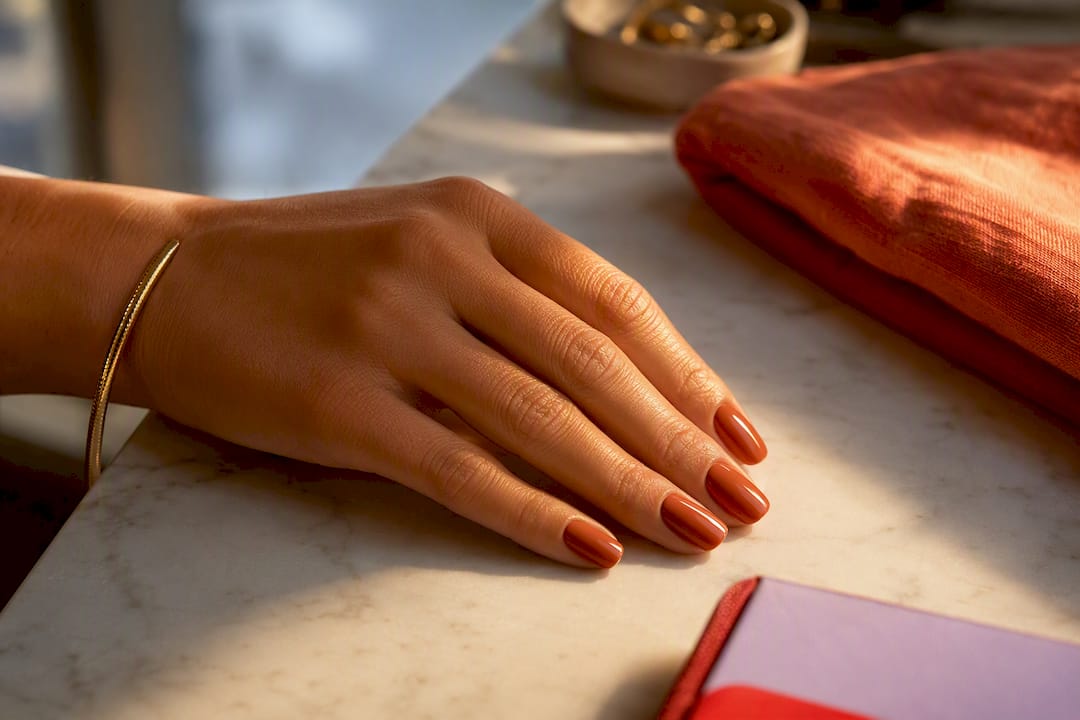
Warm earth tones like terracotta, burnt sienna, and caramel sit at the top of the list because they mirror the golden or bronze undertone most tan skin carries. These read as polished for work, brunch, or anywhere you want color without shouting. PaletteHunt points to warm terracotta, coral, warm wine, and burgundy as some of the strongest options for tan skin specifically, since they play off the skin’s golden base instead of competing with it.
Vibrant brights such as coral, tangerine, and turquoise create the kind of contrast that makes tan skin look sun-kissed rather than washed out. Short nails handle a saturated coral well; longer nails can carry turquoise or tangerine without looking costume-like.
Jewel tones like emerald, cobalt, and plum belong in the evening rotation. They add drama against tan skin the way a great red lip does against fair skin. Try them for a night out, a holiday party, or anytime you want your hands to be the accessory.
Whites and creams split into two camps. Creamy ivory softens and flatters almost every tan undertone, while stark, blue-white polish can look harsh unless you’re going for a specific summer French tip. For layered color pairings across these families, a nail art color combination guide can help you build a manicure around one anchor shade instead of guessing.
How Do You Find Your Undertone?
Undertone, not the depth of your tan, is what decides whether a color harmonizes with your skin or fights it, according to Cosmopolitan’s breakdown of nude shade selection. Three quick tests, done in natural daylight rather than under indoor bulbs, will tell you which camp you’re in.
Vein test. Look at the veins on the inside of your wrist. Blue or purple veins suggest a cool undertone. Green veins point to warm. A mix of both usually means neutral.
Jewelry test. Hold gold and silver jewelry against your skin. Gold that looks richer signals warm undertones. Silver that looks brighter signals cool. Both looking equally good is a neutral tell.
White paper test. Hold a plain white sheet next to your face. Skin that looks golden or yellow against it leans warm. Skin that looks pink or rosy leans cool.
Once you know your camp, the shade map gets simple. Warm undertones lean into corals, tomato reds, and terracotta. Cool undertones look best in blue-based reds, berry, and plum, a pairing Makeup backs up directly. Neutral or olive undertones are the most flexible and can wear true reds or balanced pink-beiges without much risk.
Pro Tip: Still unsure after all three tests? Grab a neutral-leaning true red or a balanced pink-beige. Both shades sit close enough to the middle of the undertone spectrum that they flatter almost everyone, which makes them the safest starting point if you’re stuck between camps.
Choosing Nudes for Tan Skin the Right Way
Here’s where most people go wrong: they hunt for a nude that matches their exact skin tone, and it backfires. An exact match tends to wash out against tan skin and can make nails look pale or flat under bright light. Professional stylists routinely recommend picking a nude one to two tones deeper or warmer than your actual skin, not an identical match, because that extra depth reads as intentional rather than accidental.
Several reviewers testing polish specifically for tan skin land on the same conclusion: warm beiges, peaches, and rich browns consistently outperform cooler or lighter nudes, and choosing a shade slightly deeper than skin tone avoids the washed-out effect entirely, according to Vampy Varnish’s testing notes.
Shade families worth asking for by name:
Caramel for an everyday warm nude with real depth.
Peachy-beige for something softer and closer to your natural coloring.
Warm mocha for cooler months or a more grounded look.
Terracotta nude for a shade that bridges nude and color.
Sheer jelly finishes on these tones give a soft, barely-there look. Opaque creme versions deliver full, salon-polished coverage. If you want to see how a sheer nude actually wears on tan skin before committing, the salon’s nude nail design gallery shows finished examples rather than just swatches on a wheel.
How Finish Changes the Way Color Reads
The finish you choose shifts how warm or cool a color looks almost as much as the pigment itself. Gloss and metallic topcoats amplify warmth, making terracotta or caramel look richer and more saturated on tan skin. Matte finishes soften saturation, which works beautifully on jewel tones but can occasionally dull a warm shade if it’s already borderline cool.
For 2026, a few trend calls are worth trying if you want something current without abandoning what already works for tan skin:
Milky peach, called out as a standout for bronzed skin this season by ParisSelectBook.
Tiffany-style turquoise as an accent nail rather than a full set, for contrast without commitment.
Gold-fleck topcoats layered over caramel or terracotta, since metallic gold and bronze finishes mirror tan skin’s warmth directly, per PaletteHunt.
Save high-gloss brights for vacation or a night out, keep satin nudes for everyday wear, and reserve matte jewel tones for evening. A full breakdown of gloss versus satin versus matte versus metallic lives in this nail polish finish guide if you want to go deeper on any one of them.
Colors and Shades to Avoid
Ashy pastels, icy pinks, and cool grey-based polishes are the most common mistakes on tan skin. These shades lack the warmth to stand up against golden or olive undertones, so they tend to look chalky or muddy instead of soft.
Icy pink → swap for dusty rose, which keeps the softness without the chalkiness.
Cool grey → swap for warm greige, a shade with enough beige undertone to avoid looking flat.
Pale frozen lilac or mint → swap for a warmer pastel like butter yellow or peach.
PaletteHunt’s guidance on tan-skin polish backs this up directly: grey-based pastels and icy tones tend to wash out warm skin, while warmer pastels or slightly deeper variants hold up far better. If you’re attached to a cooler shade, a warm shimmer topcoat or a single accent nail in a warmer color can rescue the look without abandoning it entirely.
Nudes and “My-Nails-But-Better” Shades, Explained
The “my-nails-but-better” trend asks for a nude that looks like an upgraded version of your bare nail, not a color swap. On tan skin, that means skipping anything with a pink or cool cast and reaching for shades with visible warmth: caramel, warm taupe, or a soft terracotta-beige hybrid.
The deeper-tone rule matters even more here, since the whole point of this look is subtlety. A nude that’s too light or too pink against tan skin doesn’t look natural, it looks pale, and it defeats the purpose of the trend entirely. Going one to two shades deeper than your actual skin, the same rule that governs regular nude selection, keeps the “better” part of “my-nails-but-better” intact instead of erasing your color.
Texture matters too. A slightly warm-toned creme finish reads more like skin than a sheer jelly does, since jelly finishes can pick up a cooler cast depending on the base polish underneath. If you want dimension without leaving the nude family entirely, an ombre technique that fades a warm nude base into a soft terracotta or caramel tip is one of the more forgiving ways to experiment. The ombre style guide walks through a few variations that work well for this exact effect.
Ask for descriptors like “warm caramel” or “terracotta-beige” rather than just “nude” when booking, since “nude” alone covers a huge range of pink, beige, and taupe tones that don’t all flatter tan skin equally.
Why Ashy Pastels and Cool Greiges Don’t Work
The problem with ashy pastels and cool greiges isn’t the color family itself, it’s the undertone baked into the pigment. Most ashy pastels are built on a grey or blue base, which is exactly the opposite of the golden or olive base most tan skin carries. Put a cool grey-lavender next to warm, sun-kissed skin, and the contrast reads as dullness instead of softness.
Cool greiges cause a similar problem. They’re marketed as neutral, but “neutral” in polish naming usually means neutral against fair, cool-toned skin, not tan skin. Against a golden base, a cool greige can look almost lifeless, like a shade that’s fighting the hand wearing it rather than complementing it.
The fix isn’t to avoid pastels or muted tones altogether. It’s to shift the base. A butter yellow or peachy pastel keeps the softness of the trend without the ashy cast, because both sit on a warm base that matches tan skin’s own warmth. Same logic applies to greige: swap it for a warm taupe or greige with a visible beige undercurrent instead of a flat grey one.
This is really an undertone problem wearing a color-trend disguise. Any shade, pastel or bold, fails on tan skin the moment its base leans cool and grey rather than warm and golden. Check the undertone of the polish itself the same way you’d check your own, holding it in daylight rather than trusting the bottle color under salon lighting.
Matching Nail Color to Your Undertone Within Tan Skin
Not all tan skin reads the same. A golden undertone leans yellow and handles warm brights, terracotta, and gold-fleck finishes with ease, since the polish and skin are working from the same base. Someone with this undertone can wear almost any warm shade without a second thought.
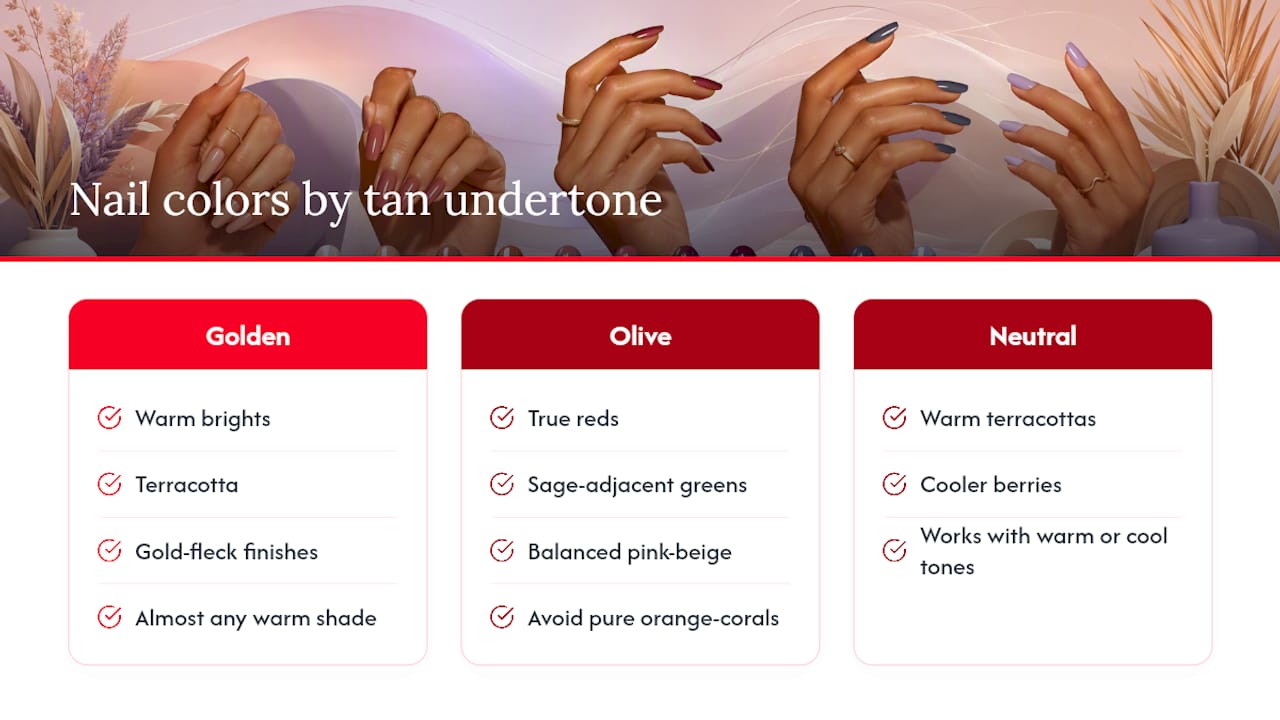
An olive undertone carries a green or grey cast underneath the tan, which changes the math slightly. True reds, sage-adjacent greens, and balanced pink-beiges tend to work better than pure orange-based corals, which can occasionally look too warm against olive’s cooler base. This is one case where “warm undertone rules” don’t apply in a straight line, and testing a shade against your wrist before committing matters more than following the general chart.
A neutral undertone within the tan spectrum is the most forgiving of the three. Neutral skin can wear both warm terracottas and cooler berries without much risk, since it doesn’t clash hard with either direction.
The practical move: if you know you’re golden, shop the warm end of any color chart with confidence. If you’re olive, lean toward true reds and balanced tones before jumping to pure orange-coral. If you’re neutral, treat the entire spectrum as fair game and choose based on occasion rather than undertone risk. ClothME’s guide to matching color and skin tone breaks down this same undertone logic for clothing, and the same tests translate directly to polish.
Matching Nail Color to Outfits and Occasions
Nail color doesn’t exist in isolation, it sits next to whatever you’re wearing, and tan skin gives you more room to play with contrast than most people realize. For everyday outfits in neutral tones like white, denim, or khaki, a warm nude or caramel keeps things cohesive without competing for attention. For anything with a print or bold color already in play, a nude or muted terracotta lets the outfit stay the focus.
Bright outfits call for a different rule. If you’re wearing a saturated color, a jewel tone or bright nail can either match the energy or clash with it, so a safer bet is a warm nude that lets both the outfit and the nails read as intentional rather than competing. Save the boldest brights, coral, tangerine, cobalt, for occasions where the nails are meant to be a focal point: a beach trip, a summer dress, a night out where your hands are on display.
Gold jewelry pairs naturally with the same warm tones that flatter tan skin, terracotta, caramel, gold-fleck topcoats, since both share the same warm base. Silver jewelry tends to pull toward cooler polish, plum, berry, cobalt, for the same reason. A guide on wearing bold color in nail art covers how to balance a statement nail against a simpler outfit without one overwhelming the other, which is the real skill behind occasion-matching.
Nail Care That Makes Any Color Look Better
Color choice only does half the work. Healthy, well-prepped nails make every shade, warm or cool, look intentional rather than accidental. Dry cuticles, ridged nail beds, or uneven polish application will dull even the most perfectly matched terracotta.
Start with a base coat every time, since it prevents staining from deeper pigments like plum or cobalt and gives the color a smooth surface to sit on. Push back cuticles rather than cutting them, and moisturize the nail bed regularly, since dehydrated skin around the nail draws attention away from the polish itself. A light buff before polish application also helps color sit flatter and look more saturated once it’s on.
For anyone choosing deeper or brighter shades, two thin coats almost always look better than one thick one, since a single heavy coat tends to pool near the cuticle and dry unevenly. Seal with a glossy topcoat if you want maximum warmth from the finish, since gloss reflects light in a way that intensifies whatever color sits underneath it. Nails that are well-maintained hold polish longer and chip less, which matters most with richer, deeper shades where a chip shows up faster than it would on a sheer nude.
A Salon’s-Eye View of Choosing Color for Tan Skin
Sitting across from a client, the first thing a technician does isn’t reach for a color wheel, it’s hold a few swatches against the client’s hand under natural light near a window, not under the overhead salon lights that flatten everything. That single step catches undertone mismatches a chart never will.
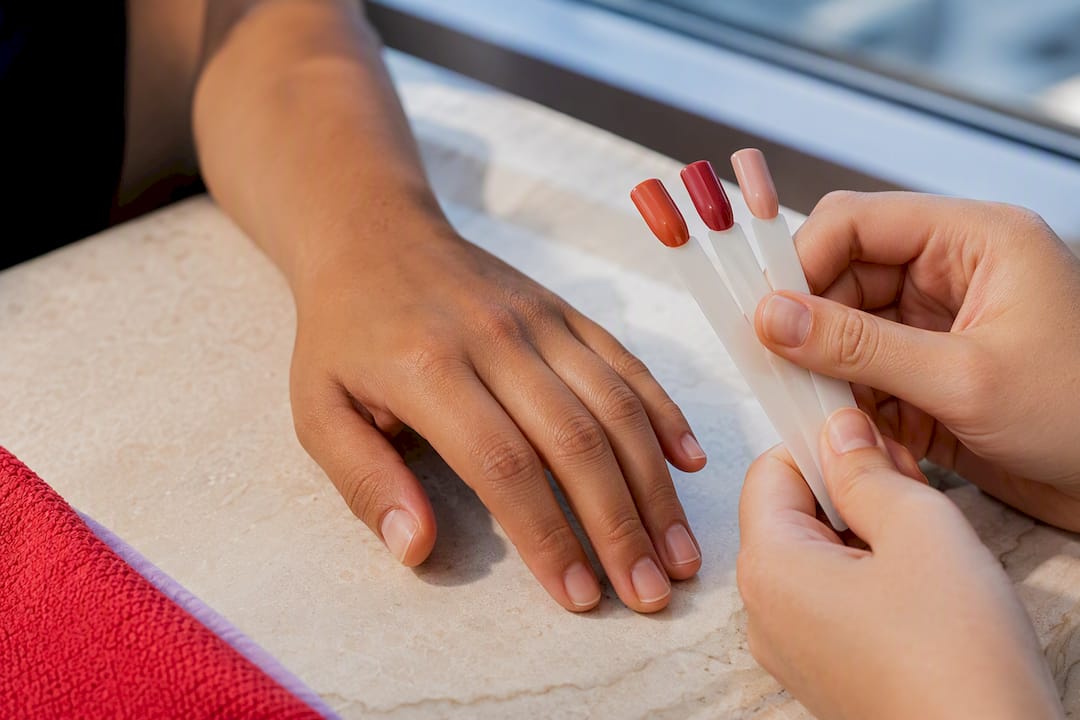
Clients with a warm, golden tan gravitate toward terracotta nudes or ask specifically for a gold-fleck topcoat once they see how it reads against their own skin rather than a printed swatch card. Whether that color comes through best in SNS dip or gel depends on how much depth and shine the client wants, since each finish carries pigment differently.
One habit worth adopting before any appointment: bring a photo of the outfit or piece of jewelry you’re planning to wear. It turns color selection into a coordinated decision rather than a guess.
— MinhHieu
Book a Color-Match Appointment at Bradentonnails
Bradentonnails is the direct alternative to guessing at a drugstore polish rack. Instead of testing bottles under fluorescent store lighting and hoping for the best, you sit down with a technician who checks your undertone against natural light and walks you through swatches before anything touches your nails.
A color-match appointment typically starts with a quick undertone check and swatch testing so you can see how a few finalists look against your hand, ending with a finish decision according to your preference. If you’re after something with real staying power, SNS dipping holds pigment and shine longer than standard polish, while a classic manicure with gel polish suits anyone who wants a quicker, no-fuss version of the same color-matched result. For a fuller custom set with more shape control, the acrylic with gel polish full set is worth asking about too.
Ready to stop guessing which nude actually works for your skin? Book your appointment through the Bradentonnails booking page and bring a photo of your go-to outfit or jewelry so your technician can match the finish to it on the spot.
Sources
FAQ
What colors look best on tanned skin?
Warm terracotta, coral, caramel nudes, and jewel tones like emerald and cobalt tend to look best on tanned skin because they echo the golden or olive base most tan skin carries. PaletteHunt specifically calls out warm terracotta, coral, warm wine, and burgundy as top performers for tan skin.
What’s the hottest nail trend right now?
Milky peach is one of the standout trend picks for bronzed skin this season, alongside Tiffany-style turquoise accents and gold-fleck topcoats layered over warm nudes, according to ParisSelectBook’s 2026 trend roundup. These work well as accent nails if you’re not ready to commit to a full set.
What nail colors should I avoid with brown skin?
Ashy pastels, icy pinks, and cool grey-based polishes tend to wash out brown or tan skin because they lack the warmth to hold their own against a golden undertone. Swapping to dusty rose, warm greige, or a deeper variant of the same color usually solves the problem without abandoning the shade family entirely.
How do I pick a nail color based on my skin tone?
Test your undertone first using the vein, jewelry, or white paper test, then match your polish to that result rather than to your surface skin tone. Warm undertones do best in corals and terracotta, cool undertones in blue-based reds and berry, and neutral undertones can wear either, a mapping detailed by Makeup.com.
Does Bradentonnails offer a color-matching consultation?
Yes. A color-match appointment at Bradentonnails includes an undertone check and swatch testing under natural light before you commit to a shade or finish. Current service pricing is listed on the natural nail care page.
Recommended
Comments