
Nail Salon Red Flags to Avoid: Your 2026 Safety Guide

Nail salon red flags to avoid are clear signs of poor hygiene, safety lapses, or unprofessionalism that put your health directly at risk. Every year, clients walk into salons without knowing what to look for, and some leave with fungal infections, chemical burns, or worse. State licensing boards, OSHA guidelines, and industry standards like those from cosmetology infection control authorities exist precisely because these risks are real and preventable. Knowing what warning signs to watch for before you sit down in that chair is the single most effective way to protect yourself.
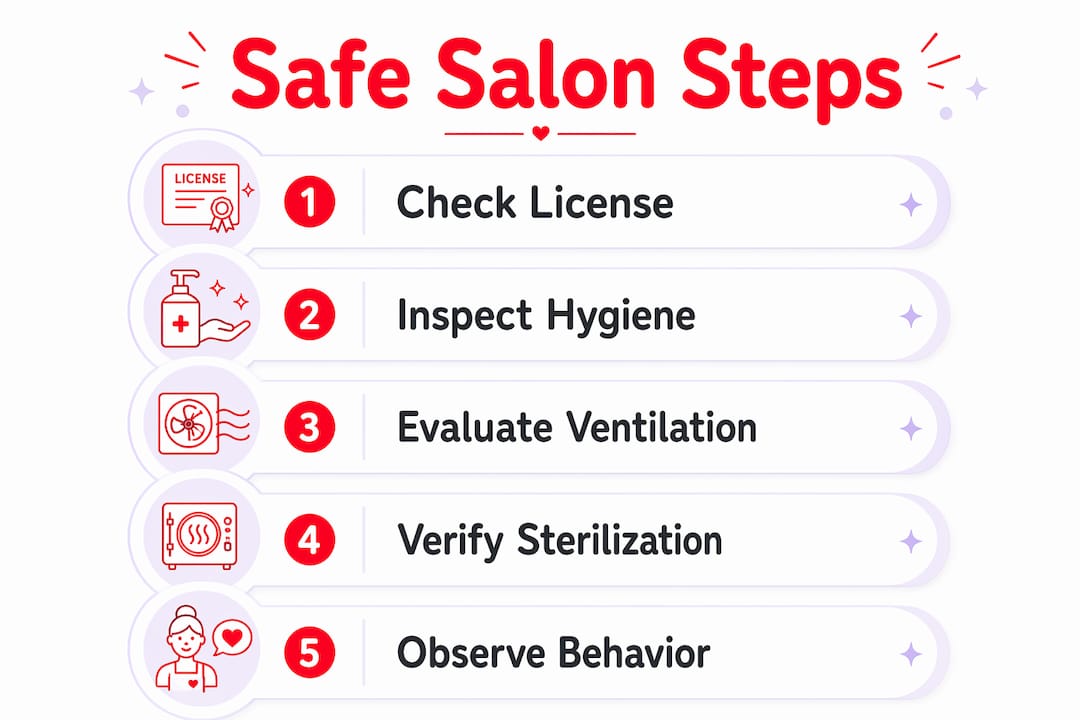
What hygiene and sanitation red flags should you look for?
Poor sanitation is the most common and most dangerous category of nail salon warning signs. Up to 30% of tested pedicure bowls contained harmful bacterial contamination in recent studies. That number means the foot bath you are soaking in may be actively working against you.
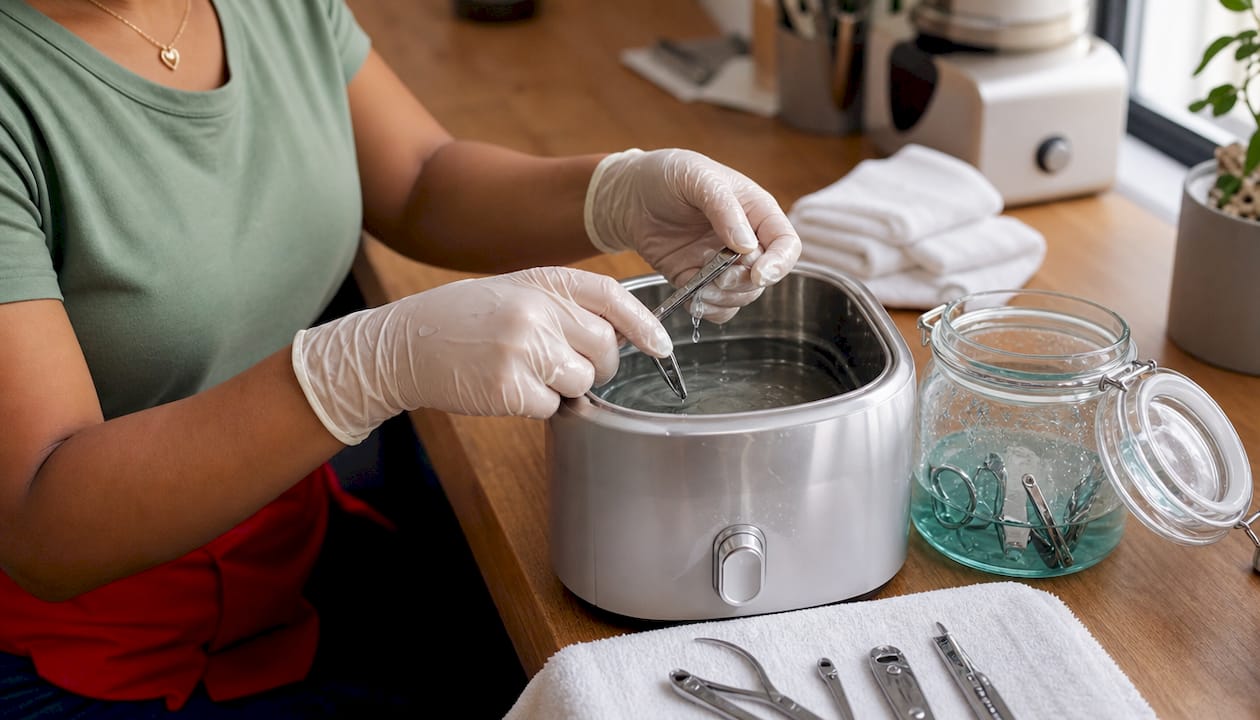
The sterilization method a salon uses tells you everything. UV light “sanitizers” do not kill bacteria, viruses, or fungi on metal tools. Only heat autoclaves or chemical soaks achieve true sterilization. If a salon points to a UV box as proof of clean tools, that is a direct red flag. Autoclaves are the industry-required standard for preventing outbreaks of Mycobacterium species from pedicure tubs.
Watch for these specific hygiene warning signs before your service begins:
Reused files and buffers. These are porous and cannot be sterilized. A reputable salon uses a fresh set for each client or sends you home with yours.
Dirty pedicure bowls. Jets and drains must be flushed with disinfectant between every client. Ask the technician to show you the process.
No gloves during service. Technicians should wear gloves, especially when handling cuticles or broken skin.
Aggressive cuticle cutting. Credo blade razors are illegal in many states. Any tool that creates open wounds on your skin raises your infection risk significantly.
Cluttered or visibly dirty workstations. If the table looks neglected, the sterilization routine probably is too.
Pro Tip: Bring your own nail file and buffer to any new salon. It costs almost nothing and eliminates one of the most common contamination risks entirely.
A useful resource for understanding what clean really looks like is this guide on nail salon cleanliness standards, which breaks down the specific benchmarks clients should expect.
How to recognize ventilation and chemical safety issues
Chemical exposure is the most overlooked category of nail salon safety tips, and it affects both clients and workers. Poor ventilation can push VOC levels above 200 ppm, far beyond safe baselines. If you walk into a salon and your eyes water or your throat tightens within minutes, the air quality is failing you.
The chemicals responsible include methacrylate monomers used in acrylic systems and formaldehyde-releasing compounds found in many hardeners and gel products. Here is what to look for:
Overpowering chemical smell with no airflow. A well-ventilated salon has noticeable air movement at each workstation.
No source-capture ventilation at nail tables. Source-capture ventilation reduces chemical exposure by 50–60% compared to relying on ceiling fans or open windows alone.
Unlabeled or repackaged product containers. Unlabeled chemicals may contain allergens like 2-HEMA, which causes contact dermatitis. A salon that cannot show you a Safety Data Sheet (SDS) for the products it uses is not meeting OSHA HazCom standards.
“Formaldehyde-free” claims without explanation. Many gel products labeled “formaldehyde-free” still release formaldehyde during curing because of chemical precursors in the formula. The label alone is not a safety guarantee.
Proper ventilation and chemical safety protocols are often neglected in nail salons, yet they are among the most critical factors for protecting both client and worker health. Asking about source-capture ventilation and requesting SDS sheets are not unreasonable demands. They are the baseline of a professionally run operation.
Understanding the full picture of chemical hazards in beauty services helps you ask better questions before any appointment.
What technician behaviors signal you should leave?
Professionalism from a nail technician is not just about skill. It is about how they treat your safety. Unprofessional nail salon signs in technician behavior are often the easiest to spot in real time.
No visible license at the workstation. Every licensed technician must display their state cosmetology or nail technician license. If you cannot see it, ask. Reluctance to show it is a definitive warning sign.
Visible infections or open wounds on the technician’s hands. A technician with broken skin or an active infection should not be working on clients. This is a direct contamination risk.
Rushing through the service. Cutting corners on prep time, skipping cuticle care steps, or skipping the disinfection of tools between clients all increase your risk.
Pressure to buy add-ons mid-service. Legitimate salons quote clearly upfront. Pressure tactics mid-appointment are a sign of poor business practices and often lead to surprise charges.
Unwillingness to answer questions. Transparency in sanitation and licensing is a primary indicator of a salon’s safety culture. A technician who deflects or dismisses your hygiene questions is telling you something important.
Pro Tip: Before sitting down, ask the technician directly: “How do you sterilize your metal tools between clients?” A confident, specific answer is a green flag. Vagueness or irritation is not.
The role of licensed beauty professionals goes beyond technique. Licensing signals that a technician has met state-mandated training requirements in both skill and safety.
What does licensing compliance tell you about a nail salon?
Regulatory compliance is not paperwork for its own sake. It is the legal framework that protects you as a client. Every state requires nail salons and their technicians to hold current licenses issued by the state cosmetology or barbering board. A salon operating without current licenses is breaking the law and cutting corners on your safety.
State fines for violations range from $500 to $10,000, and repeated infractions can result in license suspension. That financial penalty structure exists because regulators recognize the real harm non-compliance causes clients.
What to check | Why it matters |
Salon operating license | Confirms the business is legally authorized to operate |
Individual technician licenses | Verifies each technician met state training requirements |
Inspection records | Shows whether the salon passed recent health and safety checks |
Disinfection logs | Documents that sterilization procedures are followed consistently |
Visible SDS binder | Confirms OSHA HazCom compliance for chemical products used |
You can verify a salon’s license status through your state’s cosmetology board website. Most states make this information publicly searchable. If a salon’s license has lapsed or shows unresolved violations, that is a hard stop. Report confirmed violations to your state board. Doing so protects the next client, not just yourself.
For a practical walkthrough of what to check before and during your visit, the nail salon visit checklist covers the key steps in plain language.
Key Takeaways
Choosing a safe nail salon requires checking hygiene practices, ventilation quality, technician credentials, and regulatory compliance before your service begins.
Point | Details |
Sterilization method matters | Only autoclaves or chemical soaks properly sterilize metal tools. UV boxes do not. |
Pedicure bowl contamination is common | Up to 30% of tested bowls showed harmful bacteria. Always ask how bowls are cleaned. |
Ventilation protects your health | Source-capture ventilation cuts chemical exposure by 50–60%. Overpowering fumes are a red flag. |
Licenses must be visible | Check for current state licenses for both the salon and each technician before sitting down. |
Transparency is the baseline | A salon that cannot answer hygiene questions or show SDS sheets is not meeting professional standards. |
What I’ve learned from watching clients ignore the obvious
I have spent years watching people walk past glaring warning signs because they did not want to seem difficult. The irony is that asking one direct question, “How do you sterilize your tools?”, takes ten seconds and can save you weeks of treating a nail infection.
The red flags most clients miss are not the dramatic ones. They are the quiet ones. A technician who skips washing their hands before starting. A pedicure bowl that smells faintly of mildew. A product bottle with no label. None of these feel like emergencies in the moment. But they compound.
What I find genuinely encouraging is that informed clients are changing salon culture. When enough people ask about autoclave use, salons invest in autoclaves. When clients request SDS sheets, salons start maintaining them. Your questions are not an inconvenience. They are market pressure that raises the floor for everyone.
Trust your instincts. If something feels off when you walk in, it probably is. The best salons make you feel comfortable asking anything. That comfort is not an accident. It is the result of a team that takes safety seriously enough to build it into every interaction.
— MinhHieu
Why Bradentonnails takes safety off your checklist
Knowing what to look for is half the work. Finding a salon that already meets every standard is the other half.
Bradentonnails operates under current 2026 Florida cosmetology licensing requirements, with licensed technicians whose credentials are displayed at every workstation. The salon uses proper sterilization protocols for metal tools, maintains disinfection logs, and uses clearly labeled products. Pricing is transparent before any service begins. If you are in the Bradenton area and want a professional nail service where the safety work is already done for you, Bradentonnails is worth your time. Book online or walk in during flexible hours, including Sundays.
FAQ
What are the biggest nail salon red flags to avoid?
The most serious red flags are reused porous tools, UV-only sterilization, unlabeled chemical products, missing technician licenses, and pedicure bowls that are not disinfected between clients. Any one of these signals a hygiene or safety lapse.
How do I verify a nail salon’s license?
Search your state’s cosmetology board website using the salon’s name or address. Most states offer a free public license lookup tool that shows current status and any recorded violations.
Is a strong chemical smell normal in a nail salon?
A mild chemical scent is expected, but an overpowering smell indicates poor ventilation. VOC levels above 200 ppm have been measured in poorly ventilated salons, which poses real health risks for both clients and workers.
Can I bring my own tools to a nail salon?
Yes, and for new salons it is a smart practice. Bringing your own nail file and buffer eliminates the risk of cross-contamination from porous tools that cannot be sterilized between clients.
What should I do if I spot a violation at a nail salon?
Leave the salon and report the violation to your state cosmetology board. You can also leave a factual review noting the specific concern. Both actions protect future clients and create accountability for the business.
Recommended
Comments