
Walk-In Nail Service: What to Expect and How to Choose
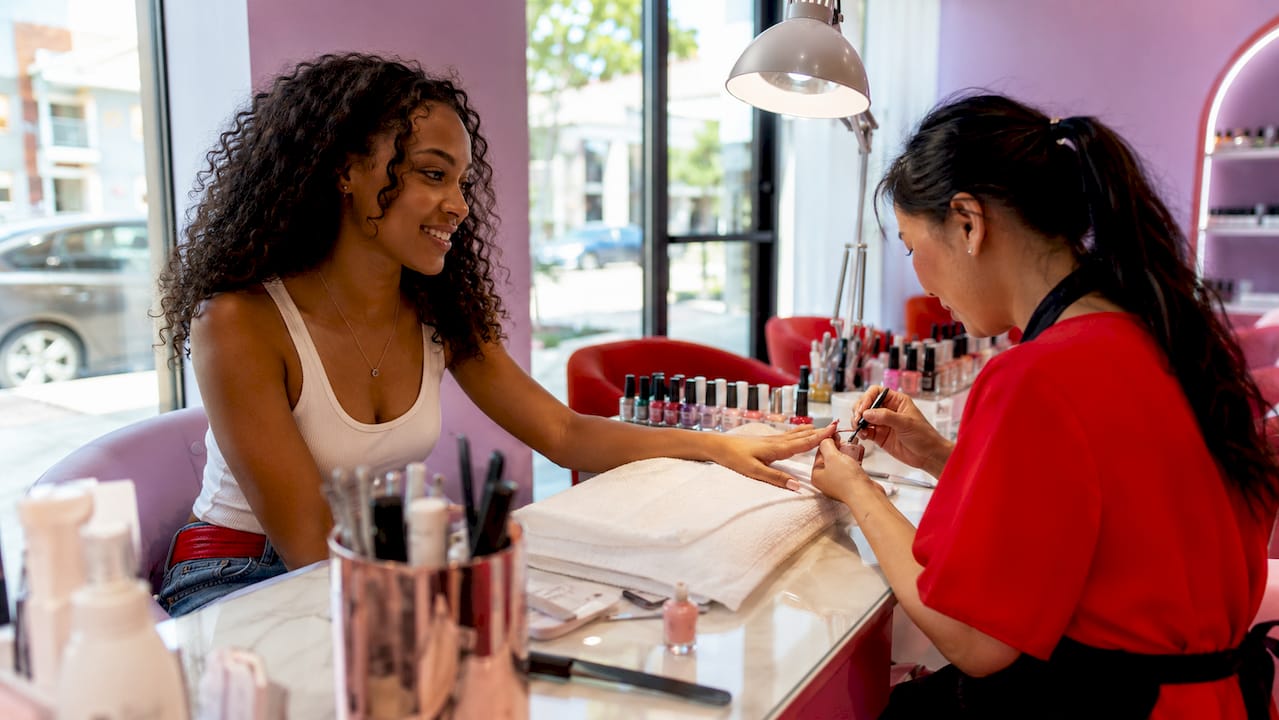
A walk-in nail service is defined as a salon visit where you arrive without a reservation and receive treatment based on real-time chair availability. No booking required, no confirmation texts, no scheduled slot. You show up, check in at the front desk, and either sit down immediately or wait until a station opens. For anyone juggling a packed schedule or simply acting on a spontaneous urge for a fresh manicure, this model is built around your timeline, not the salon’s calendar.
The industry term you’ll hear most often is “walk-in service,” though some salons also call it “open availability” or “first-come, first-served” nail care. Either way, the core promise is the same: access to professional nail care services without planning ahead. Understanding how this model works, what happens during your visit, and what separates a quality walk-in nail salon from a mediocre one will save you time and help you get exactly the results you want.
What is a walk-in nail service and how do salons run them?
A walk-in nail service operates on a chair availability system where the front desk manages client flow in real time, deciding who gets seated immediately and who waits. This is fundamentally different from appointment-only salons, where every technician’s time is pre-allocated and the schedule is locked in hours or days ahead.
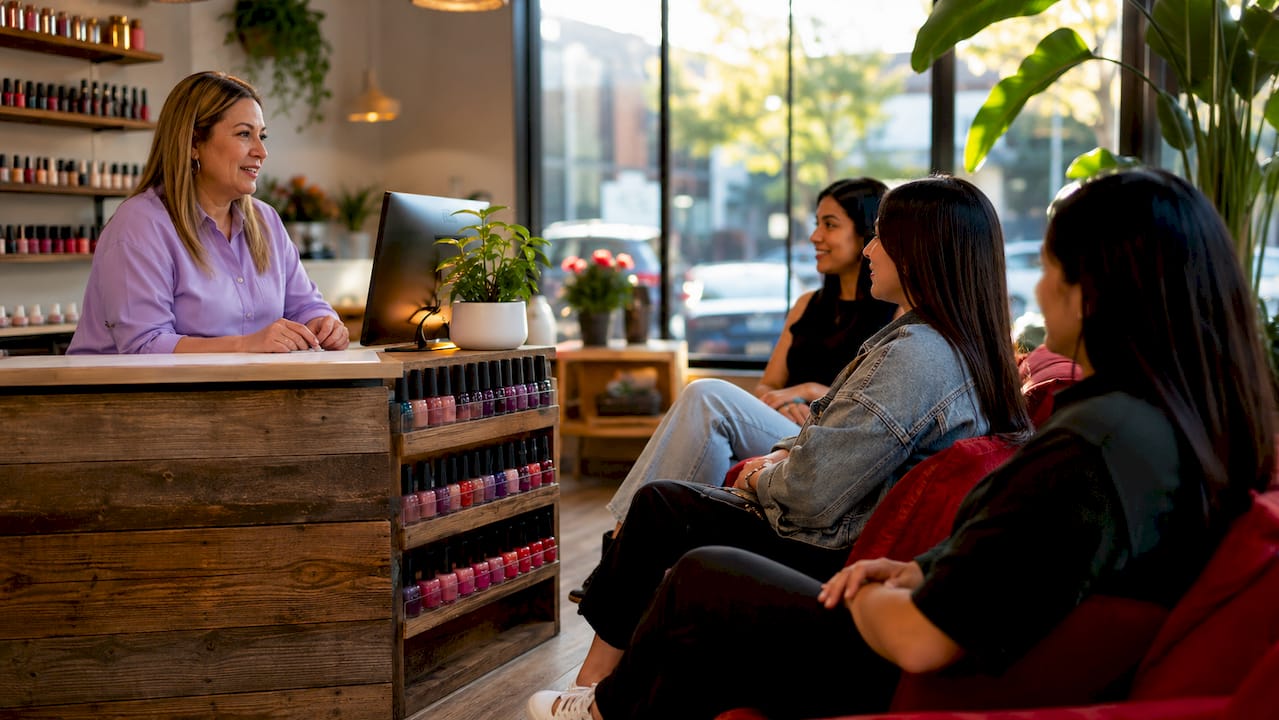
Walk-in nail salons are specifically designed for high throughput. According to industry setup guidance, typical salon layouts feature 6 to 10 manicure and pedicure stations packed into 500 to 1,000 square feet, optimized for continuous client flow and minimal transition time between customers. That density is intentional. More stations mean more simultaneous clients, which means the business can absorb walk-in demand without grinding to a halt.
Location is a major factor in how well this model works. Volume-based walk-in salons thrive in high foot traffic areas like strip malls, shopping centers, and busy commercial corridors because consistent client flow is what keeps the chairs full and the business profitable. A walk-in salon in a low-traffic area struggles to maintain the throughput the model depends on.
Here is what typically distinguishes a walk-in nail salon from an appointment-only operation:
Queue management. Walk-in salons use a real-time queue, often tracked on a tablet or whiteboard at the front desk, to assign clients to available technicians.
Flexible staffing. Technicians rotate between clients rather than being locked to one person’s schedule, which keeps service moving.
Faster service focus. The menu tends to prioritize services that can be completed in 30 to 60 minutes, such as classic manicures, gel polish, and standard pedicures.
Open floor plans. Stations are visible and accessible, allowing staff to monitor chair availability across the whole floor at a glance.
Pro Tip: Visit during off-peak hours, typically Tuesday through Thursday mornings, to minimize wait time at a walk-in nail salon. Weekend afternoons are the busiest windows at most locations.
What happens step by step during a walk-in nail visit?
The standard workflow at a walk-in nail salon follows a consistent sequence whether you are getting a manicure or a pedicure. Knowing the steps ahead of time removes any uncertainty about what to expect at a nail salon, especially if it is your first visit.
Check-in. You arrive, tell the front desk what service you want, and either get seated immediately or added to the wait list. The staff will confirm which technician is available and how long the wait will be.
Consultation. Once seated, your technician asks about your preferred shape, length, and finish. This is the moment to show a reference photo if you have a specific design in mind.
Soaking. For manicures, your hands soak in warm water to soften the skin around the nails. Pedicures involve a longer foot soak, often with salts or a softening solution, which also serves as a relaxing start to the service.
Shaping and trimming. The technician trims your nails to your preferred length and files them into your chosen shape, whether square, oval, almond, or coffin.
Cuticle care. Cuticles are pushed back and any excess skin is removed. This step matters more than most clients realize because clean cuticle lines make polish look sharper and last longer.
Exfoliation and massage. Most pedicures and many manicures include a brief scrub and hand or foot massage. This is where the experience shifts from grooming to genuine relaxation.
Polish or gel application. For a classic polish finish, the technician applies a base coat, two color coats, and a top coat. For a gel manicure, each coat is cured under a UV or LED lamp before the next is applied, which adds time but produces a finish that lasts two to three weeks without chipping.
Drying and finishing. Classic polish requires drying time under a fan or UV dryer. Gel is fully cured and ready to touch immediately after the final lamp pass.
A standard manicure takes 30 to 45 minutes. A gel manicure runs 45 to 60 minutes due to the curing steps. A full pedicure typically takes 45 to 60 minutes. If you are considering SNS dipping powder, plan for a similar window as gel, since the layering and sealing process takes comparable time.
What are the benefits and limitations of walk-in nail services?
Walk-in nail services offer genuine convenience, but they are not the right fit for every situation. The table below lays out the honest comparison so you can decide which approach fits your needs.
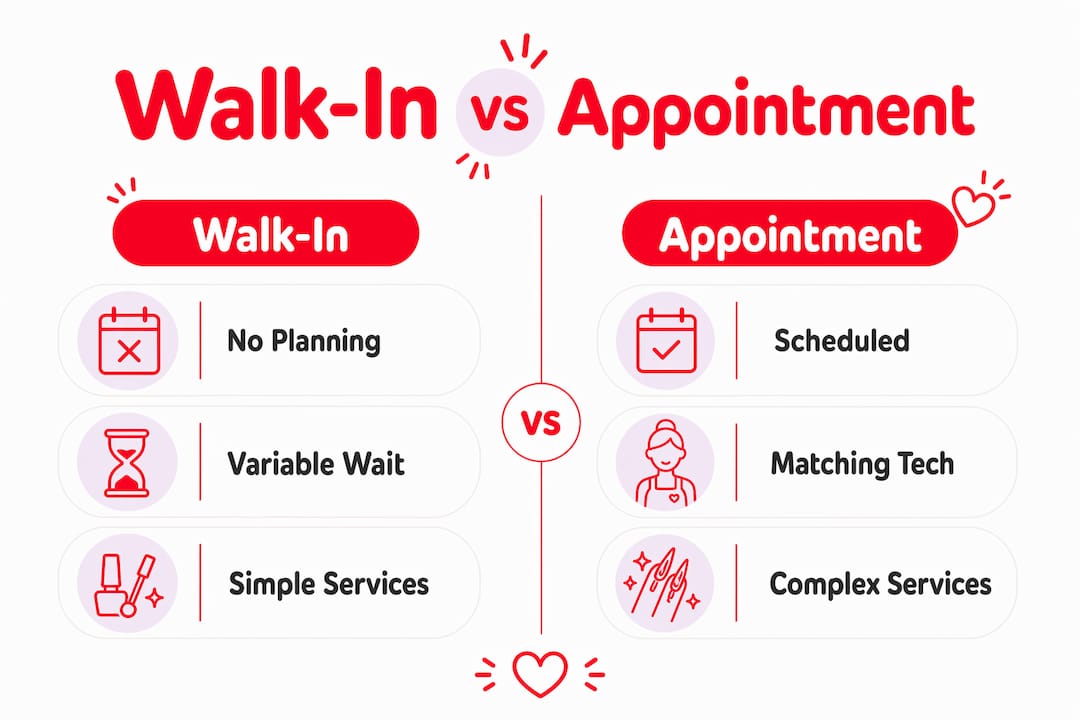
Factor | Walk-in service | Appointment service |
Scheduling | No planning required | Must book in advance |
Wait time | Variable, depends on traffic | Minimal, time is reserved |
Technician choice | Assigned by availability | Can request a specific person |
Complex services | May face delays or refusal | Fully accommodated |
Spontaneity | High | Low |
Best for | Simple, fast treatments | Nail art, extensions, repairs |
The key difference between walk-in and appointment visits comes down to waiting time and technician matching. Appointments guarantee your slot and your stylist. Walk-ins depend on who is free when you arrive, which works perfectly for a classic manicure or a gel color change but can create friction for elaborate nail art or full acrylic sets.
Hygiene is a non-negotiable factor regardless of the service model. Proper sanitation requires removing visible debris from tools first, then disinfecting or sterilizing them. Skipping the initial cleaning step makes disinfection ineffective, because chemical agents cannot penetrate organic matter. A clean-looking salon is not the same as a properly sanitized one. Check that tools arrive in sealed pouches or are visibly cleaned between clients.
Pro Tip: Bring a reference photo of your preferred nail shape and color before you arrive. Walk-in visits move fast, and a clear visual reference cuts the consultation time in half and reduces the chance of miscommunication.
Walk-in nail treatments also work best when you keep your service request straightforward. Simpler services get faster acceptance in a queue-based system, while complex treatments like full acrylic sets or intricate nail art may require longer waits or a scheduled appointment. Knowing this before you walk in sets realistic expectations and avoids disappointment.
How to choose and evaluate a quality walk-in nail salon
Choosing a walk-in nail salon well requires looking past the surface. A fresh coat of paint and a pleasant smell do not tell you whether the tools are properly sanitized or whether the technicians are skilled. Here is what actually matters when you are evaluating your options.
Check the sanitation sequence. Watch whether staff remove debris from tools before disinfecting them. Proper tool hygiene follows a three-step sequence: clean, disinfect or sterilize, then store correctly. Salons that skip straight to a disinfectant spray are cutting corners. You can review nail salon cleanliness standards to know exactly what to look for before you book.
Read recent reviews with specifics. Look for reviews that mention technician skill, wait times, and cleanliness rather than generic praise. A pattern of comments about long waits or rushed service is a reliable signal.
Assess the service menu. A quality walk-in nail salon offers a clear menu with transparent pricing. If gel, SNS dipping, shellac, and classic polish are all listed with distinct prices, that is a sign of a professional operation rather than a vague “starting from” structure.
Observe the floor. When you walk in, look at whether stations are cleaned between clients, whether foot baths are drained and scrubbed, and whether technicians wash their hands before starting each service.
Ask about wait times honestly. A well-run salon will give you a realistic estimate rather than a vague “just a few minutes.” If the staff seems evasive about wait times, that tells you something about how they manage client expectations overall.
For a structured approach to evaluating your options, the nail salon comparison guide at Bradentonnails covers service variety, cleanliness benchmarks, and what questions to ask before you sit down.
Key takeaways
A walk-in nail service delivers professional nail care without an appointment, but quality, hygiene, and service complexity determine whether it meets your expectations.
Point | Details |
Definition of walk-in service | You arrive without a reservation and are seated based on real-time chair availability. |
Best service types for walk-ins | Classic manicures, gel color changes, and standard pedicures fit the walk-in model best. |
Hygiene is non-negotiable | Tools must be cleaned before disinfecting. A visually clean salon is not automatically a safe one. |
Complex services need appointments | Nail art, acrylic sets, and extensions are better handled with a scheduled slot. |
Choosing a quality salon | Observe sanitation practices, read specific reviews, and assess menu transparency before committing. |
Why walk-in visits reveal more about a salon than appointments do
Walk-in visits are, in my experience, the most honest test of a nail salon’s real operating standards. When a salon knows you are coming, they can prepare. When you walk in unannounced, you see exactly how they run on an average Tuesday afternoon.
I have noticed that the salons with the shortest wait times are rarely the ones cutting corners on service. They are the ones with well-trained staff who move efficiently because they know what they are doing, not because they are rushing. Speed and quality are not opposites in a well-run walk-in nail salon. They are the result of the same thing: skilled technicians with clear processes.
The one area where I think most clients underestimate walk-in services is hygiene. People focus on the wait and the price, but the sanitation sequence is what actually protects you. I always watch whether the technician cleans the station before I sit down and whether tools come from a sealed pouch. If either of those things is missing, I leave. No manicure is worth an infection. The nail infection prevention guide at Bradentonnails explains exactly what proper protocols look like if you want a reference point.
My honest advice: use walk-in services for maintenance and simple color changes. Use appointments for anything that requires a specific technician, a complex design, or a treatment like acrylics or extensions. That split approach gives you the best of both models without the frustration of either.
— MinhHieu
Experience professional walk-in nail care at Bradentonnails in Bradenton
Bradentonnails at TJ Nails in Bradenton, FL offers walk-in nail services across a full menu of manicures, pedicures, gel polish, and SNS dipping powder treatments, all performed by skilled technicians in a clean, welcoming environment. No appointment is necessary for most services, and flexible hours including Sundays mean you can fit nail care into your schedule on your terms.

Whether you want a quick gel color refresh or a full pedicure, TJ Nails is built for clients who value both convenience and quality. The salon’s commitment to proper sanitation and personalized service sets it apart from high-volume operations that prioritize speed over care. Visit the Bradenton nail salon page to see the full service menu, check current hours, and book online or plan your walk-in visit today.
FAQ
What is a walk-in nail service exactly?
A walk-in nail service means you visit a nail salon without a prior reservation and are seated based on chair availability. The front desk manages the queue in real time and assigns you to the next available technician.
How long does a walk-in nail appointment take?
A classic manicure takes 30 to 45 minutes, while a gel manicure runs 45 to 60 minutes due to UV or LED curing between coats. A standard pedicure typically takes 45 to 60 minutes.
Can I get nail art or acrylics as a walk-in?
Complex services like nail art, full acrylic sets, and extensions are better suited to scheduled appointments. Walk-in salons prioritize simpler, faster treatments, and complex work may face longer waits or require booking in advance.
How do I know if a walk-in nail salon is hygienic?
Watch for the three-step sanitation sequence: tools should be cleaned of visible debris, then disinfected or sterilized, then stored properly. Sealed tool pouches and clean stations between clients are reliable signs of a well-run salon.
What is the best time to visit a walk-in nail salon?
Weekday mornings, particularly Tuesday through Thursday, offer the shortest wait times at most walk-in nail salons. Weekend afternoons are peak hours and typically carry the longest queues.
Recommended
Comments